How Does a Pulse Laser Cleaning Machine Work? A Complete Guide

In recent years, industries worldwide have been searching for more precise, efficient, and environmentally friendly ways to remove surface contaminants and residues. Traditional methods like sandblasting, chemical stripping, and manual grinding are messy, slow, and often damage the underlying material. Enter the pulse laser cleaning machine —a technology that's changing how manufacturers, restorers, and maintenance teams approach surface cleaning. But how does it actually work? Let's break it down.
1. Working Principle of a Pulse Laser Cleaning Machine
At its core, a pulse laser cleaning machine operates on a simple but brilliant principle: selective ablation. The machine emits short, high-energy laser pulses—typically in nanoseconds or picoseconds—that are directed onto the contaminated surface. Each pulse delivers an intense burst of energy that lasts only a fraction of a second.
Here's what happens step by step:
-
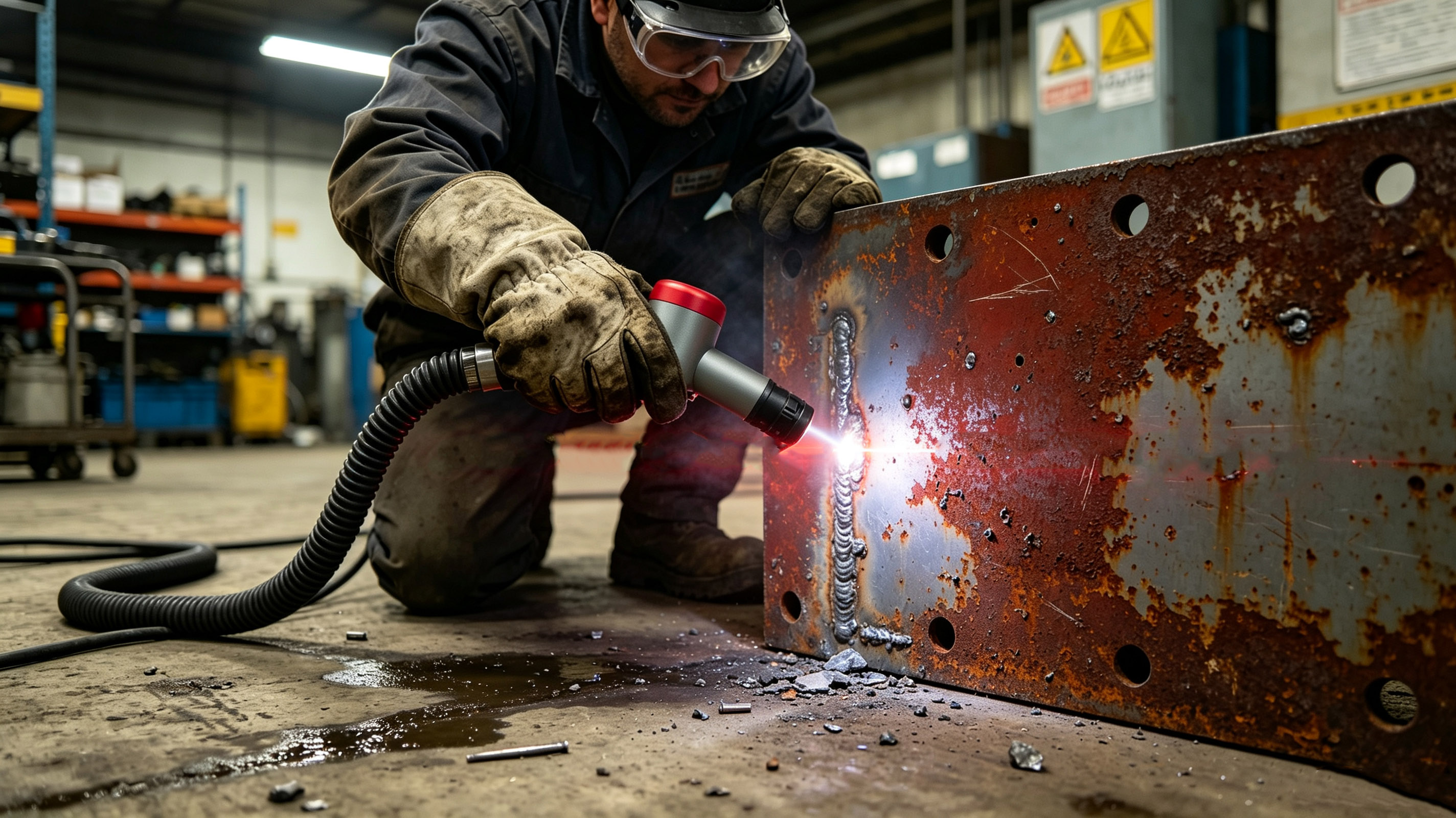
The laser beam hits the contaminant layer – Rust, paint, oxide, or oil absorbs the laser energy much more readily than the base metal does. This is because different materials have different "ablation thresholds"—the point at which they begin to vaporize.
-
Rapid heating and micro-explosions – The contaminant absorbs the energy and heats up almost instantly. This causes rapid thermal expansion and micro-explosions that break the bond between the contaminant and the base material.
-
Vaporization and removal – The contaminant turns into gas or fine dust, which is then captured by an attached vacuum system. The entire process happens in milliseconds.
-
The base material stays cool – Because each pulse is so short, the heat doesn't have time to transfer to the underlying metal. The result? The rust or paint is gone, but the base material remains completely intact.
This selective absorption is the key to why laser cleaning is so effective. It's like having a tool that knows exactly where to stop.
2. Why a Pulse Laser Cleaning Machine Changes the Game
What makes this technology so revolutionary? Traditional cleaning methods have major drawbacks: sandblasting damages the base metal and creates toxic dust clouds; chemical cleaning produces hazardous waste and requires expensive disposal; manual grinding is slow, inconsistent, and labor-intensive.
A pulse laser cleaning machine solves all these problems in one go. It's non-contact, so there's no mechanical wear on the surface. It uses no chemicals, no abrasives, and no consumables—just electricity. The process produces minimal waste (just a small amount of captured dust), making it far more environmentally friendly than traditional methods. And because the laser removes only the contaminant, the base material is left completely undamaged.
3. Pulse Laser Cleaning Machine Features and Advantages
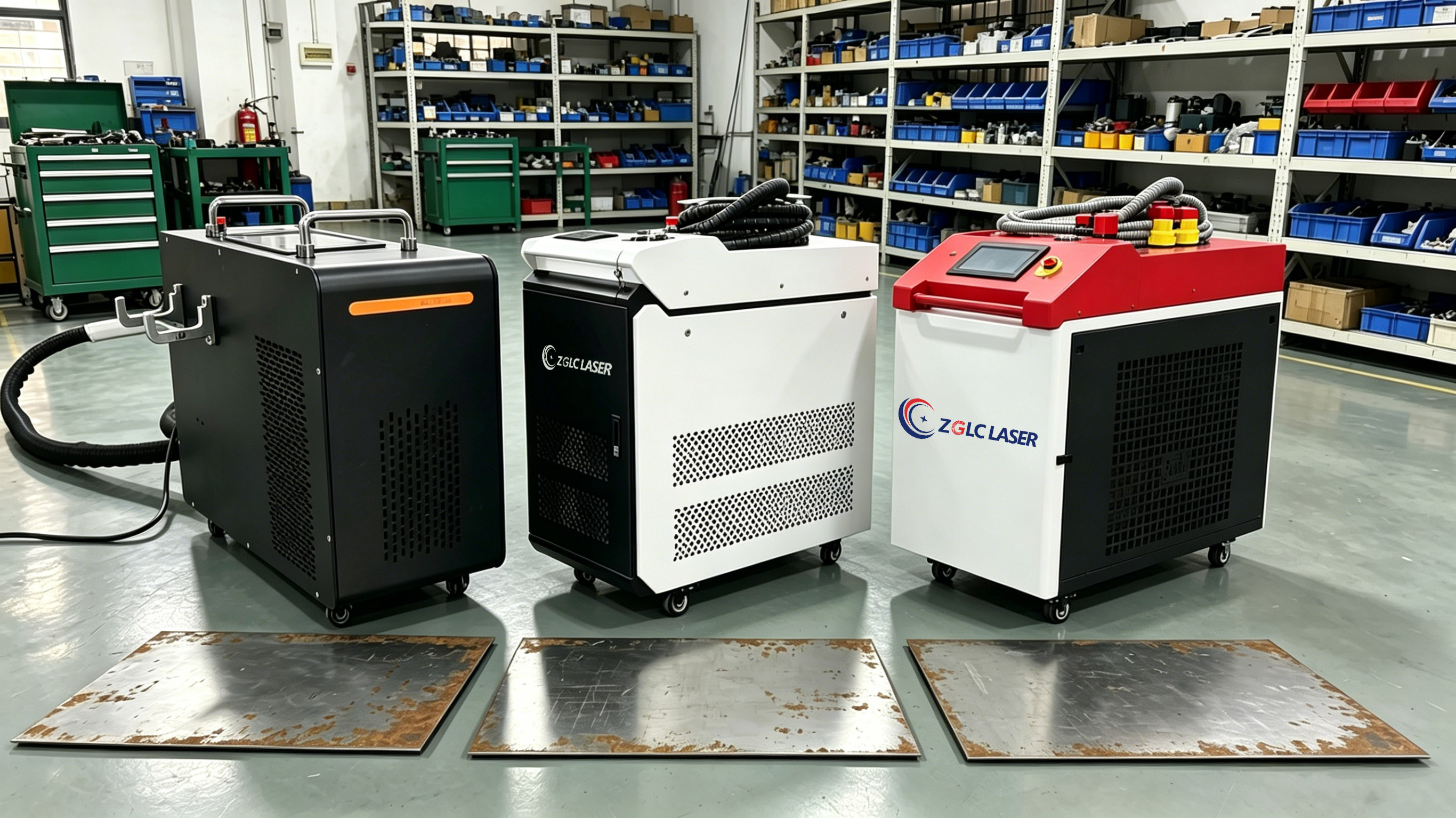
Main components of a typical pulse laser cleaning machine:
-
Laser source – Generates the high-energy pulses (fiber laser, typically 1064nm wavelength)
-
Scanning head (galvanometer) – Directs the beam across the surface at high speed
-
Handheld or robotic delivery system – Allows flexible positioning
-
Control interface – Touchscreen for adjusting power, frequency, and scanning patterns
-
Fume extraction system – Captures vaporized contaminants
-
Cooling system – Air-cooled or water-cooled depending on power
Common uses for rust laser cleaning:
-
Rust removal from steel structures, pipes, and machinery
-
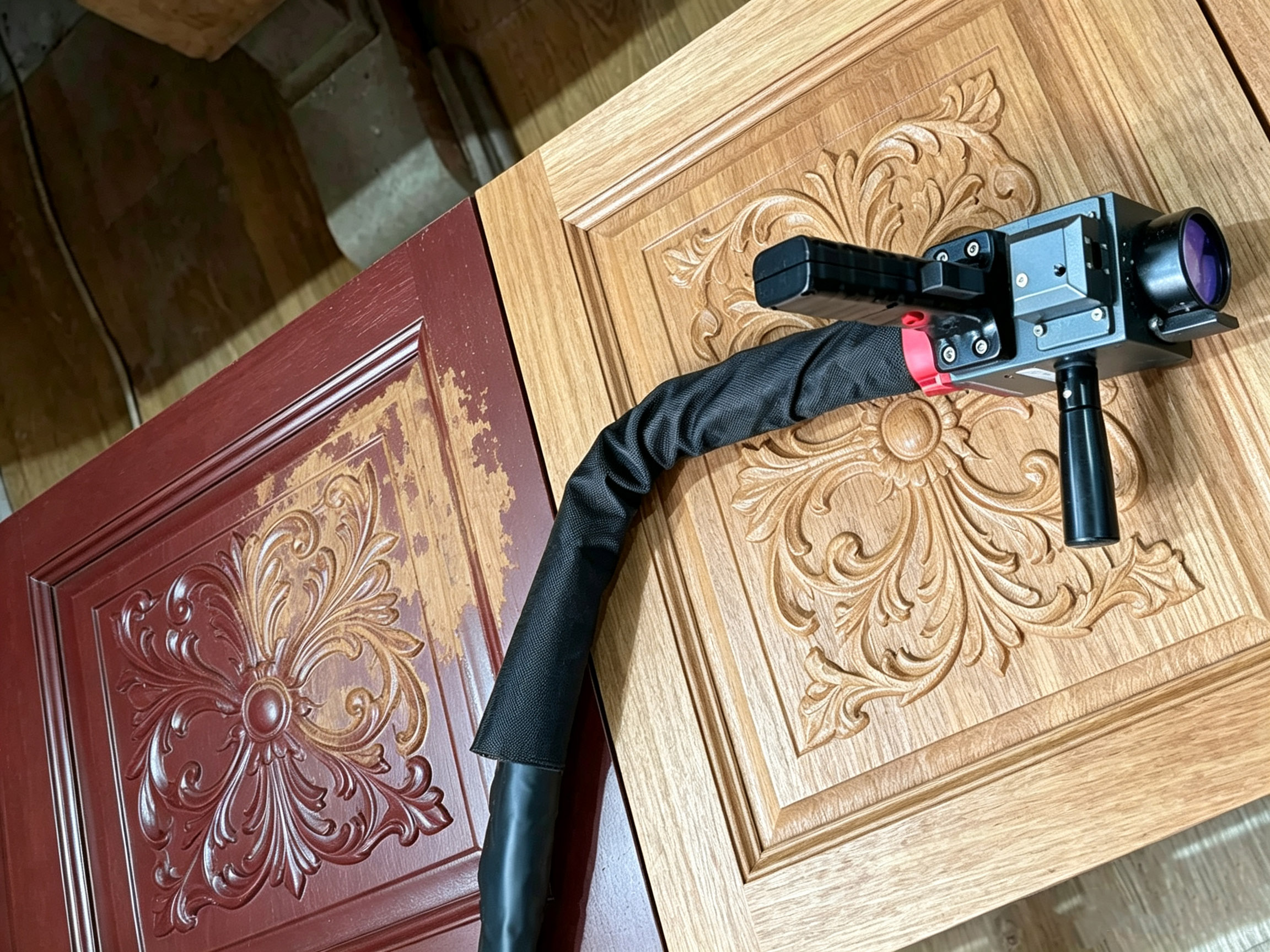
Paint stripping from ships, bridges, and equipment
-
Oxide layer removal before welding or coating
-
Oil and grease removal from engine parts and tools
-
Mold cleaning in plastic and rubber manufacturing

4. Pulse Laser Cleaning Operation Guide (Step-by-Step)
Operating a handheld pulse laser cleaning machine is straightforward but requires attention to detail:
-
Pre-operation check – Inspect the equipment for any damage, ensure the protective lens is clean, and check that all cables are securely connected.
-
Wear safety equipment – Put on certified laser safety glasses (OD6+ rated for the specific wavelength) and any required protective clothing.
-
Power on – Turn on the main power and allow the cooling system to start. Wait for the system to complete its self-check.
-
Set parameters – Adjust power, frequency, and scanning width based on the material and contaminant type. Start with lower settings and increase as needed.
-
Aim and clean – Point the cleaning head at the target surface and press the trigger. Move the head steadily across the surface at the recommended speed and distance.
-
Shutdown – After finishing, turn off the laser and allow the cooling system to continue running for a few minutes to dissipate heat.
-
Cleanup – Wipe down the machine exterior, check the protective lens, and store the equipment properly.
5. Compatible Materials for Pulse Laser Cleaning
A versatile pulse laser cleaning machine works on a wide range of metals:
-
Carbon steel and stainless steel – The most common and ideal materials for rust laser cleaning
-
Aluminum and aluminum alloys – Removes oxides without damaging the soft metal beneath
-
Copper and brass – Effective on reflective metals with careful parameter tuning
-
Titanium – Commonly cleaned in aerospace applications
-
Cast iron – Widely used in industrial cleaning scenarios
Technical specifications reference (see attached image):
-
Power options: 100W, 200W, 300W, 500W
-
Power supply: Single-phase 220V±10%, 50/60Hz AC
-
Repetition rate: 1-3000kHz (gradually adjustable)
-
Scanning speed: Up to 30,000 mm/s
-
Scanning width: 0-145mm, continuously adjustable
-
Cooling: Air-cooled
-
Handheld weight: 0.9kg
-
Main unit weight: 28-32kg
Safety mechanisms – Modern systems include multiple safety features:
-
Laser interlock systems
-
Emergency stop buttons
-
Protective enclosures
-
Safety sensors
-
Key switch activation
6. Key Advantages of Pulse Laser Cleaning
-
Non-damaging (cold process) – Minimal heat transfer means no warping or distortion
-
High precision – Targets only the contaminant, leaving the base material untouched
-
Eco-friendly – No chemicals, no abrasives, no hazardous waste
-
Cost-effective long-term – No consumables means lower operating costs over time
-
Easy automation – Can be integrated with robots for consistent, repeatable results
-
Versatile – Works on multiple materials and contaminant types
7. Pulse Laser Cleaning Machine Safety Tips
Safety is non-negotiable when operating any laser equipment:
-
Always wear laser safety glasses – Use OD6+ glasses matching the laser wavelength. Regular sunglasses won't protect you.
-
Never look directly at the beam – Direct or reflected laser light can cause permanent eye damage.
-
Use fume extraction – Some materials release harmful smoke during cleaning. Always use the attached vacuum or a separate extraction system.
-
Keep a safe distance – Maintain at least 10cm between the nozzle and the surface. Never point the laser at people or flammable materials.
-
Follow proper shutdown procedures – Allow the cooling system to run after use to prevent overheating.
-
Get proper training – Never operate a laser cleaning machine without adequate training on the specific model.

8. Pulse Laser Cleaning vs. Continuous Wave (CW) Laser Cleaning
Here's a quick comparison to help you understand the difference:
| Feature | Pulse Laser Cleaning | Continuous Wave (CW) Laser Cleaning |
|---|---|---|
| Energy delivery | Short, high-energy bursts | Steady, uninterrupted beam |
| Peak power | Very high (kW range) | Lower (100-2000W continuous) |
| Heat input | Very low ("cold" process) | Higher |
| Precision | Extremely high | Moderate |
| Best for | Delicate surfaces, thin coatings, precision work | Heavy rust, large areas, thick coatings |
| Substrate damage | Minimal | Can affect substrate |
A pulse laser cleaning machine is like a sniper rifle—precise, controlled, and minimal collateral damage. A CW laser is more like a machine gun—powerful, fast, but less precise. For most rust laser cleaning applications on sensitive or thin materials, a pulse laser cleaning machine is the better choice.
9. Buyer Considerations
When shopping for a pulse laser cleaning machine, consider these factors:
-
Power requirements – 100-300W works for light to medium rust; 500W+ for heavy industrial cleaning
-
Portability needs – Handheld units are great for field work; stationary systems suit production lines
-
Cooling system – Air-cooled for lower power (100-300W); water-cooled for higher power
-
Scanning modes – Multiple modes (line, rectangle, circle, spiral) offer flexibility for different surfaces
-
Safety features – Look for interlocks, emergency stops, and protective enclosures
-
Brand and support – Choose reputable manufacturers with good after-sales support
-
Price – A 300W backpack rust laser cleaner price typically ranges from $5,000 to $20,000+, depending on features and brand
10. FAQ
Q: Will a pulse laser cleaning machine damage the metal underneath?
A: No. The laser is tuned to the contaminant's ablation threshold, which is lower than the metal's. The base material stays cool and intact.
Q: How fast is rust laser cleaning?
A: A pulse laser cleaning machine can clean a square meter of light rust in minutes. Heavy rust may take longer, but it's still dramatically faster than grinding or sandblasting.
Q: Do I need special training to operate a pulse laser cleaning machine?
A: Yes, basic training is strongly recommended. Modern systems are user-friendly, but proper safety knowledge is essential.
Q: Can a pulse laser cleaning machine remove paint as well as rust?
A: Yes. Laser cleaning removes rust, paint, oxides, grease, and other contaminants from metal surfaces.
Q: Is a pulse laser cleaning machine expensive to run?
A: No. The main cost is electricity—no consumables, no chemicals, no abrasives. This makes the total cost of ownership lower than traditional methods over time.
Q: What's the difference between a pulse laser cleaning machine and a CW laser cleaner?
A: A pulse laser cleaning machine fires short, high-energy bursts with minimal heat input—ideal for precision work. A CW laser delivers a steady beam—faster but with more heat.
Conclusion
A pulse laser cleaning machine is a game-changing tool for surface maintenance. By using short, high-energy pulses to vaporize contaminants without damaging the base material, it offers unmatched precision, speed, and environmental benefits. Whether you're removing rust from steel structures, stripping paint from ships, or cleaning delicate molds, rust laser cleaning with a pulse laser cleaning machine is faster, cleaner, and safer than traditional methods.
Ready to see a pulse laser cleaning machine in action? Contact ZGLC Laser today for a free demo on your own rusty parts.
Can You Remove Paint from Wood with a Laser?
Laser How to Clean Metal: The Fastest Way to Remove Rust
Related Article