Elucidating the Impact of Laser Welding Techniques on Joint Formation, Microstructure, and Mechanical Properties of Ultra-Thin 316L Stainless Steel Sheets
Introduction
Ultra-thin 316L stainless steel sheets, with thicknesses below 0.1 mm, are increasingly used in vapor chambers and miniaturized electronic devices due to their excellent corrosion resistance and thermal conductivity. However, their extremely low thickness results in critically low stiffness, making them highly prone to welding deformation. During the encapsulation process, common issues such as burn-through, geometric distortion, and interfacial bonding degradation frequently occur, severely limiting manufacturing precision and yield. Among available joining technologies, laser welding stands out as an effective solution for suppressing welding deformation while achieving high-quality joints, particularly when comparing four different techniques: continuous laser welding (CLW), pulsed laser welding (PLW), oscillating continuous laser welding (OCLW), and oscillating pulsed laser welding (OPLW).
Joint Formation Across Four Laser Welding Techniques
The four laser welding techniques exhibit fundamentally different molten pool characteristics, leading to distinct bead morphologies and sheet deformation patterns. CLW produces a continuous molten pool and results in a continuous bead accompanied by saddle-shaped deformation. In contrast, PLW generates an intermittent molten pool, yielding a cyclic bead pattern with wavy deformation. OCLW, despite its oscillating motion, still forms a continuous pool and leads to saddle-shaped deformation, while OPLW—the most complex mode—produces an irregular, fragmented bead morphology accompanied by twisting deformation. Notably, PLW demonstrates superior control over welding deformation, reducing distortion by approximately 57.1% compared to CLW, 84.5% relative to OCLW, and 67.7% against OPLW. This makes PLW the optimal choice for applications where geometric precision is paramount.

Microstructure Evolution and Grain Refinement
Molten pool dynamics dictate the solidification behavior and resulting microstructure properties of the welded joint. Continuous molten pools (CLW and OCLW) are characterized by predominantly two-dimensional heat dissipation, which promotes a pronounced columnar grain orientation. The directional heat flow during continuous welding encourages grain growth along the thermal gradient, producing a highly oriented microstructure along the weld centerline. Conversely, intermittent molten pools (PLW and OPLW) enhance longitudinal heat transfer, suppressing preferential grain orientation and promoting more isotropic microstructure properties with refined grain structures. Quantitative analysis reveals that PLW reduces the average grain size from 4.9 µm in CLW to just 3.4 µm, representing a significant refinement of approximately 30%. This grain refinement stems from repeated melting and rapid solidification cycles inherent to pulsed laser operation, which limit the time available for grain coarsening.
Mechanical Performance and Distortion-Strength Trade-Off
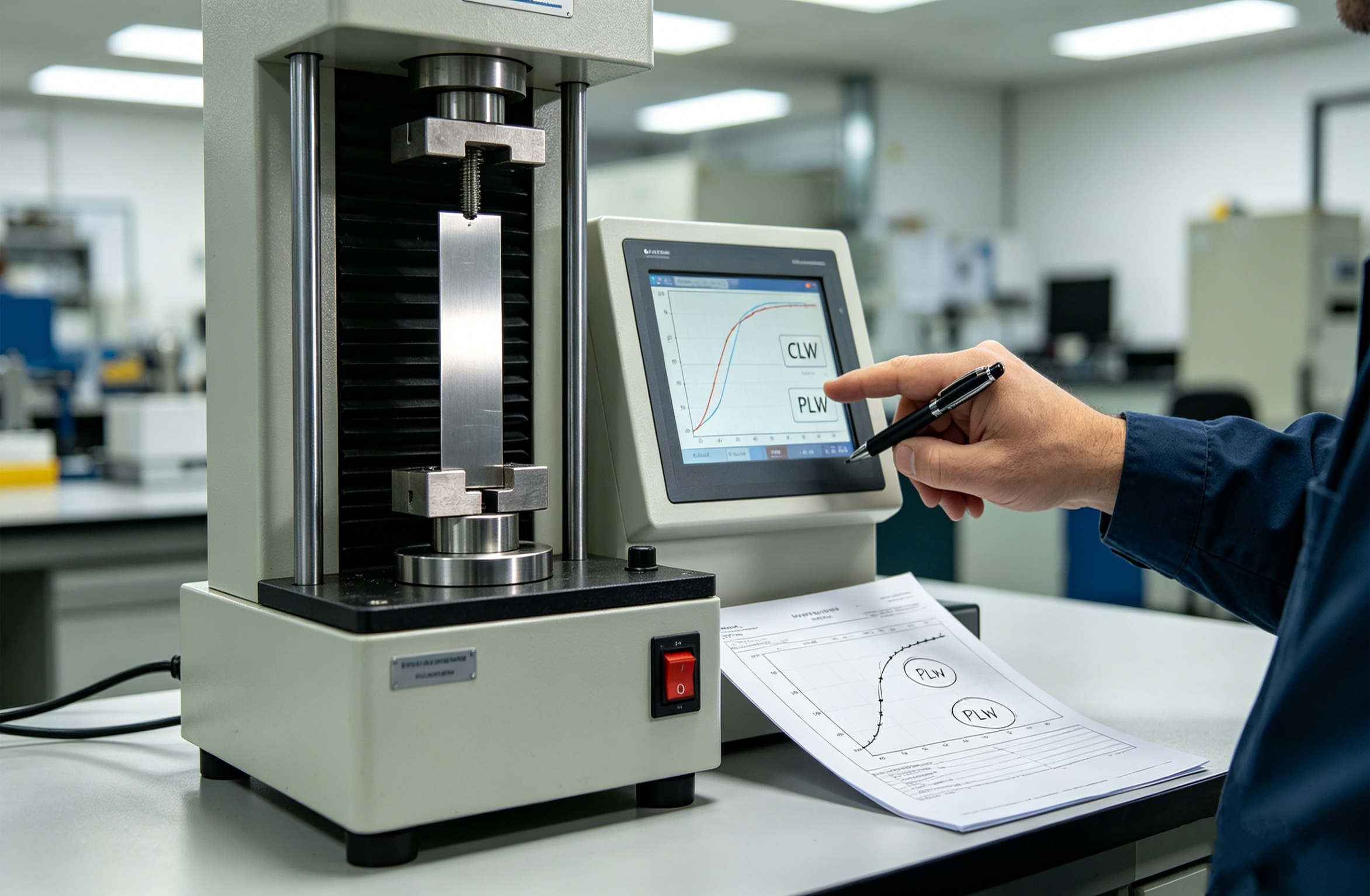
The welding deformation characteristics and microstructure properties directly influence the mechanical behavior of ultra-thin 316L joints. Joint maximum load capacity follows the ranking: CLW > PLW > OCLW > OPLW. While CLW achieves the highest absolute joint strength, its severe saddle-shaped deformation makes it unsuitable for precision applications. PLW offers an optimal balance, delivering the lowest distortion among all four modes while maintaining joint strength comparable to CLW. This combination of minimized welding deformation, refined grains, and maintained mechanical properties positions PLW as the ideal process for laser welding ultra-thin 316L stainless steel sheets, effectively addressing the core manufacturing challenges faced in vapor chamber encapsulation and microelectronics packaging
What Is Laser Welding? How Does It Work?
Aerospace Precision Manufacturing – The “Interstellar” Weld Joint for Dissimilar Materials
Related Article