UV Laser Application in Wood Flooring QR Code Marking: A Technical Study
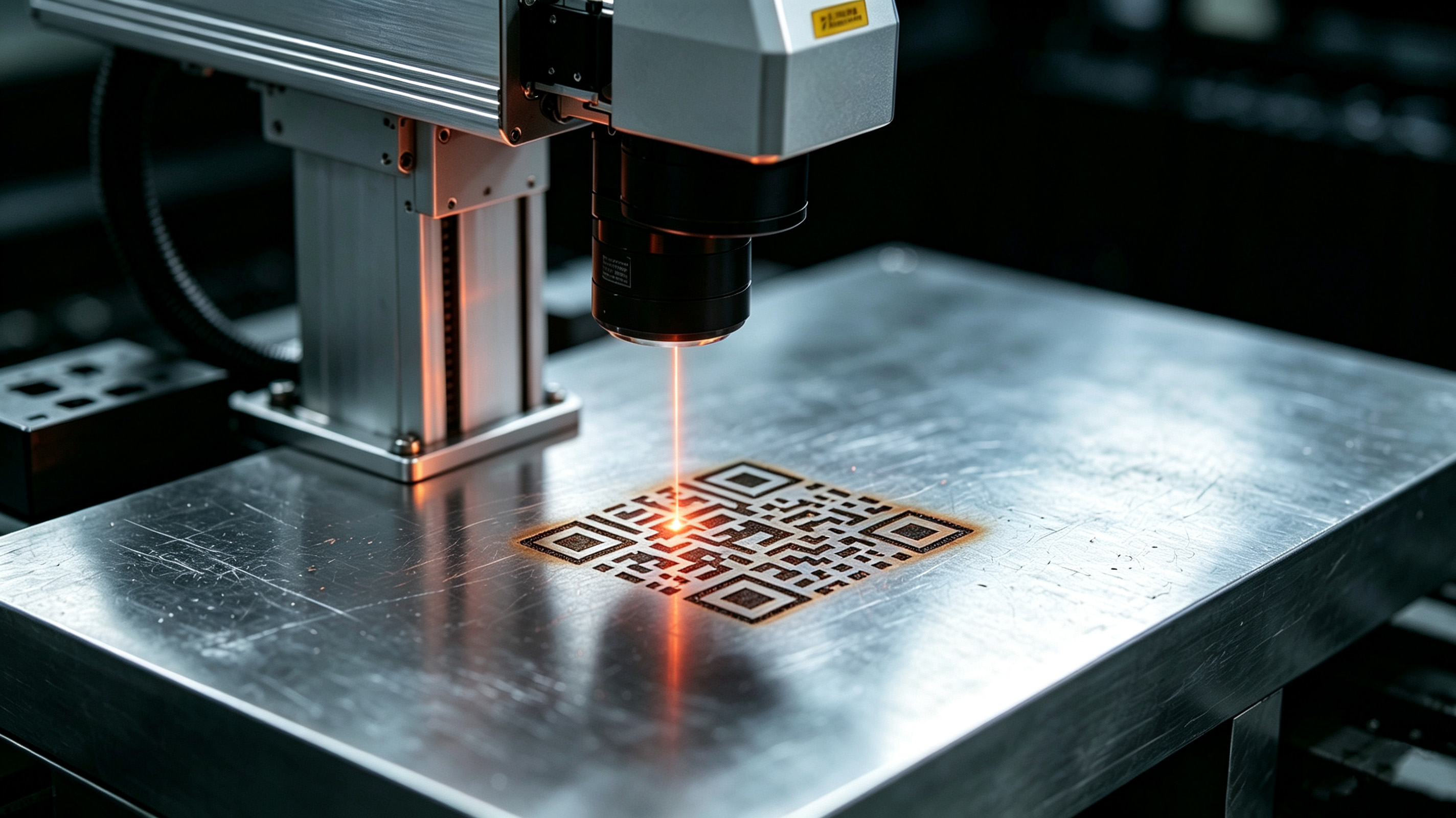
The wood processing industry is rapidly advancing toward intelligent manufacturing and digital workshops. A critical enabler of this transformation is the ability to mark durable, scannable QR codes directly onto wood flooring for quality traceability throughout the production lifecycle. While CO₂ lasers have traditionally been used for wood marking, a recent study published in Optics & Laser Technology demonstrates the significant advantages of UV laser marking for this application. This article explores the key findings on how UV laser marking achieves superior depth, clarity, and precision on wood surfaces, making it a compelling choice for the wood industry.
1. The Shift to UV Laser for Precision Marking
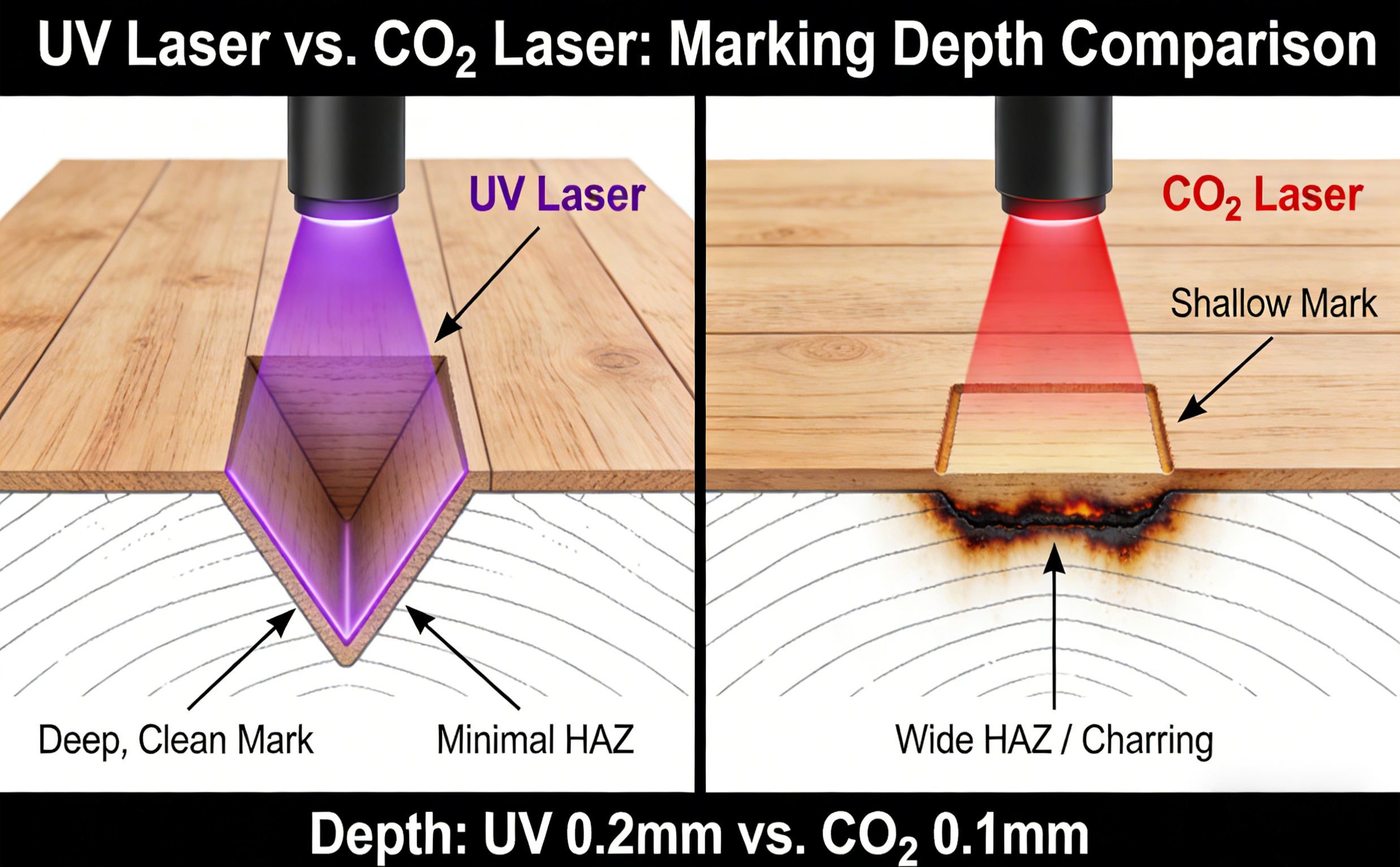
Traditional CO₂ lasers operate at a wavelength of 10.6 μm, which is readily absorbed by wood. However, they produce a relatively large heat-affected zone (HAZ) that can lead to charring and less defined marks. In contrast, UV laser marking utilizes a 355 nm wavelength. The study highlights that UV lasers offer “high accuracy, short wavelength, easy focusing, and easy control of the HAZ.” This makes them particularly suitable for creating small, high-contrast, and clearly defined QR codes essential for automated scanning in production lines. For manufacturers seeking reliable quality traceability, the precision of UV technology offers a clear advantage.
2. Key Parameters for Optimal Marking
The research systematically investigated how laser parameters affect the laser marking depth and quality on two common flooring woods: cherry and teak. The results show that marking speed and line spacing are critical variables. Under optimal UV laser marking conditions (a marking speed of 200–400 mm/s and a line spacing of 0.03 mm), the laser achieved “relatively deep QR code markings with good recognition speed and clarity.” This balance is crucial: sufficient depth ensures the code remains legible after wear, while clarity ensures fast, error-free scanning—both are vital for robust quality traceability systems.
The study also revealed that laser marking depth varies with wood type due to differences in texture and material composition. This finding underscores that process parameters may need slight adjustments for different wood species to achieve consistent results.
3. UV Laser vs. CO₂ Laser: A Comparative Advantage
To validate the feasibility of UV laser marking, the study directly compared it to CO₂ laser marking under equivalent conditions. The findings are revealing. While CO₂ lasers can mark at higher speeds (1000–1600 mm/s), they require higher power and produce shallower marks. For example, on teak at a speed of 2000 mm/s, the CO₂ laser achieved a marking depth as low as 0.1 mm, making the QR code “not easy to be recognized.” Conversely, the UV laser, despite its slower scanning speed, produced deeper, more legible marks with lower power and tighter line spacing. This deeper penetration is key to ensuring the laser marking depth provides long-term durability against wear, a critical factor for flooring products.
4. Industrial Implications for Quality Traceability
The study concludes that UV laser marking is not only feasible for wood flooring but also offers superior performance in terms of precision and depth. The thermal effect of UV laser marking is significantly lower than that of CO₂ lasers, resulting in cleaner marks with minimal surrounding damage. This contributes to a higher-quality finish, which is important for consumer-facing products like wood flooring. For manufacturers, adopting UV laser marking supports the broader goal of achieving intelligent manufacturing by enabling reliable, automated quality traceability from production line to end-user.
The research provides a solid technical foundation for the wood industry to move toward digital workshops. By carefully controlling parameters like speed and line spacing, manufacturers can produce durable, scannable QR codes that withstand the rigors of the production environment and product lifecycle, ensuring that quality traceability is maintained from the first cut to the final installation.
Top 12 Industrial Laser Marking Companies to Watch in 2026
UV Laser Marking: The Smart Way to Label Clear Aligners
Related Article