What Is the Principle of Laser Rust Removal?
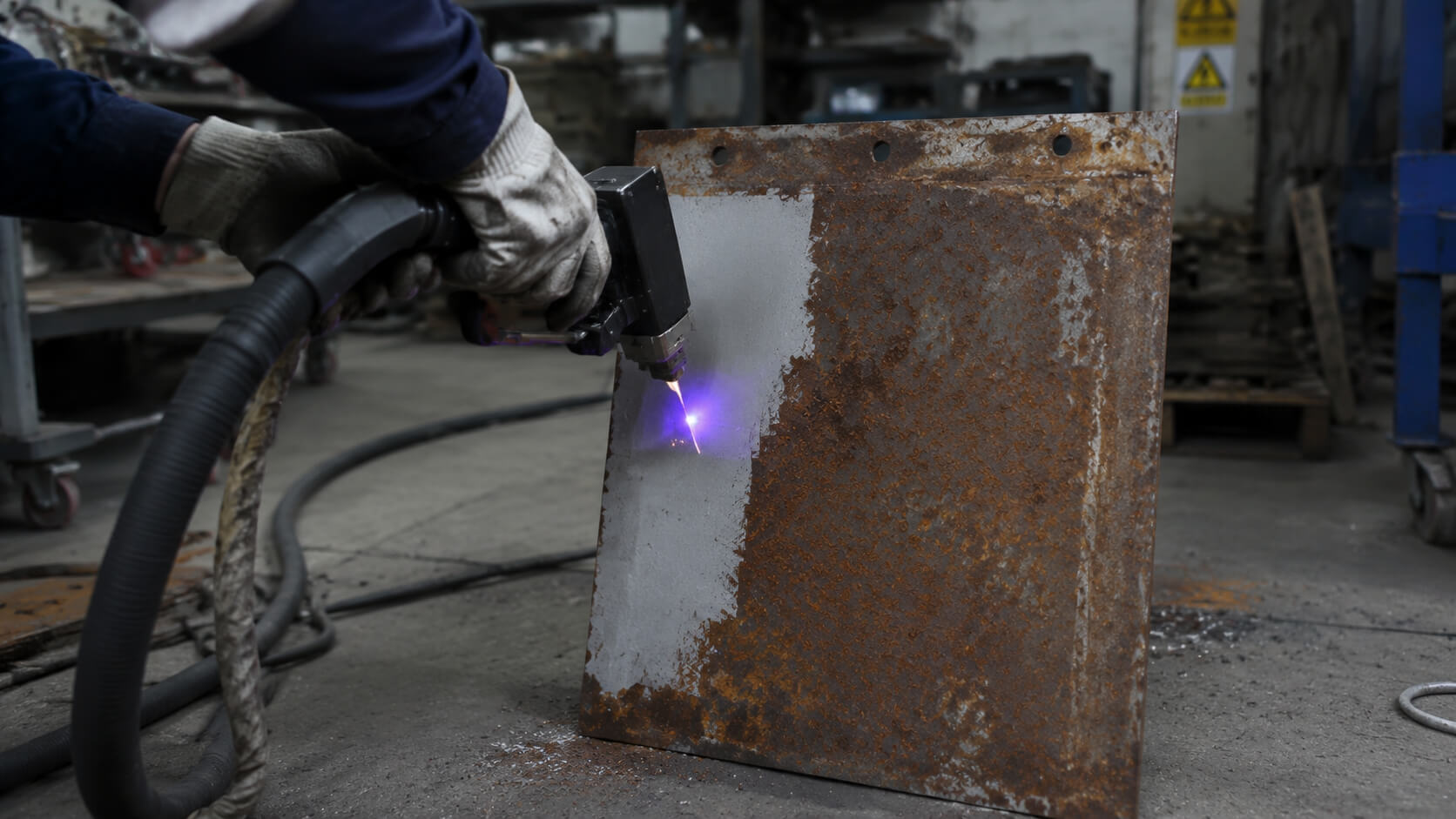
Laser rust removal works by directing a high-energy laser beam onto the rust layer until the corrosion breaks down and disappears. The rust absorbs the laser energy, while the metal beneath reflects most of it. This selective absorption is the key to why laser cleaning is so effective—it removes the contaminant without harming the base material.
1. The Science Behind It: How Laser Rust Removal Actually Works
Let's break down the process step by step.
a. The laser beam hits the rust layer
Every material has something called an ablation threshold—the point at which it begins to break down under laser energy. Rust has a much lower ablation threshold than most metals. When the laser beam is aimed at a rusty surface, the rust absorbs the energy far more readily than the clean steel underneath. The operator sets the laser's energy level to fall between the rust's threshold and the metal's threshold, so only the rust gets removed.
b. High temperatures convert rust into gas and dust
When the rust's temperature exceeds its ablation threshold—typically around 2,000-3,000°C for nanosecond pulses—the contaminant sublimates instantaneously, going directly from solid to gaseous state. The laser doesn't "melt" the rust away; it vaporizes it. This is called ablation—when a solid turns immediately into a gas. The result is a plume of fine dust and vapor that's captured by an attached vacuum system.
c. The metal reflects the beam and stays intact
Here's the clever part. Clean metal reflects most of the laser energy rather than absorbing it. So while the rust layer heats up, vaporizes, and disappears, the underlying steel stays cool and completely undamaged. This selective removal is what makes laser cleaning so precise—it's like having a tool that knows exactly where to stop.
This principle is backed by real research. Studies show that the cleaning mechanism of rust layers is dominated by the ablation effect at lower laser power densities, while a combination of ablation and thermal vibration takes over at higher densities. Either way, the rust goes, and the metal stays.
2. Types of Laser Cleaning Machines for Rust Removal
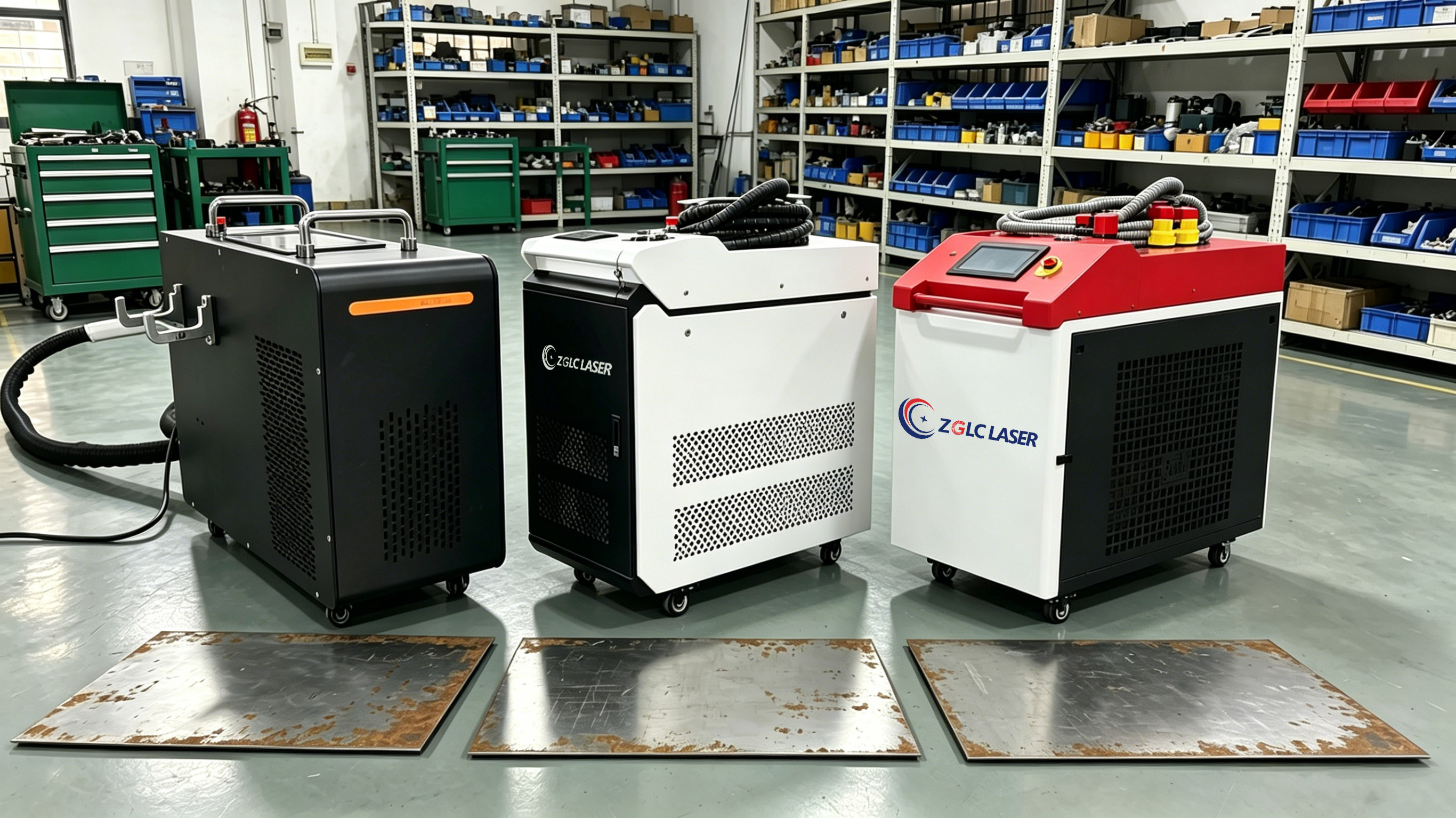
Not all laser cleaning machines are the same. Here are the main types you'll encounter in the latest laser cleaning news and industry discussions.
a. Pulse laser cleaning machine
A pulse laser cleaning machine fires energy in short, high-power bursts—think of it like a sniper rifle. Each pulse lasts only nanoseconds but delivers enormous peak power. Pulsed systems are ideal for high-precision, low-damage applications like cleaning thin metals, molds, or delicate components. They're especially good when you need to preserve the surface integrity of the base material. If you're working with sensitive parts or thin materials, a pulse laser cleaning machine is usually the better choice.
b. Continuous wave (CW) systems
A CW laser delivers a steady, constant stream of energy—more like a machine gun than a sniper rifle. CW systems excel in heavy-duty, high-speed surface treatment. They're ideal for cleaning large areas quickly, especially when dealing with thick rust and heat-tolerant materials where speed drives your bottom line. However, they generally offer less microscopic precision than pulsed systems because the continuous energy creates a more generalized heating effect.
c. Handheld laser cleaning machine
A handheld laser cleaning machine gives you the flexibility to move the cleaning head manually over the surface. These portable systems are becoming increasingly popular in field applications—think shipyards, bridge maintenance, and on-site equipment restoration. According to recent laser cleaning news, handheld units are now available in various power ranges, from 100W to 500W and beyond. They're lightweight, easy to operate, and can be paired with generators for remote locations. If you need mobility and versatility, a handheld laser cleaning machine is worth serious consideration.
d. Automated systems
For production lines and high-volume work, automated laser cleaning systems integrate with robots or CNC tables. These are the heavy hitters—often enclosed in Class 1 safety cabinets and capable of running 24/7. They're ideal for factories that need consistent, repeatable results on thousands of parts.
3. Which Metals Can Be Laser Cleaned?
Laser cleaning is highly effective on a wide range of metals:
-
Steel (carbon steel and stainless steel) – The most common and ideal material for laser cleaning
-
Iron – Works well, especially for heavy industrial components
-
Aluminum and aluminum alloys – Laser cleaning removes oxides without damaging the soft metal beneath
-
Copper and brass – Effective, though reflective metals require careful parameter tuning
-
Titanium – Commonly cleaned in aerospace applications
-
Cast iron – Widely used in industrial cleaning scenarios
Metals have high thermal conductivity and relatively high melting points, making them resistant to damage during the cleaning process. This is why laser cleaning works so well on metal surfaces—the base material simply doesn't absorb enough energy to be affected.
4. Does Laser Rust Removal Really Work? (Real-World Testing)
Where laser cleaning outperforms every other method:
-
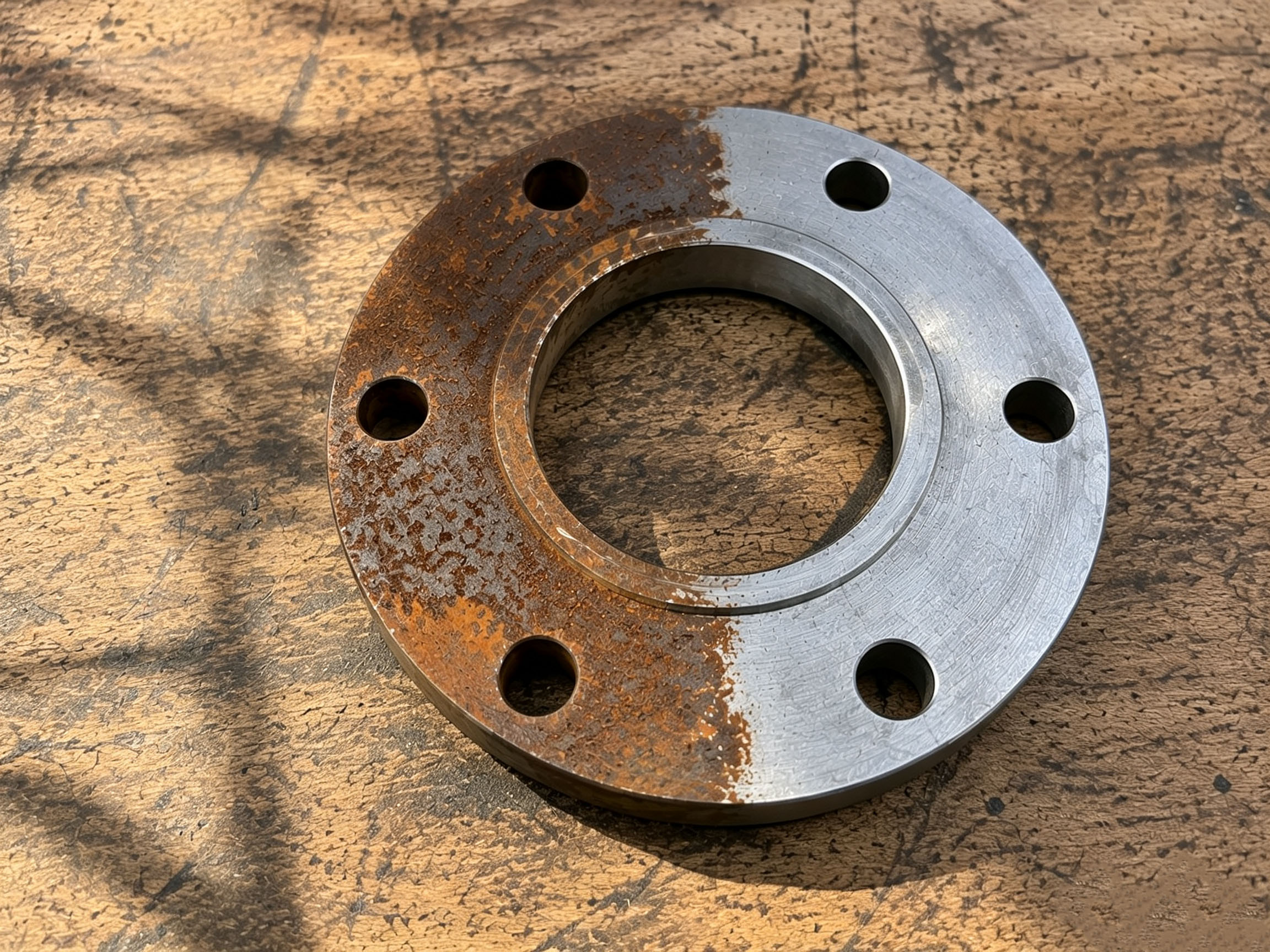
Speed – In one real-world test, a patch with 1 to 2 millimeters of heavy, solid rust vanished after just a couple of clean passes. That's minutes instead of hours.
-
Precision – Laser cleaning exposes cracks and defects rather than filling them with debris, and it does so without damaging the base material. This is critical for inspection and quality control.
-
No secondary waste – No chemicals, no abrasives, no hazardous liquid waste. The only byproduct is a small amount of fine dust, easily captured by vacuum.
-
Environmentally friendly – No toxic fumes, no silica dust, no chemical runoff. Recent laser cleaning news highlights how the technology is disrupting the $46 billion sand and abrasives blasting market.
The limitations:
-
Thick coatings – If the rust layer exceeds about 0.5mm, cost-effectiveness drops dramatically
-
Heavy vs. light rust – Processing speed can differ by 10x on the same machine, depending on the severity of the corrosion
-
Initial investment – The upfront cost is higher than buying chemicals or a sandblaster
A study comparing cleaning methods found that a pulse laser cleaning machine can completely remove rust when the cleaning speed is reduced appropriately. Composite cleaning—combining both pulsed and continuous lasers—yields the best results, with no rust found in the lower layers.
5. How Much Does Laser Rust Removal Cost?
If you're hiring a service provider:
Expect to pay between $250 and $350 per hour for professional laser cleaning services. Many providers price by the day or by the job, so it's worth getting multiple quotes. Mobile services with a van or truck setup add additional costs for transport and generator equipment.
If you're buying equipment:
-
Entry-level handheld units (50W-200W): $2,000 – $8,000
-
Commercial-grade portable systems: $49,000 – $99,000
-
Industrial automated systems: Can exceed $100,000 for high-power, robotic, or integrated setups
Keep in mind that a $6,000 "factory-direct" machine can end up costing $9,500-$14,000 once you factor in shipping, duties, mandatory safety equipment, and electrical setup.
6. Is Laser the Best Rust Remover in the World?
That depends on your definition of "best."
If "best" means fastest and cleanest – Yes. Laser cleaning removes rust in seconds, leaves no residue, and doesn't damage the base metal. Nothing else comes close for precision work.
If "best" means cheapest upfront – No. Chemicals and sandblasting have lower entry costs. But over time, laser cleaning wins because there are no consumables to buy and no waste to dispose of.
If "best" means most versatile – Yes. A single handheld laser cleaning machine can remove rust, paint, oil, oxides, and coatings from steel, aluminum, copper, brass, and titanium. No other method offers that range on a single platform.
According to the latest laser cleaning news, the technology is rapidly being adopted in aerospace, automotive, shipbuilding, and even data center equipment manufacturing. The trend is clear: laser cleaning is becoming the new standard.
7. Should You Use Laser Rust Removal?
Ask yourself these questions:
-
Do you need precision? If you're cleaning delicate parts, thin materials, or components that can't tolerate abrasion, laser is your only choice.
-
Do you care about speed? If you're processing large areas, a CW or high-power pulsed system will save you days of labor.
-
Do you have environmental regulations? Laser cleaning produces no hazardous waste, no toxic fumes, and no chemical runoff. If compliance is a concern, this is the answer.
-
What's your budget? If you can afford the upfront investment, the long-term savings on consumables and waste disposal make laser cleaning more cost-effective over time.
8. Frequently Asked Questions
Q: Will laser cleaning damage the metal underneath?
A: No. The laser is tuned to the rust's ablation threshold, which is lower than the metal's. The base material stays cool and intact.
Q: How fast is laser rust removal?
A: A handheld laser cleaning machine can clean a square meter of light rust in minutes. Heavy rust may take longer, but it's still dramatically faster than grinding or sandblasting.
Q: Do I need special training?
A: Basic training is recommended, but modern systems are user-friendly with preset cleaning modes. Most operators learn the ropes in a few hours.
Q: Can a pulse laser cleaning machine remove paint as well as rust?
A: Yes. Laser cleaning removes rust, paint, oxides, grease, and other contaminants from metal surfaces.
Q: Is laser cleaning safe?
A: Yes, when proper safety equipment (laser safety glasses, enclosures, and fume extraction) is used. Class 1 systems are fully enclosed and safe for factory floors.
Q: What's new in the industry?
A: Recent laser cleaning news shows the technology expanding into aerospace, AI data center manufacturing, and marine applications, with robotic and handheld systems becoming more powerful and affordable.
Conclusion
Laser rust removal works because rust absorbs laser energy while metal reflects it. This selective ablation—removing the contaminant without harming the base material—is what makes the technology so effective. Whether you choose a pulse laser cleaning machine for precision work, a CW system for speed, or a handheld laser cleaning machine for portability, the principle remains the same: targeted energy delivery that vaporizes rust and leaves clean metal behind.
As the latest laser cleaning news shows, this technology is no longer experimental. It's proven, practical, and becoming the new standard for metal surface restoration across industries.
Ready to see laser rust removal in action? Contact ZGLC Laser today for a free demo on your own rusty parts.
Laser How to Clean Metal: The Fastest Way to Remove Rust
Laser Cleaning Machine – The Ultimate Guide for Hong Kong Manufacturers
Related Article