What Is Laser Barcode Marking? Benefits, Applications & Solutions | ZGLC

Laser marking is undoubtedly a versatile and long-lasting technology. But it's not right for every application. Let's take a closer look at how laser barcode marking works, where it excels, and how to decide if it's the right fit for your laboratory.
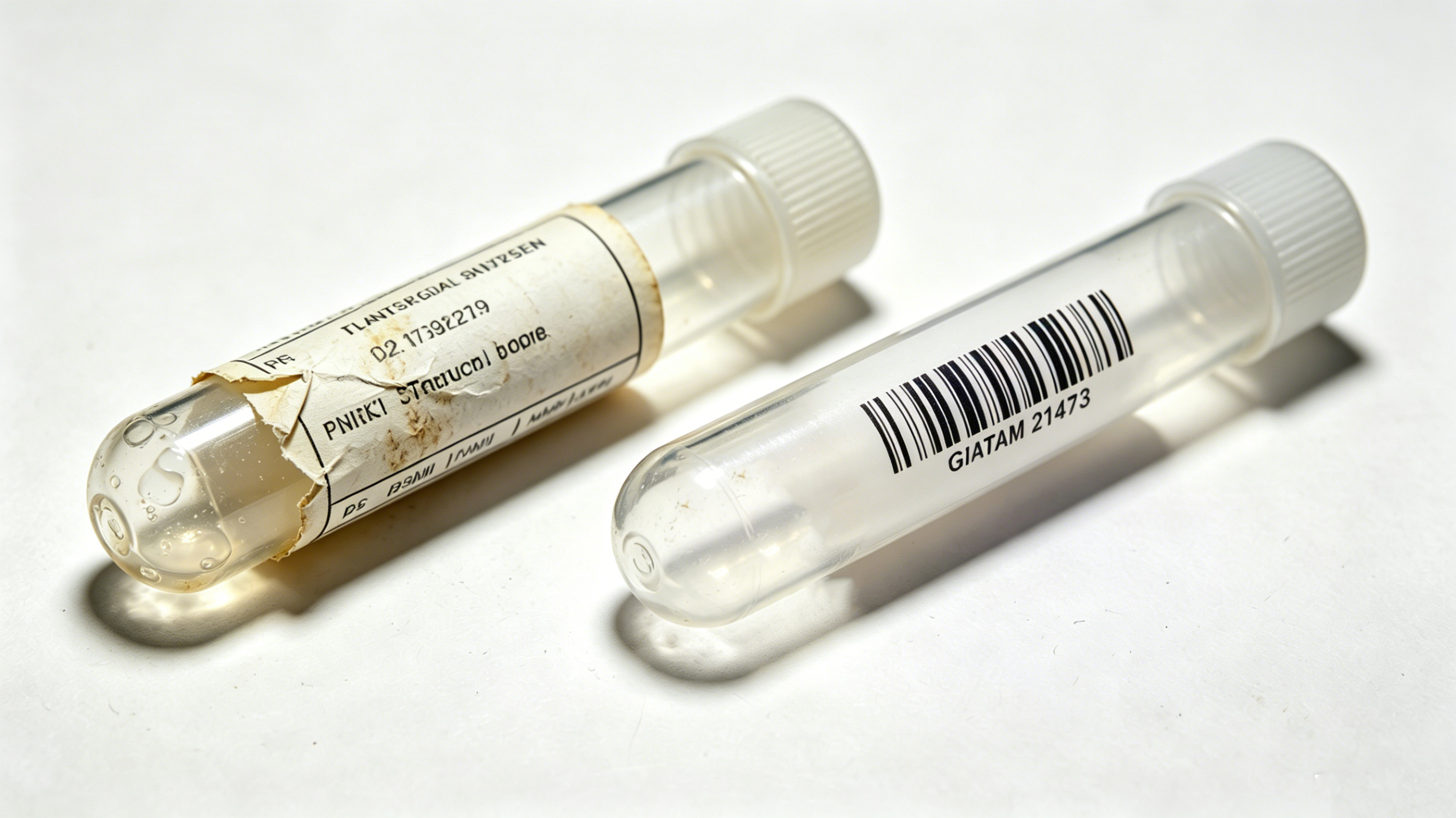
If you've ever dealt with peeling labels, smudged ink, or unreadable barcodes on laboratory samples, you know the frustration. Traditional adhesive labels fail under extreme temperatures, chemicals, and mechanical abrasion. Laser printer bar code marking offers a fundamentally different approach: the mark becomes part of the labware itself. Unlike labels that can peel, fade, or degrade, laser-etched markings resist chemicals, abrasion, and temperatures from -196°C to +100°C, ensuring 100% reliable sample traceability.
How Does Laser Barcode Marking Technology Work?
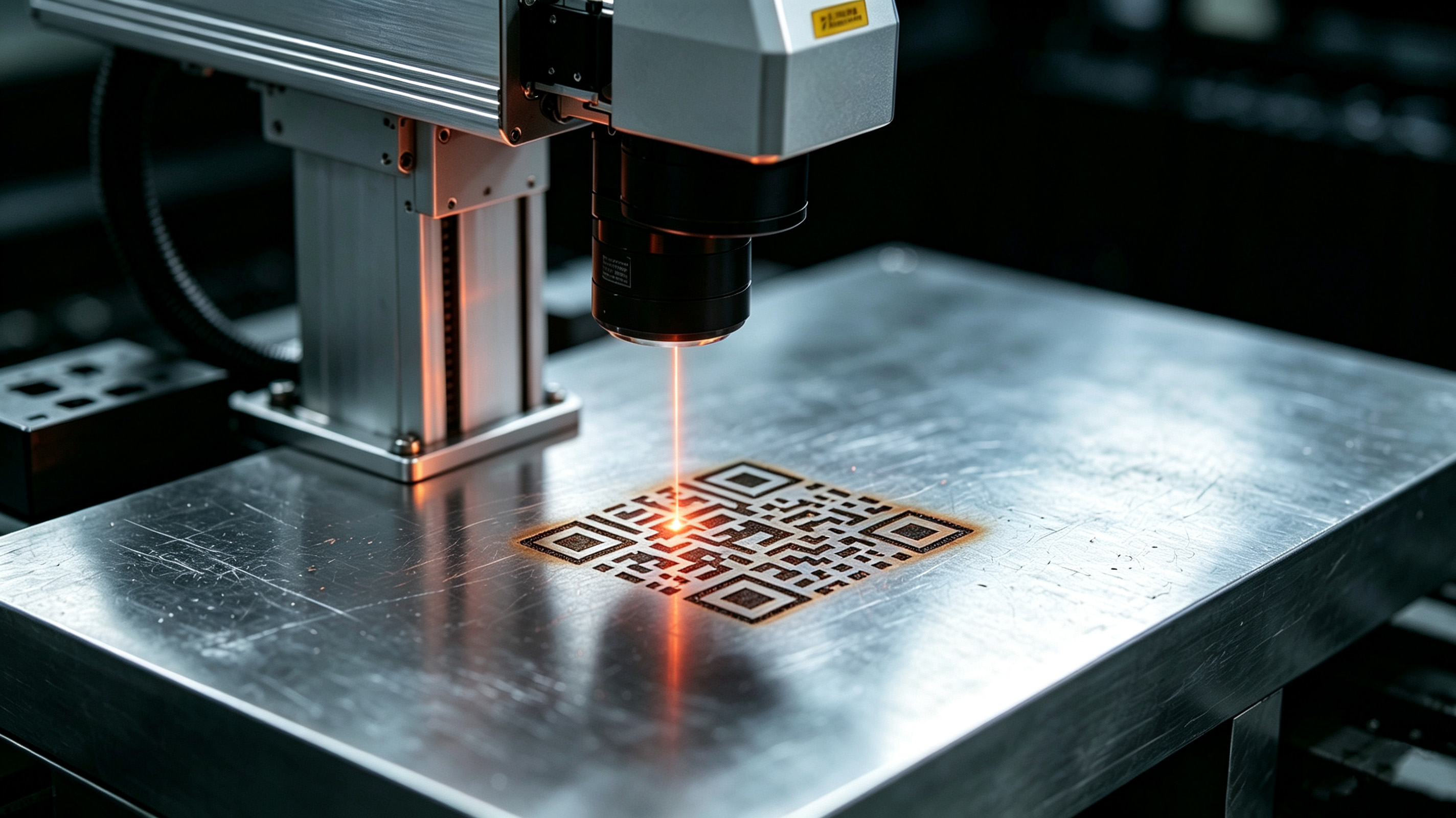
Permanent barcode marking is a non-contact process that uses a focused beam of light to create permanent marks on a material's surface. When the laser beam hits the surface, its energy is transferred as heat, creating marks through surface contrast, melting, or engraving.
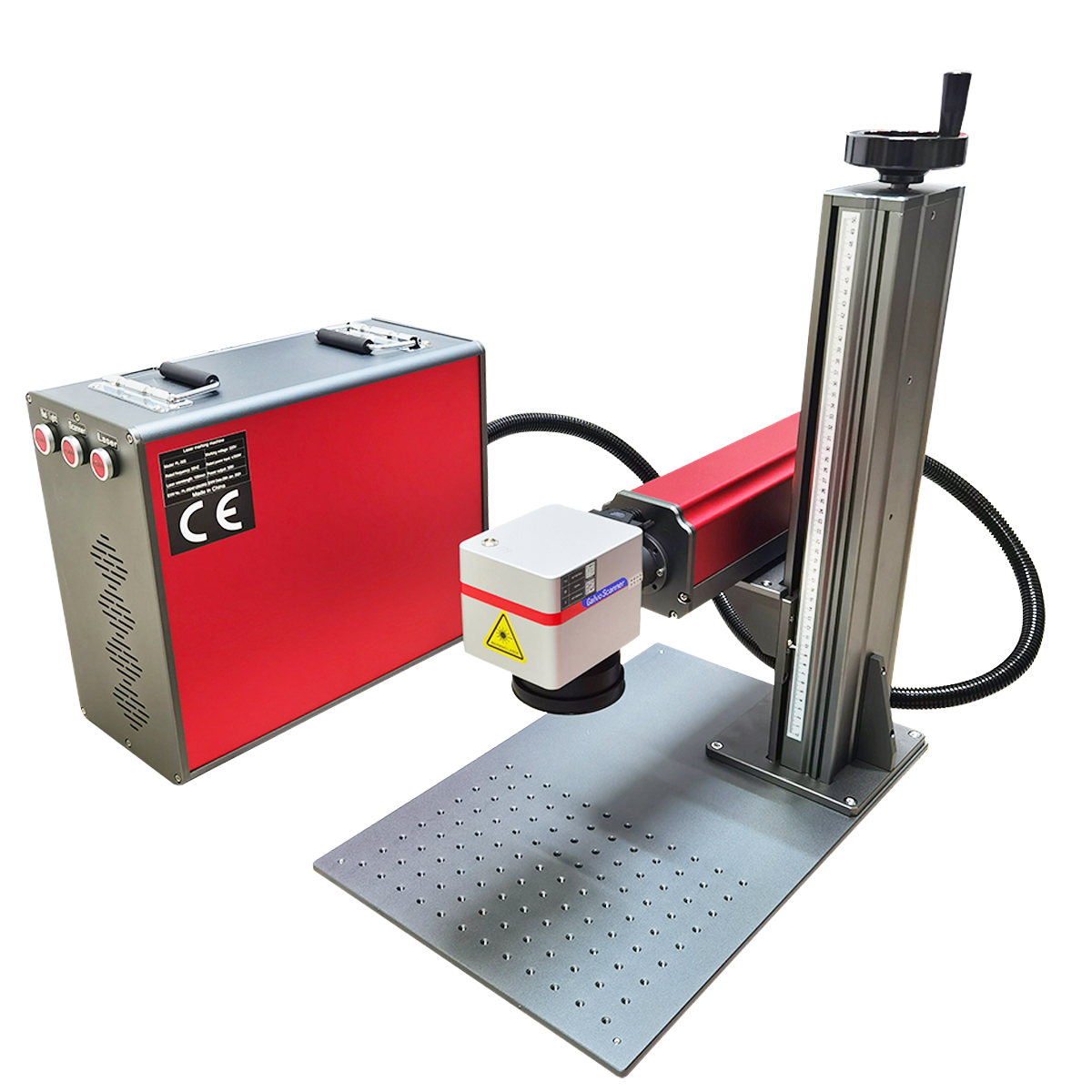
A typical laser marker consists of three main components: a laser source that generates the beam, a scan head containing two mirrors (galvanometers) that move the beam rapidly in X and Y directions, and a focusing lens that concentrates the beam onto the part. The result is a permanent mark that becomes part of the labware itself—not something stuck on top.
Key Advantages of Laser Barcode Marking
| Comparison Aspect | Laser Marking | Inkjet Printing | Adhesive Labels |
| Permanence | Permanent, cannot be erased, becomes part of the material | Fades over time, affected by solvents and abrasion | Peels, degrades, falls off over time |
| Resistance to Chemicals & Temperature | Resists chemicals, extreme temperatures (-196°C to +100°C), and mechanical wear | Poor resistance – ink smudges or dissolves | Poor resistance – labels peel or become brittle |
| Material Compatibility | Works on glass, plastics, metals, ceramics, coated surfaces | Limited to porous or coated surfaces only | Adheres to most surfaces but fails on curved or uneven areas |
| Impact on Tare Weight | No weight added – removes microscopic layer of material | Adds measurable weight from ink and coating | Adds significant weight from label material and adhesive |
| Suitability for Irregular Shapes | Works on tubes, vials, slides, caps, racks – any geometry | Limited to flat or gently curved surfaces | Struggles with curved or uneven surfaces |
| Operating Cost | Very low – no consumables, only electricity | High – ink cartridges, printhead maintenance, solvents | Ongoing cost of labels and application labor |
| Long-Term Reliability | 100% readable for years, even after repeated handling | Prone to fading and smudging over time | Prone to peeling and damage over time |
1. Exceptional Durability
The most compelling reason to choose laser printer bar code marking is durability. Unlike ink or labels that can wear away, laser-etched markings resist water, chemicals, heat, and mechanical wear. They don't smudge, peel, or degrade. Even after years of storage, repeated handling, or exposure to extreme conditions, your sample identifiers remain readable. This durability is built-in: the laser-etched mark is permanent, eliminating label peeling, ink smearing, and other failure modes.
2. Functional Marking on Irregular Shapes
Laser barcode marking can add functional marks to labware of virtually any shape. Unlike flat labels that struggle with curved or uneven surfaces, laser marking works on tubes, vials, microscope slides, caps, and even ANSI/SLAS-format racks. The laser beam can be precisely focused onto complex geometries, making it ideal for the diverse range of labware found in research and clinical settings.
3. Stable Tare Weight Support
For laboratories that rely on precise measurements, laser printer bar code marking offers an important advantage: it doesn't add weight. Unlike adhesive labels that add measurable mass and can affect tare weight, laser marking removes a microscopic layer of material or creates a color change without altering the container's weight. This makes it ideal for applications requiring precise tare-weighted containers.
How to Determine If Laser Barcode Marking Is Right for Your Lab
Laser barcode marking is trusted by laboratories and manufacturers across multiple sectors for permanent sample and product traceability:
| Clinical & Research Labs | Permanent sample IDs on cryo vials, microtubes, microscope slides, and PCR plates – withstands liquid nitrogen and repeated freeze-thaw cycles |
| Medical Devices | UDI (Unique Device Identification) barcodes on surgical instruments, implants, and packaging – sterilizable, biocompatible marks |
| Pharmaceutical | Tamper-evident and track-and-trace coding on vials, ampoules, and blister packs – meets regulatory compliance requirements |
| Electronics & Semiconductors | Micro 2D codes on PCBs, chip casings, and connectors – ultra-fine marking without damaging sensitive components |
| Automotive & Aerospace | Permanent part serialization and VIN codes on components – resistant to heat, oil, and vibration |
| Laser Source Type | Fiber Laser – Best for metals and most plastics. Long lifespan (>100,000 hours), low maintenance. UV Laser – Ideal for "cold marking" on heat-sensitive materials like glass and films, with minimal thermal damage. CO₂ Laser – Suitable for organic materials, wood, paper, and some plastics. |
| Laser Power (Wattage) | 20W – 30W: Fine marking on thin materials, plastics, and small parts. 50W – 100W: General-purpose for most metals, deep engraving, and higher speed. ≥100W: Heavy-duty applications and high-speed inline marking. |
| Marking Speed | Higher speed increases throughput. Industrial systems can reach up to 12,000 mm/s. |
| Marking Area | Standard field sizes range from 110×110 mm to 300×300 mm. Choose based on the size of your samples or parts. |
| Software & Connectivity | Ensure the system supports the barcode symbologies you need (Code 128, Data Matrix, QR, etc.) and can integrate with your existing systems via PLC or Ethernet. |
💡 Not sure which configuration fits your needs? Contact our engineering team for a free sample test and personalized consultation.
Not every laboratory needs laser marking. Here are three key questions to help you decide:
Do you need black-and-white printing?
Laser printer bar code marking typically produces marks in shades of gray, black, or white, depending on the material. If your application requires full-color labels for visual sorting or color-coded identification, traditional labels may still be the better choice. However, for most traceability applications—barcodes, serial numbers, and text—black-and-white marking is perfectly adequate.
Are you interested in outsourcing label production?
If your lab doesn't want to invest in a laser marking system, you can purchase pre-marked labware through laser printer bar code marking services. Many suppliers offer laser-marked tubes, vials, and other consumables with custom barcodes and identifiers. This gives you the benefits of permanent laser marking without the capital investment.
Do you have flexibility in ANSI grade requirements?
Laser marking can achieve ANSI grades from "C" to "A" depending on the material and settings. If your application requires the highest ANSI grade for automated reading systems, you'll need to test your specific material and laser settings. However, many laboratories find that laser-etched barcodes consistently meet their readability requirements.
Procuring Laser-Marked Labware Through Pre-Barcoded Services
If you're not ready to invest in your own laser printer bar code marking system, you can still benefit from the technology. Many suppliers offer pre-barcoded laboratory consumables with permanent laser markings. These services engrave text, logos, 1D barcodes, and 2D Data Matrix codes directly into the surface of labware. The markings become part of the labware itself, eliminating issues such as peeling labels, fading ink, smudging, and relabeling.
These systems are compatible with a wide range of tubes and ANSI/SLAS-format racks. Some automated solutions can process up to 500 tubes per hour while ensuring compatibility, efficiency, and sustainability. Whether you need a manual system for low-volume work or an automated solution for high-throughput processing, laser barcode marking services can meet your needs.
Why Choose ZGLC Laser as Your Marking Solution Partner?
- ✅ Free Sample Testing – Send us your samples, we'll test and show you the results
- ✅ CE & FDA Certified – Meeting international safety and quality standards
- ✅ Global Technical Support – Remote troubleshooting and on-site service available
- ✅ Customized Solutions – We tailor the system to your specific application
Fiber Laser Power Settings to Fix Your Metal Marks Now
What Is Laser Coding? What Are the Features of Laser Coding?
Related Article