Effect of Corrosive Environment on Bonded Joints of Sports EV Load‑Bearing Frame After Laser Cleaning
Introduction
The development of high-performance electric vehicles (EVs) demands innovative lightweight solutions that do not compromise structural integrity. The load-bearing frame of a prototype sports electric vehicle—capable of accelerating from 0–100 km/h in 3.3 seconds—requires aluminum alloy EN AW 2017A (an Al‑Cu alloy) for its high strength-to-weight ratio. However, joining these lightweight components presents a challenge: traditional welding induces hot cracking, making adhesive bonding the preferred alternative. This is where laser cleaning pretreatment becomes critical—it removes surface contaminants and weak oxide layers while preserving substrate integrity. This article examines how corrosive environment exposure affects such bonded joints, based on a systematic study of four specimen groups. Understanding bonded joint durability in corrosive conditions is essential for EV applications, where salt spray from winter road de‑icing presents a real threat. The research adopts laser cleaning pretreatment for all specimens, then evaluates performance under corrosive environment exposure through standardized testing.
Experimental Approach
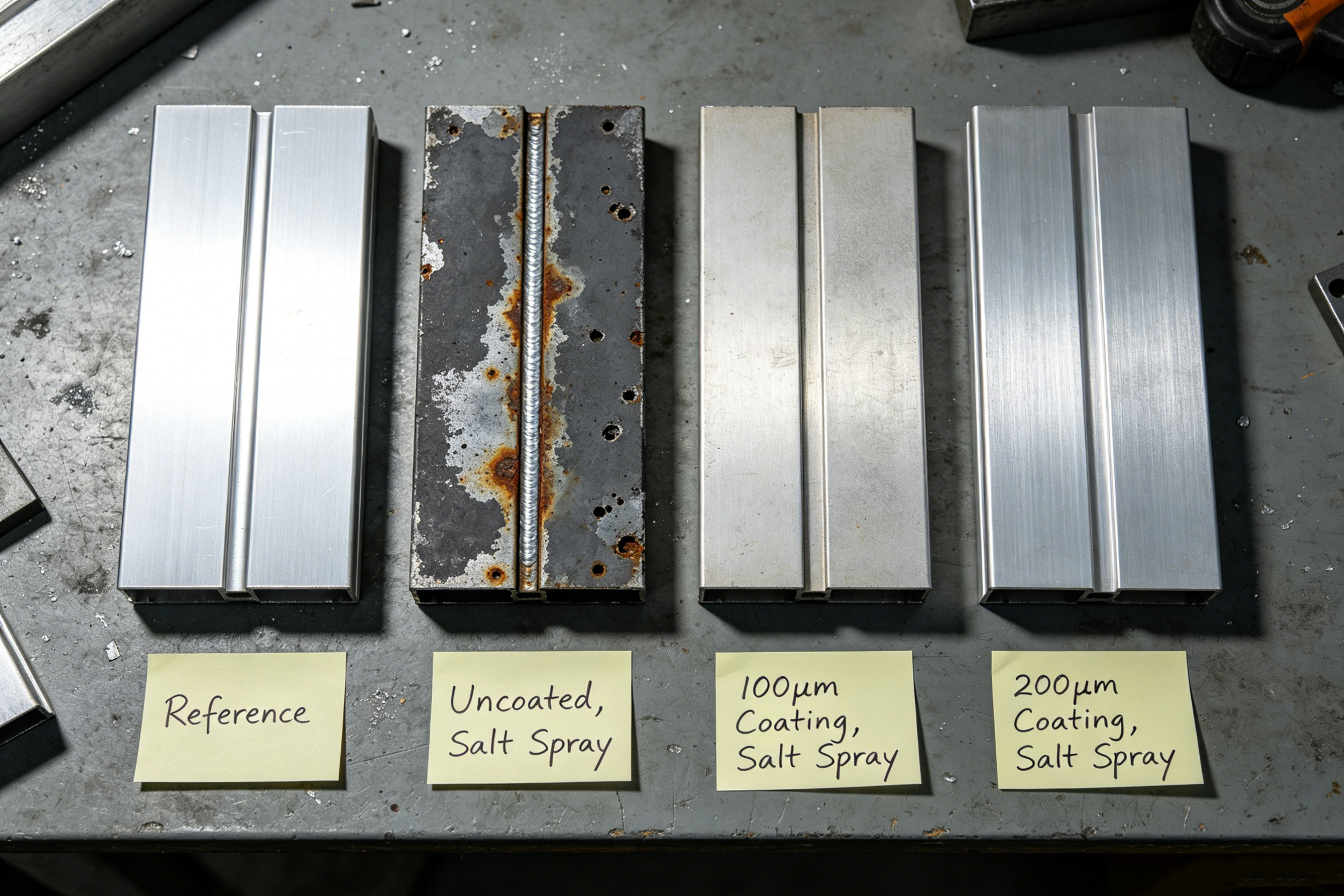
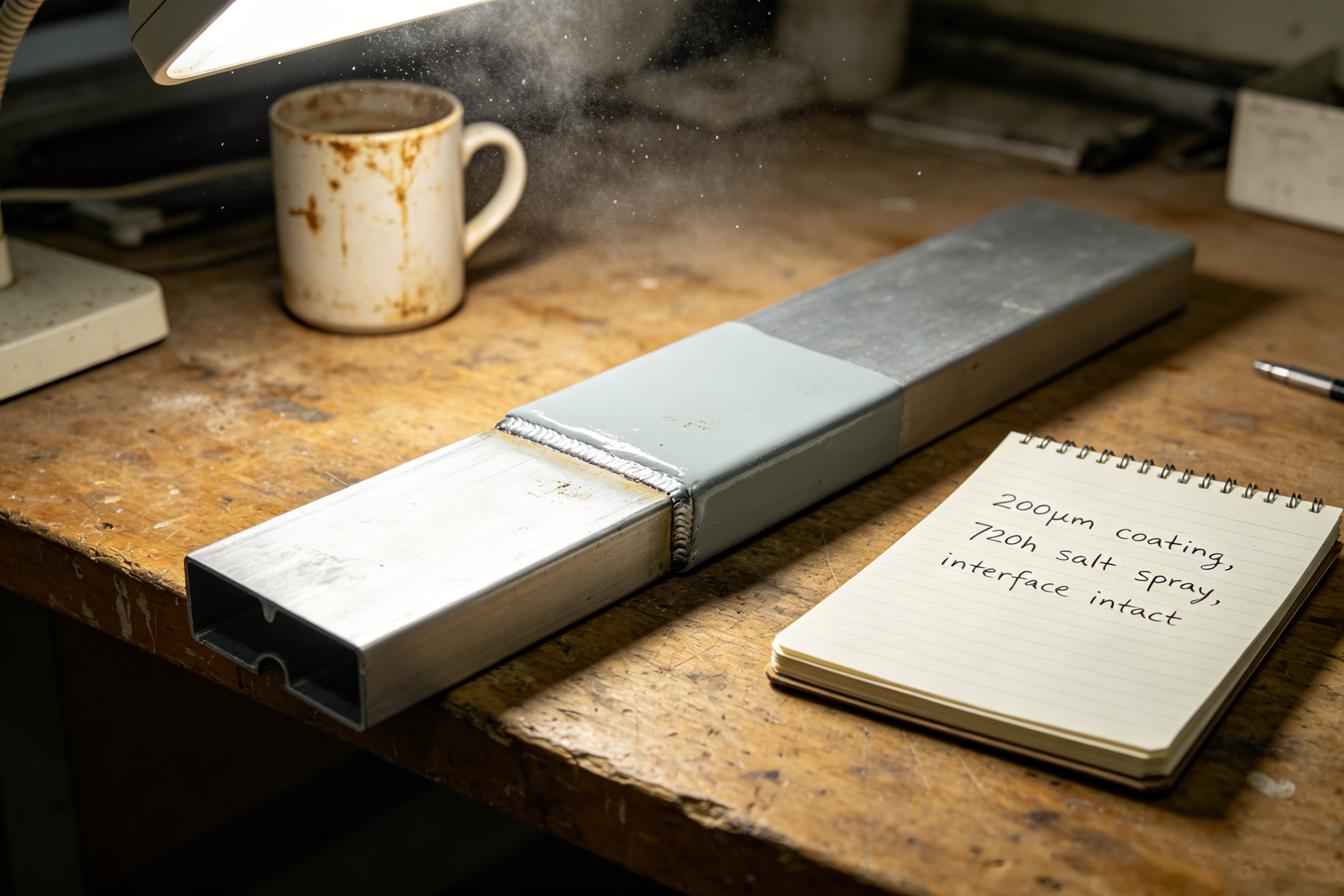
Four specimen sets were prepared from EN AW 2017A aluminum alloy, each subjected to laser cleaning pretreatment before bonding. Laser cleaning pretreatment removed surface contamination and oxide layers from the intended bond areas. Set 1 served as a reference, cured at 21 °C for 30 days without any corrosive environment exposure and without protective coating. Sets 2, 3 and 4 all underwent 720 hours of corrosive environment exposure in a salt spray chamber per ČSN EN ISO 9227, simulating approximately seven years of real-world service. Among these, Set 2 was unprotected, while Sets 3 and 4 were coated with EvoProtect 130 protective layers of 100 μm and 200 μm thickness, respectively. All corrosive environment exposure tests were conducted under identical conditions to ensure comparability. Laser cleaning pretreatment was applied uniformly across all specimens before bonding, enabling isolated assessment of protective coating effectiveness.
Results and Engineering Implications
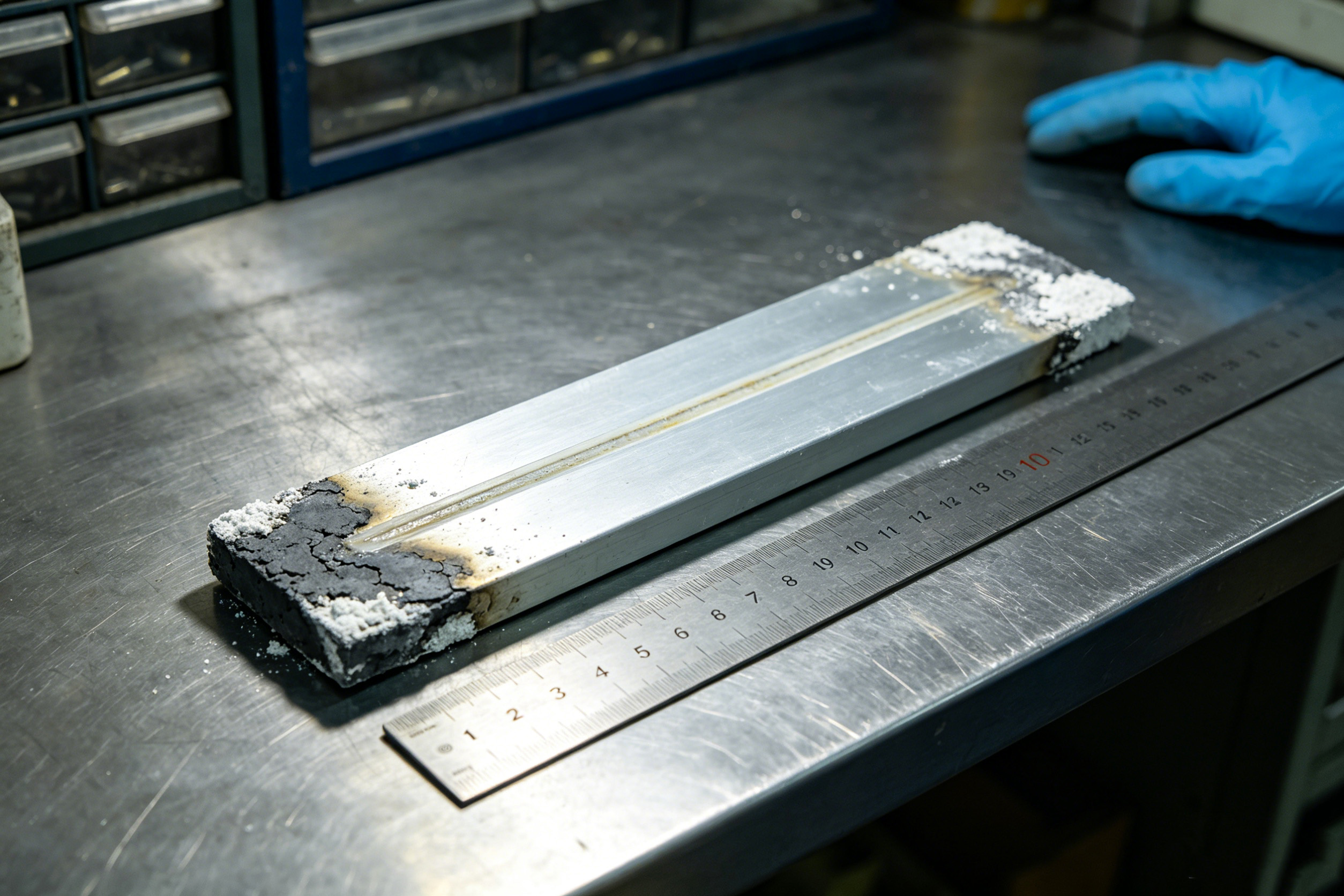
The reference specimens (Set 1, no corrosive environment exposure) achieved an average shear tensile strength of 32.7 MPa. This baseline established the maximum potential bonded joint durability achievable with optimized laser cleaning pretreatment under ideal conditions. However, after 720 h of corrosive environment exposure, the unprotected specimens (Set 2) exhibited an average reduction in shear strength of approximately 30%. Microscopic analysis revealed pronounced corrosion along the aluminum substrate and at the critical adhesive-metal interface, confirming that bonded joint durability in Al‑Cu alloys is severely compromised when corrosive environment exposure occurs without adequate protection. In contrast, specimens protected with 100 μm and 200 μm coatings maintained markedly higher joint strengths, with the 200 μm coating offering superior barrier performance. The adhesive-metal interface remained intact in coated specimens, demonstrating that proper protective systems preserve bonded joint durability even under severe corrosive environment exposure. These findings directly inform the design of sports EV load-bearing frames where laser cleaning pretreatment is essential for initial bond quality, but bonded joint durability over the vehicle’s service life also demands appropriate protective strategies.
Discussion and Future Directions
This study confirms that laser cleaning pretreatment alone does not guarantee long‑term bonded joint durability under corrosive environment exposure. While laser cleaning pretreatment effectively removes oxides and contaminants before bonding, the Al‑Cu alloy’s inherent susceptibility to chloride‑induced corrosion requires additional barrier protection. Quantitative analysis shows that application of a 200 μm protective coating can reduce the corrosion‑induced strength loss from 30% to minimal levels, preserving approximately 90% of original bonded joint durability. The mechanism involves prevention of filiform corrosion propagation along the adhesive-substrate interface, which would otherwise initiate at coating defects or unprotected edges during corrosive environment exposure. For sports EVs operating under harsh winter conditions, a combined approach of laser cleaning pretreatment and appropriate coating thickness is therefore essential.
Wholesale Fiber Laser Cleaning Machine: Power Your Industrial Cleaning Business
Laser Rust Removal on Structural Steel: A Before‑and‑After Case Study
Related Article