Quantitative Evaluation of Laser-Engraved Markings: Human and Machine Readability Under Accelerated Corrosion
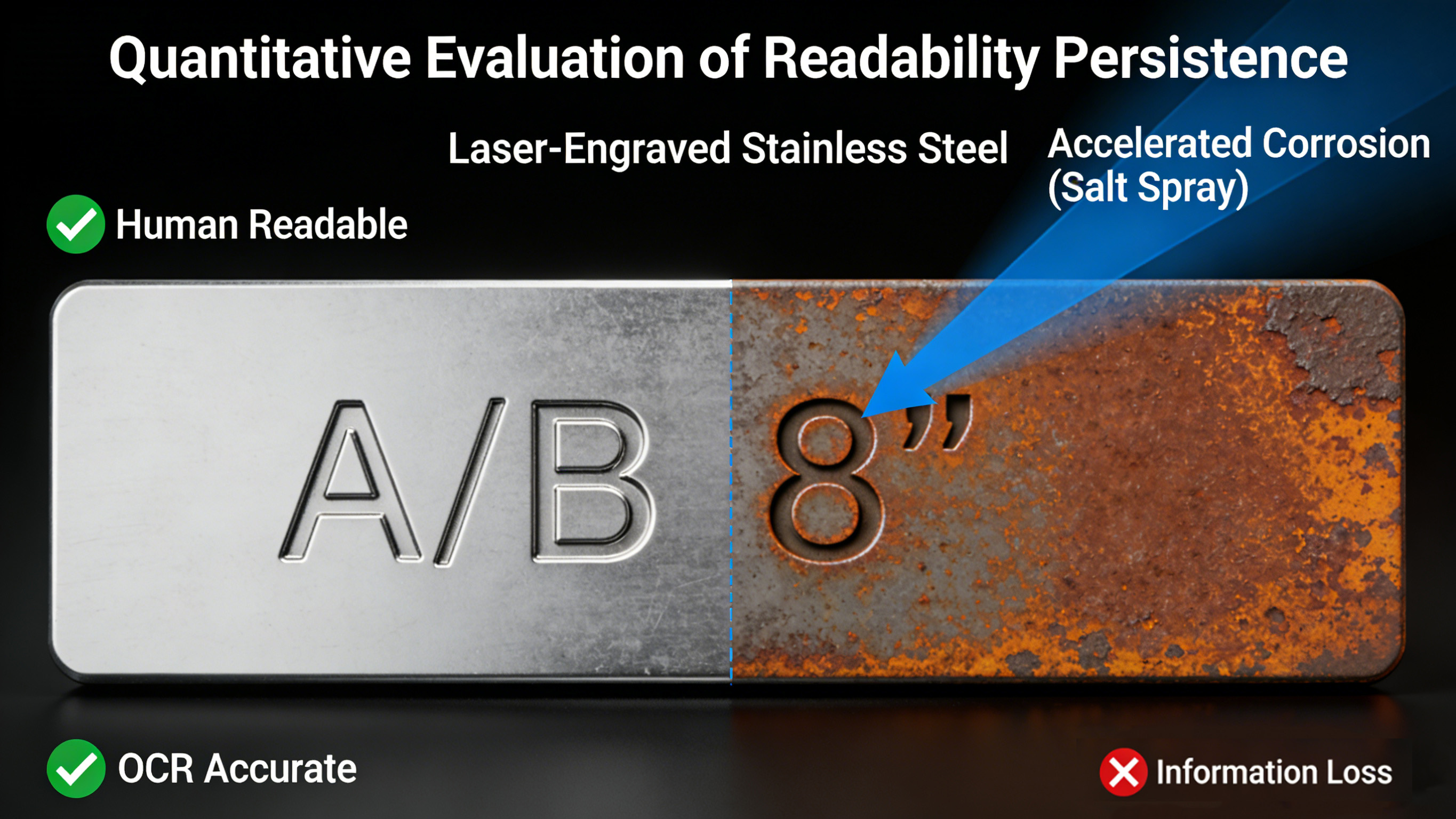
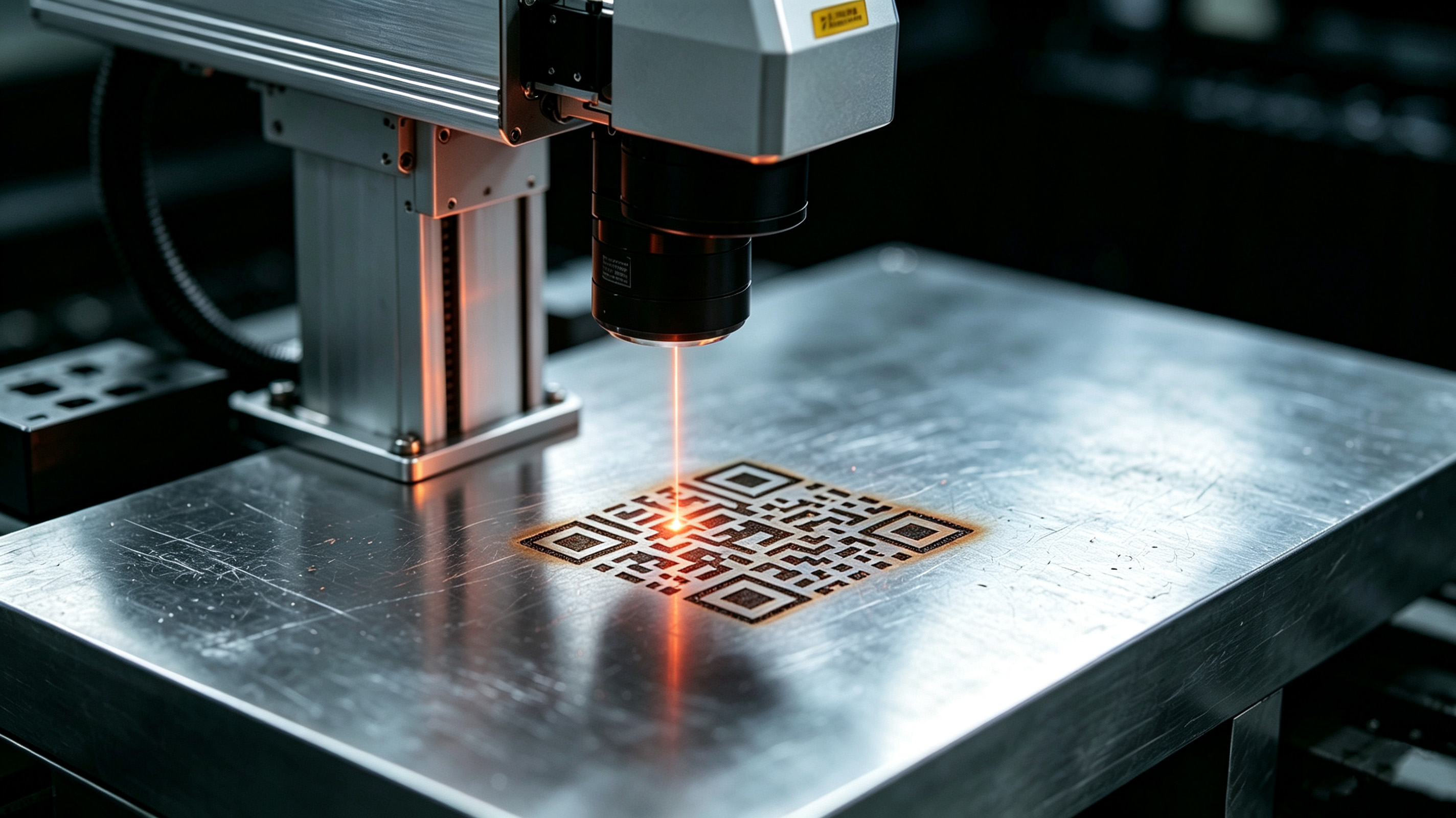
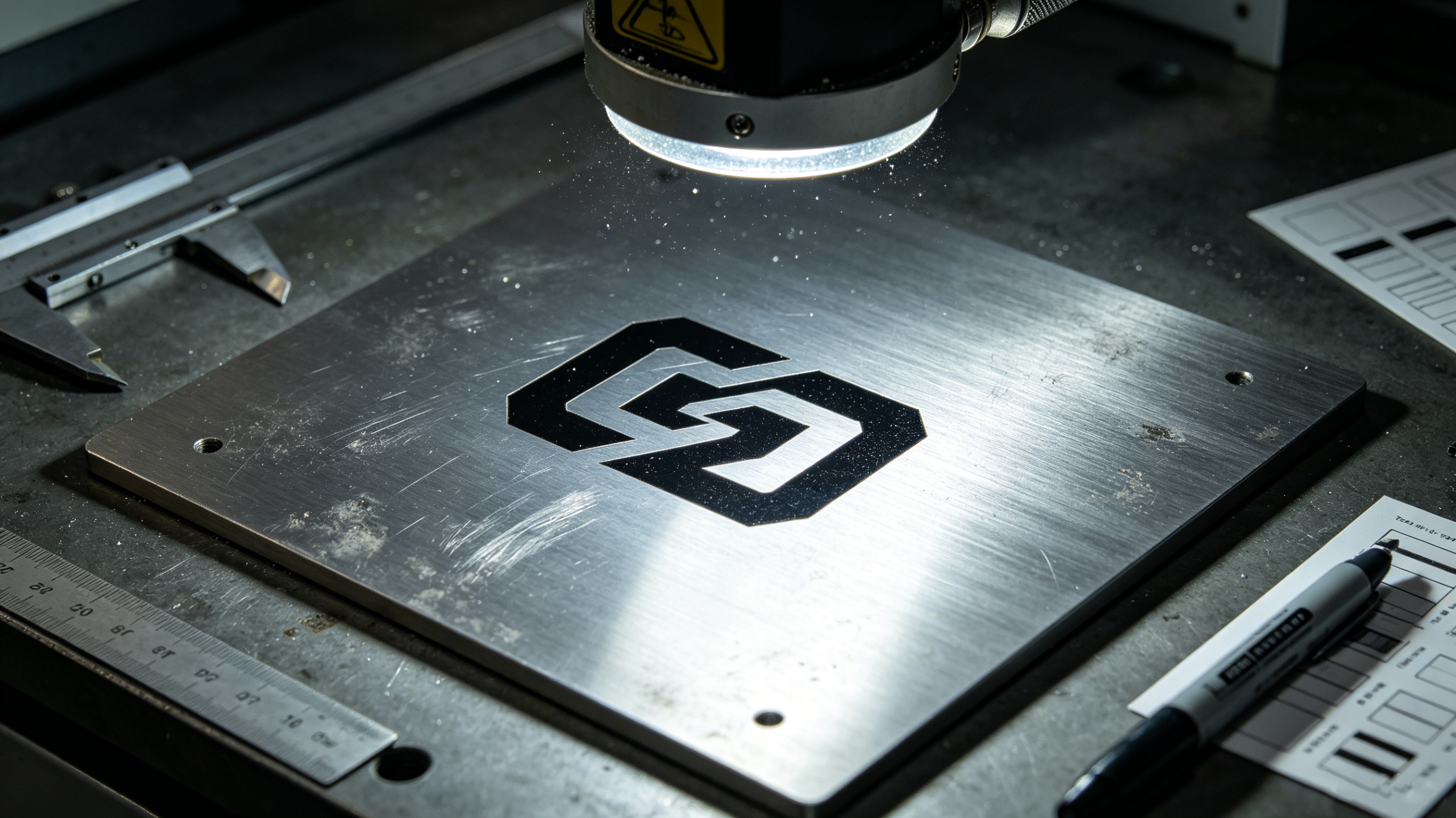
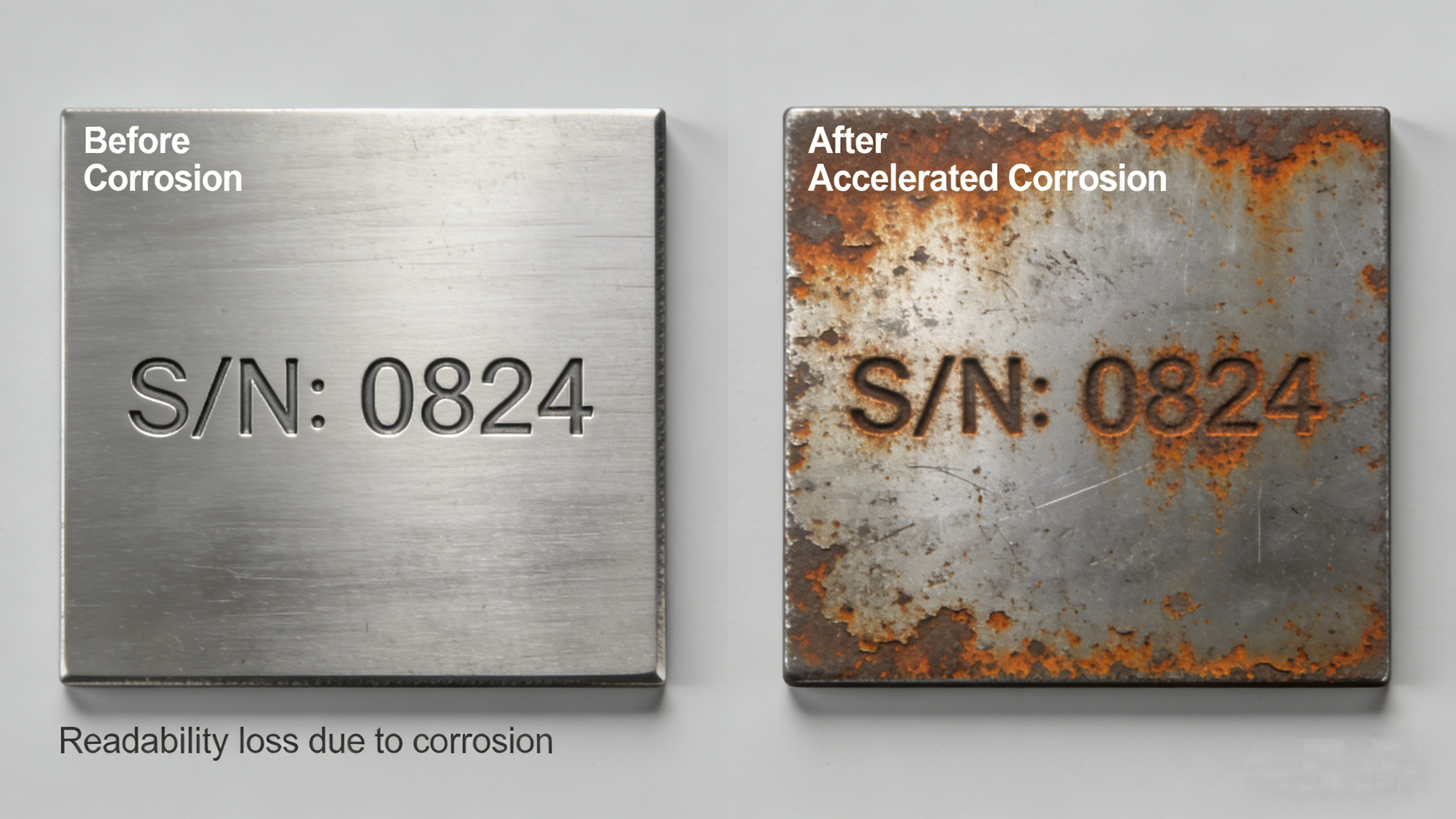
Laser engraving is the gold standard for permanent marking on metallic components in industries like aerospace, steel, and energy, where traceability is critical. However, a significant challenge emerges when these laser engraved markings are exposed to corrosive environments such as humidity or salt spray. Surface degradation can progressively reduce contrast and clarity, leading to information loss for both human inspectors and automated Optical Character Recognition (OCR) systems. A groundbreaking study published in Measurement introduces a dual-channel framework to quantitatively evaluate this decay. This article summarizes the key findings on how typographic design influences the readability persistence of laser engraved markings under accelerated corrosion.
1. A Dual-Channel Framework for Readability Assessment
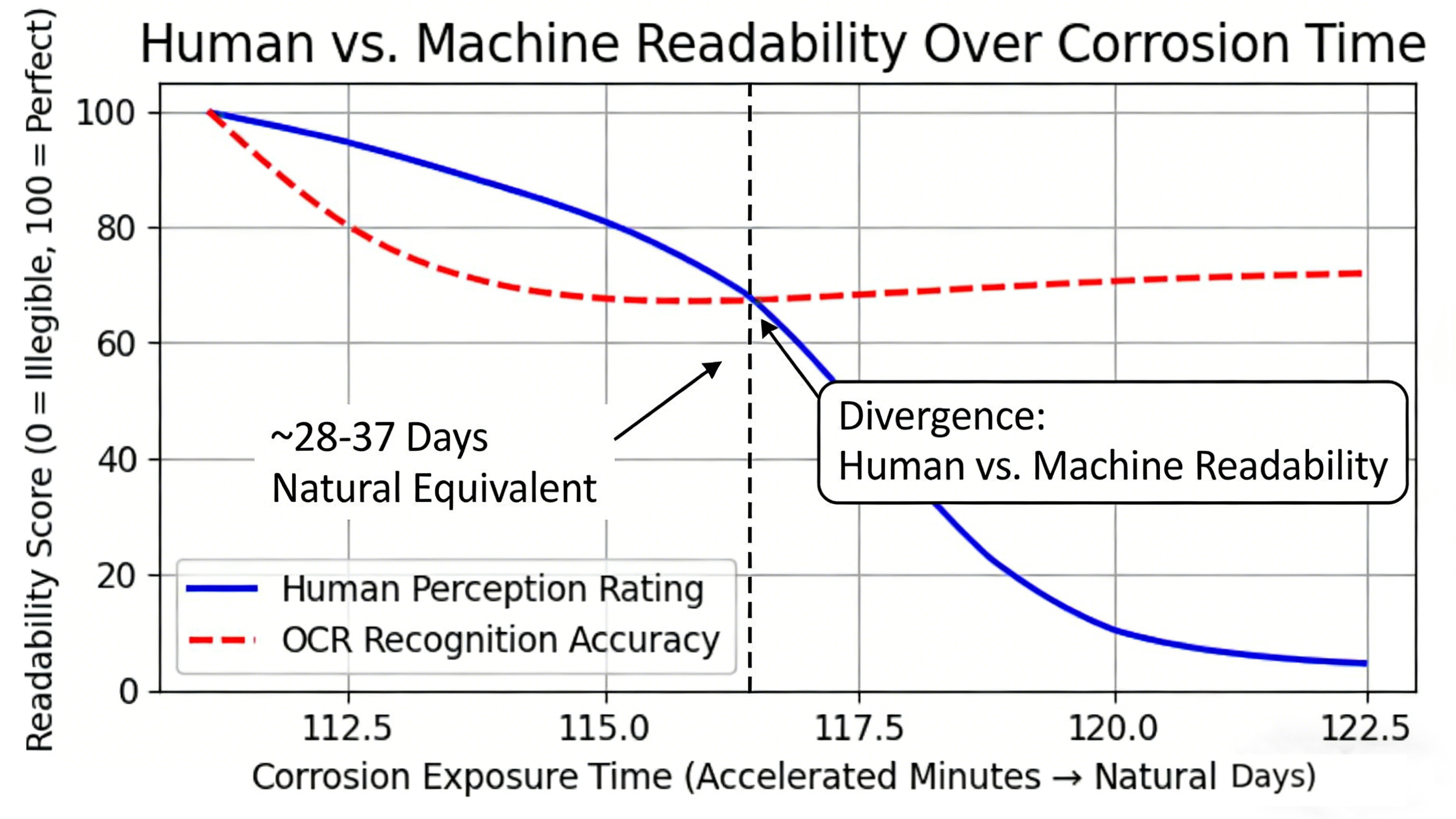
The study’s primary contribution is a novel methodology for the quantitative evaluation of readability loss over time. Researchers exposed laser-engraved stainless steel samples to accelerated corrosion conditions and measured readability at 54 uniform time points. Critically, they used two parallel channels: human perceptual ratings (subjective visual clarity) and OCR accuracy (machine recognition rate). This dual approach revealed that human and machine readability can fail at different rates, a key insight for industries relying on both manual and automated tracking. The framework provides a reproducible way to measure the functional lifetime of laser engraved markings under realistic degradation.
2. The Critical Role of Typographic Geometry
Using a 2×2 factorial design, the study investigated how letter spacing (monospaced vs. proportional) and stroke contrast (low vs. high) affect readability persistence under accelerated corrosion. The results from two-way repeated-measures ANOVA were decisive. Both larger letter spacing and higher stroke contrast significantly delayed readability failure. This means that simply widening the gaps between characters and ensuring a stark difference between the mark and the metal surface can dramatically extend the useful life of the engraving. For engineers specifying laser engraved markings, this offers clear, actionable design guidelines.
3. Corrosion Time Mapping and Practical Implications
A vital practical outcome of this quantitative evaluation is the empirical mapping between accelerated test time and real-world exposure. The study established that 112.5 minutes of accelerated corrosion corresponds approximately to 28–37 days in natural environments. This calibration allows manufacturers to predict the service life of laser-engraved markings with greater confidence. The findings also highlight a divergence in font performance: some fonts maintained high human readability longer but degraded quickly for OCR, and vice versa. The most durable designs balanced both criteria, featuring proportional spacing and high contrast. This underscores that optimizing readability persistence requires considering both human and machine end-users from the design phase.
4. Design Guidelines for Durable Markings
In conclusion, this research transforms the understanding of laser engraved markings in harsh conditions. The quantitative evaluation framework proves that corrosion-induced information loss is not random but is strongly governed by typographic choices. To maximize readability persistence under accelerated corrosion, manufacturers should prioritize higher stroke contrast and larger letter spacing. By adopting these evidence-based design guidelines, industries can significantly reduce the risk of unreadable codes, ensuring robust traceability and quality control throughout a component’s lifecycle.
Laser Barcode Marking: Permanent & High-Speed Solutions | ZGLC Laser
Top 12 Industrial Laser Marking Companies to Watch in 2026
Related Article