Air Cooling Laser vs. Water Cooling Laser
In the laser industry, thermal management is one of the most critical aspects affecting the performance, stability, and service life of laser equipment. Efficient heat dissipation ensures optimal laser operation and processing consistency. The two most common cooling methods are air cooling and water cooling. Each has its unique characteristics and is suited to different types of laser systems and applications.
What is Air Cooling?
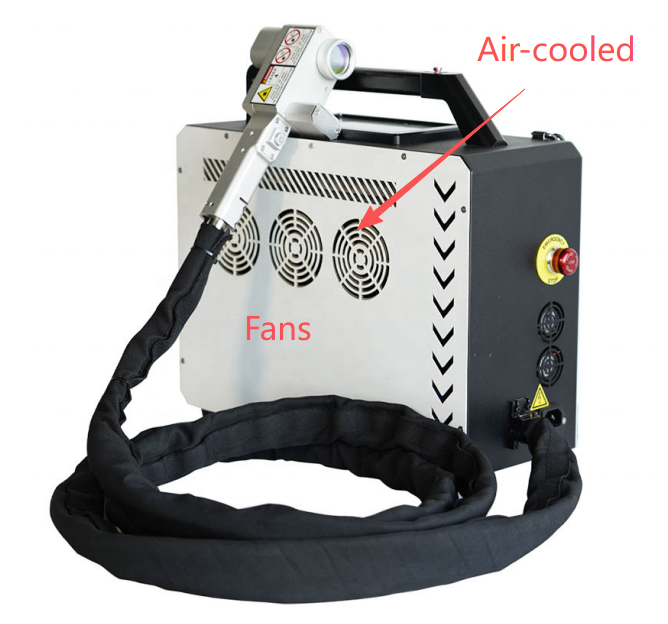
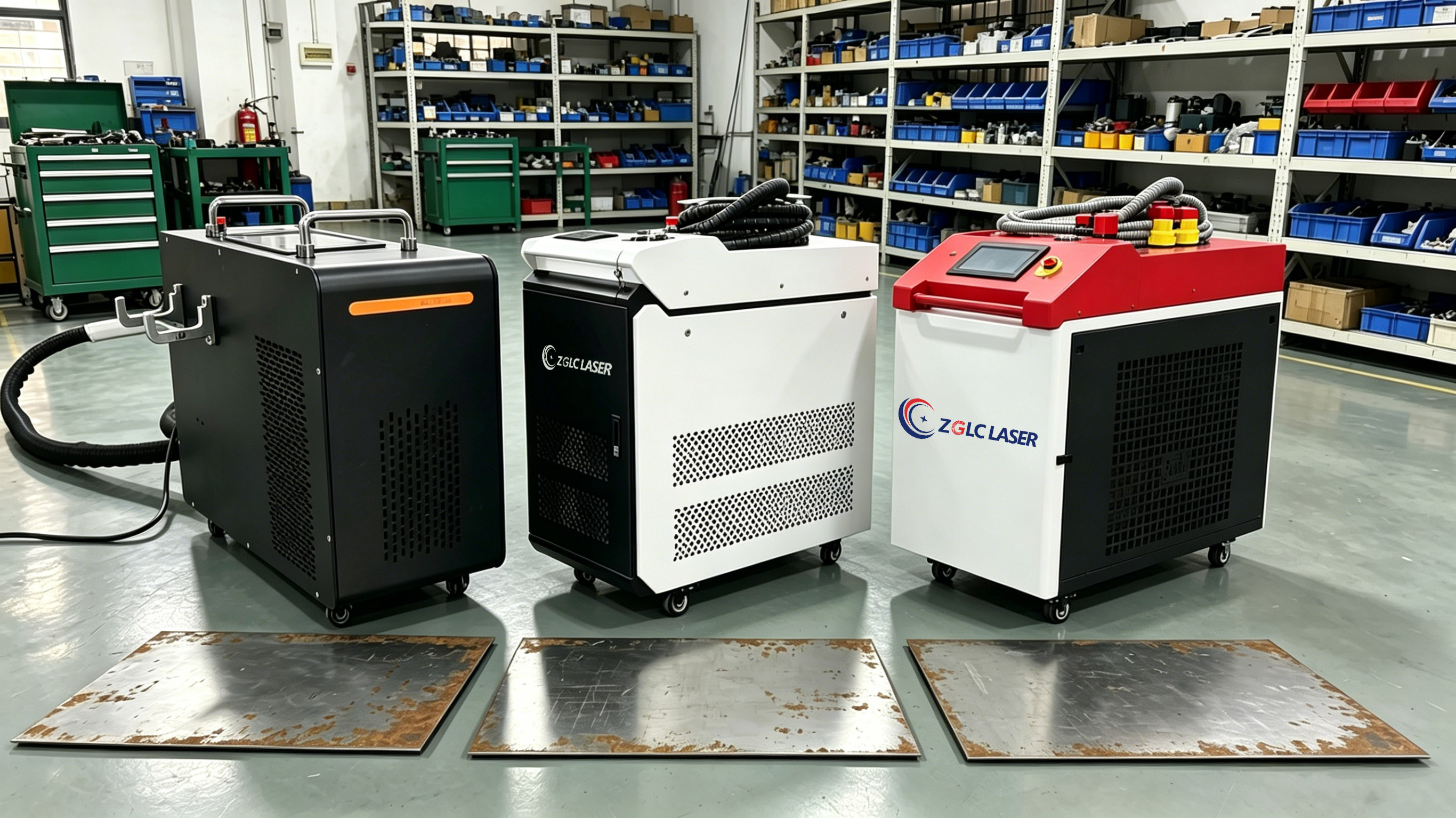
Air cooling relies on fans or blowers to circulate ambient air around the laser generator and key optical components to dissipate heat. This method is simple, self-contained, and does not require external cooling circuits.
Key Features of Air Cooling:
-
Simple structure, easy maintenance: No chillers, water pumps, or tubing; reduced failure points.
-
Low operating costs: No need for coolant or water treatment; energy-efficient.
-
Portability and compact design: Suitable for benchtop or integrated systems.
-
Suitable for stable environments: Ideal for clean, temperature-controlled conditions.
Common Applications:
Air-cooled systems are typically used in low- to medium-power laser equipment:
-
Laser marking and engraving machines (e.g., 20W–100W fiber lasers)
-
Desktop CO₂ laser cutters and engravers
-
Low-power precision welding systems
-
Educational, hobbyist, and prototyping laser devices
What is Water Cooling?
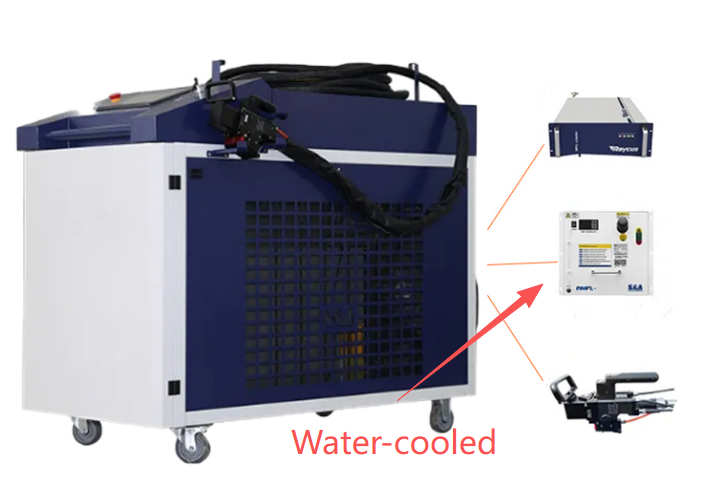
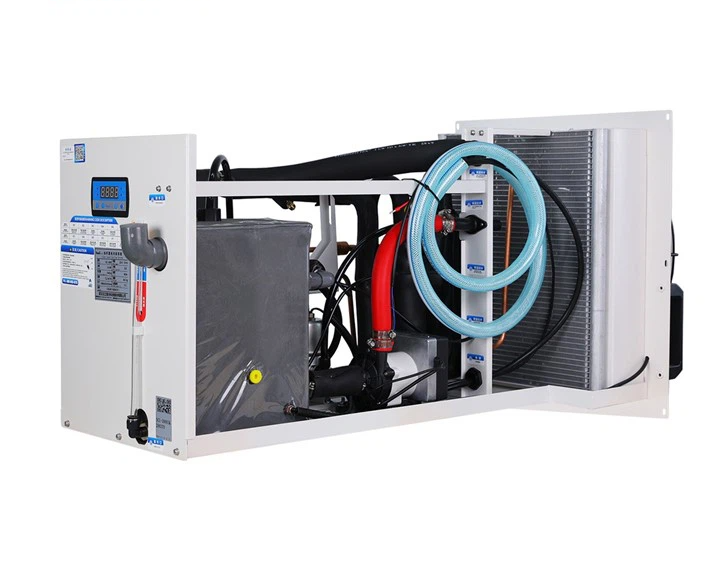
Water cooling uses a closed-loop system where a chunit circulates coolant (usually deionized water or a special fluid) through the laser source and sometimes the optical path. This system offers efficient and stable cooling, making it essential for high-power and high-duty-cycle applications.
Key Features of Water Cooling:
-
Excellent heat dissipation capability: Handles high thermal loads efficiently.
-
Stable temperature control: Maintains laser wavelength and output power stability.
-
Suitable for high-power and continuous operation: Essential for industrial-grade equipment.
-
Extended laser lifespan: Prevents overheating and component degradation.
Common Applications:
Water cooling is widely used in medium- to high-power laser systems:
-
High-power laser cutting machines (e.g., fiber lasers above 1 kW)
-
Precision laser welding and cladding systems
-
Additive manufacturing (metal 3D printing) equipment
-
Medical and aesthetic lasers
-
Scientific and research lasers
Comparison of Air Cooling and Water Cooling
| Feature | Air Cooling | Water Cooling |
|---|---|---|
| Cooling Capacity | Limited, suitable for low heat loads | High, ideal for heavy heat generation |
| Maintenance | Low (occasional fan cleaning) | Higher (coolant replacement, tubing checks) |
| Noise Level | Can be noisy due to fan operation | Relatively quiet (chiller noise is moderate) |
| Installation | Simple, plug-and-play | Requires space and plumbing for chiller |
| Operating Cost | Lower energy consumption | Higher due to chiller power use |
| Environmental Adaptability | Requires clean, cool environments | Performs well in harsh or dusty conditions |
How to Choose the Right Cooling System?
Selecting between air cooling and water cooling depends on your specific application requirements:
-
Choose air cooling if: You need a compact, easy-to-maintain system for low- to medium-power applications such as marking, light engraving, or prototyping.
-
Choose water cooling if: You operate high-power industrial lasers for cutting, welding, or additive manufacturing, especially in environments requiring continuous operation and thermal stability.
Both systems have their place in modern laser processing. While air cooling offers convenience and cost savings for entry-level systems, water cooling delivers unmatched performance and cooling stability for heavy-duty industrial applications.
(Key words:#air cooling laser #water cooling laser #high power #pulse laser)
A Practical Guide: How to Choose a Laser Cleaning Machine?
Why Most Customer Choose Pulse Cleaning Machine 2025?
Related Article