How Automotive Laser Tech is Reshaping Manufacturing
The automotive industry's relentless pursuit of efficiency, safety, and performance has found a powerful ally in laser technology. Moving far beyond simple engraving, advanced laser systems are now fundamental to building modern vehicles. From the airbag that protects you to the frame that surrounds you, lasers are quietly revolutionizing how cars are designed and manufactured. This deep dive explores how automotive laser technology, particularly CO2 lasers, is making manufacturing faster, cleaner, and more innovative.
1. CO2 Lasers and How They’re Used
At the heart of many automotive laser applications lies the CO2 laser. This type of laser generates a beam of infrared light by exciting a gas mixture, primarily carbon dioxide. For decades, it has been the workhorse for industrial processing of non-metallic materials and some metals.
In an automotive context, the key advantage of a CO2 laser is its ability to be precisely focused and delivered via mirrors and lenses, making it ideal for high-speed cutting, welding, and drilling. It’s a versatile and robust technology that excels at processing a wide range of materials found in a car's interior and exterior, from fabrics and plastics to composites and sheet metal. Its reliability and speed have made it a staple on factory floors for everything from tailoring airbags to welding transmission components.
2. Advantages of Automotive Laser Technology
The shift to laser-based processes isn't just about adopting new tools; it's about embracing a new manufacturing philosophy centered on precision and flexibility.
2.1. Less Tooling and Slimmer Parts
Traditional machining often requires custom-designed drills, cutters, and dies—each a significant cost and time investment. A laser beam is a "tool-less" tool. The same laser head can cut a complex shape in fabric one moment and weld a bracket the next, simply by following a new digital instruction file. This eliminates the need for physical tool changes and storage. Furthermore, because a laser doesn't exert physical pressure, it can be used to create incredibly slim and lightweight components. This is critical for weight reduction, a primary goal in improving fuel efficiency and electric vehicle range.
2.2. Innovative Material Mixing
Modern cars are a complex mix of traditional steels, advanced high-strength steels, aluminum, and composites. Welding dissimilar materials together has always been a challenge. Mechanical fasteners like rivets add weight and stress points. Laser welding, however, offers a superior solution. It creates high-strength, lightweight bonds between different metals, enabling engineers to use the right material in the right place without compromise. This "material mixing" leads to vehicle structures that are both lighter and safer.
2.3. Less Material Waste
Traditional blanking and punching operations can be incredibly wasteful, leaving behind a skeleton of scrap metal. Laser cutting is a "nested" process, where parts can be programmed to be cut from a sheet in the most efficient arrangement possible, like a puzzle. This optimization dramatically reduces material waste, lowering raw material costs and contributing to a more sustainable manufacturing process. Every gram of material saved is a direct boost to the bottom line and environmental goals.
3. How Lasers Inspire New Product Processes
Laser technology doesn't just improve existing steps; it unlocks entirely new design and manufacturing possibilities. A prime example is Tailored Blanks. Before lasers, a car door inner might be made from a single gauge of steel. Now, lasers can weld together different grades and thicknesses of steel into a single blank before it's stamped. This allows engineers to put thicker, stronger metal where needed for crash protection and thinner, lighter metal elsewhere, optimizing performance and weight in a way that was previously impossible.
4. Common CO2 Laser Automotive Applications
The theoretical advantages of laser tech become concrete in these widespread automotive applications.
4.1. Types of Airbags
Every airbag must deploy reliably in milliseconds. This requires perfectly sealed seams that can withstand immense pressure until the moment of ignition. CO2 lasers are the preferred method for cutting airbag fabric and welding the seams. The laser creates a clean, fused edge that prevents fraying and delivers a consistent, strong seal far superior to mechanical sewing or knife cutting. This applies to all types of airbags—front, side, and curtain.
4.2. Sealed CO2 Lasers for Carriage Components
For processing metal components in the chassis, engine, or transmission, sealed CO2 lasers are often used. These are rugged, maintenance-free systems where the laser gas is permanently sealed inside the resonator. They are perfectly suited for the harsh environment of an automotive plant, performing high-reliability tasks like welding fuel injectors, drilling precise holes in engine components, and cutting gear components. Their robustness ensures consistent quality over thousands of hours of operation.
4.3. Strengthening Hydroformed Parts
Hydroforming uses high-pressure fluid to shape metal tubes into strong, complex shapes—like engine cradles or A-pillars. These parts are incredibly strong but can be made even stronger with laser technology. Using a 3D laser head, the tube can be precision-cut and have holes drilled after forming, with absolute accuracy. Furthermore, lasers can add strength by creating strategic perforations that act as "crumple zones," controlling how the part deforms in a crash and enhancing overall vehicle safety.
5. How Electric Cars Benefit from Laser Technology
The electric vehicle (EV) revolution is being built on a foundation of laser precision. The demands of EV manufacturing align perfectly with laser capabilities:
-
Battery Manufacturing: Lasers are indispensable for welding the delicate, highly conductive foils inside lithium-ion cells and for welding the entire battery cell casing without creating particles that could cause a short circuit. They also weld the intricate cooling plates within the battery pack.
-
Electric Motor Production: The copper and silicon steel used in motor stators and rotors are highly reflective and difficult to weld with traditional methods. High-power lasers provide the precise, concentrated energy needed to create perfect, reliable welds in these critical components.
-
Weight Reduction: With range being paramount, every kilogram matters in an EV. The ability of lasers to enable "slimmer parts" and "innovative material mixing" is even more critical here, directly extending the vehicle's driving distance per charge.
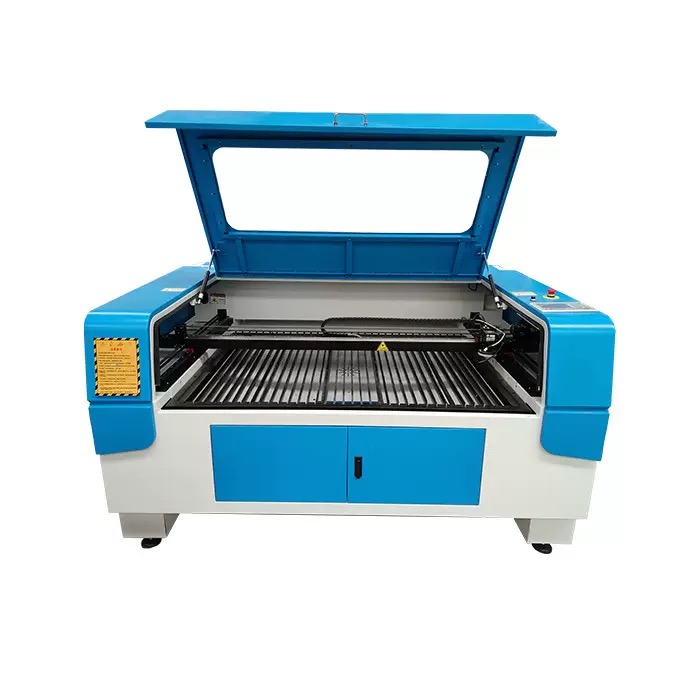
What We Should to Know About CO2 Laser Cutter