Robotic Arms in Manufacturing- How They Can Be Used

Industrial robotic arms have become the backbone of modern manufacturing, driving efficiency, precision, and automation across countless industries. These sophisticated machines, developed by several key global leaders, are programmed to perform repetitive, dangerous, or highly precise tasks with superhuman consistency. Their application is transforming production lines worldwide.
Leading Manufacturers in the Robotic Arm Industry
While many companies produce robotic arms, a few have established themselves as global pioneers:
1. FANUC (Japan): A global powerhouse, FANUC is renowned for its robust, reliable, and high-speed robots. Their distinctive yellow arms are a common sight in factories worldwide. FANUC offers an extensive range, from small collaborative robots (cobots) to massive arms capable of lifting over a ton.

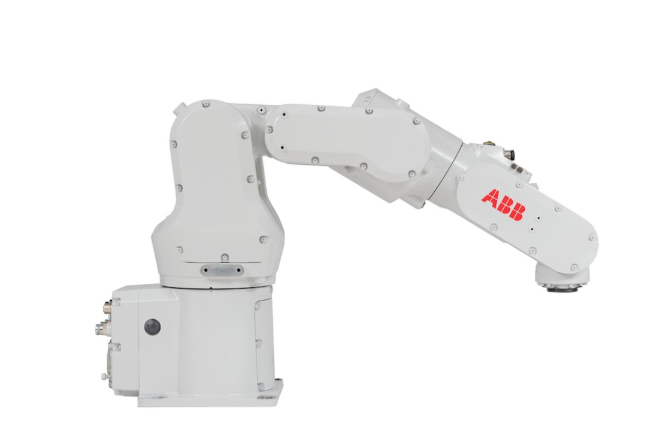
2. ABB (Switzerland-Sweden): ABB is a leader in automation technology, providing a comprehensive portfolio of robotic solutions. They are particularly recognized for their YuMi® collaborative robot series and their expertise in precision applications like arc welding and dispensing.
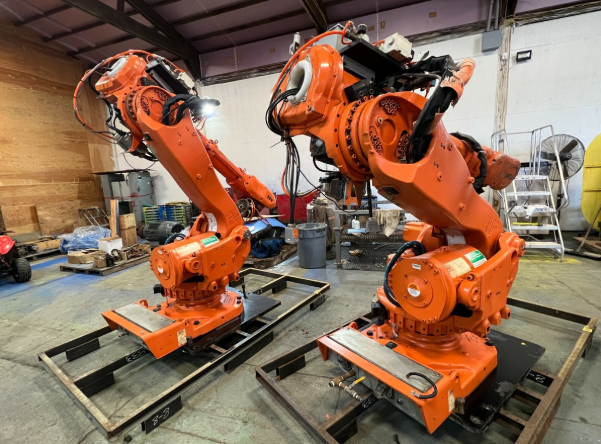
3. KUKA (Germany): Known for their orange robots, KUKA specializes in high-performance arms with exceptional flexibility and a large range of motion. They are heavily utilized in the automotive industry for tasks like body-in-white assembly and spot welding.

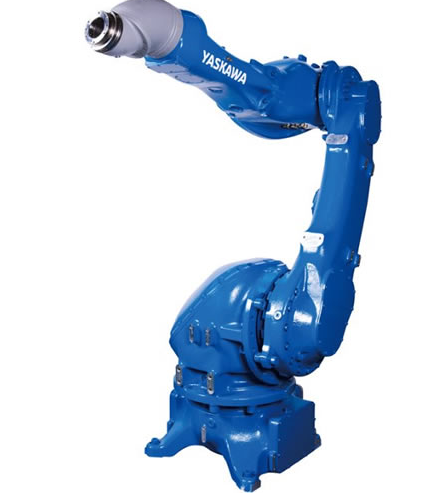
4. Yaskawa (Japan): Another Japanese giant, Yaskawa (under the Motoman brand) is one of the world's largest robotic companies. They are famous for their versatile product range and dual-arm robots that mimic human movements for complex assembly tasks.
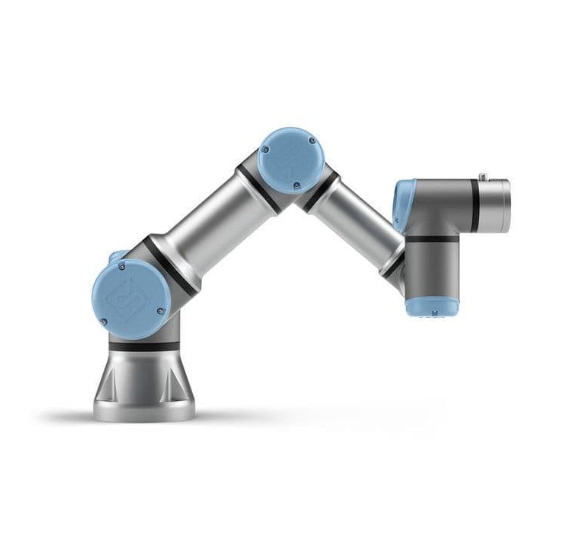
5. Universal Robots (Denmark): This company revolutionized the industry by pioneering user-friendly collaborative robots (cobots). UR's arms are designed to work safely alongside human workers without extensive safety caging, making automation accessible to small and medium-sized enterprises (SMEs).
How Robotic Arms Are Applied in Key Manufacturing Sectors
The versatility of robotic arms allows them to be adapted for a vast array of tasks. Here’s how they are applied in some of the biggest manufacturing sectors:
1. Automotive Manufacturing
The automotive industry was one of the first and remains the largest adopter of robotic technology. Applications are diverse:
-
Welding: Robotic arms perform the majority of spot welding and arc welding on a vehicle's body (body-in-white). They ensure every weld is perfectly placed, strong, and consistent, which is critical for structural integrity.
-
Painting and Coating: Robots provide a uniform, high-quality paint finish without any imperfections like drips or streaks. They operate in hazardous environments, protecting human workers from exposure to toxic fumes.
-
Assembly: Robots precisely install interior components like windows, dashboards, and seats, as well as external parts like wheels and lights, with immense speed and accuracy.
2. Electronics and Semiconductor Manufacturing
This industry demands extreme precision and a cleanroom environment, which is ideal for robotics.
-
Pick-and-Place: High-speed SCARA (Selective Compliance Articulated Robot Arm) robots are exceptionally fast and precise at picking up tiny components like microchips and capacitors and placing them onto circuit boards with microscopic accuracy.
-
Testing and Inspection: Equipped with advanced vision systems, robotic arms can scan circuit boards for defects, test functionality, and ensure product quality at a speed impossible for humans.
-
Handling Delicate Materials: Robots gently handle fragile silicon wafers and displays throughout the production process, minimizing breakage and contamination.
3. Metal Fabrication and Machining
Robots are indispensable in metalworking for their strength and endurance.
-
Machine Tending: This is a classic application where a robot's job is to load raw metal blanks into a CNC machine and unload the finished parts. This automates a monotonous and potentially dangerous job, allowing the CNC machine to run unattended for longer periods.
-
Cutting and Grinding: Robots equipped with plasma, laser, or waterjet cutters can cut complex shapes from metal sheets. Similarly, they can perform grinding and deburring tasks, applying consistent pressure to smooth rough edges on cast parts.
4. Food and Beverage Industry
In food processing, robots enhance both speed and hygiene.
-
Packaging and Palletizing: Robotic arms are experts at picking finished products from a conveyor belt and packing them into boxes, which are then stacked onto pallets for shipping. This is a physically demanding task that robots can perform tirelessly.
-
Butchery and Processing: Advanced vision-guided robots can precisely cut meat portions, increasing yield and consistency while improving hygiene by reducing human contact.
5. Pharmaceuticals and Medical Devices
In these highly regulated industries, robots ensure sterility and precision.
-
Laboratory Automation: Robots automate the process of moving samples between test tubes, petri dishes, and analytical instruments, increasing throughput and reducing the risk of human error in research and diagnostics.
-
Sterile Assembly: In cleanrooms, robotic arms assemble sensitive medical devices like pacemakers and insulin pumps, ensuring a contaminant-free production process.
The Future is Automated
The application of robotic arms in manufacturing is a key driver of the Fourth Industrial Revolution (Industry 4.0). By performing tasks with unmatched speed, quality, and reliability, they allow companies to remain competitive in a global market. From the massive arms building cars to the delicate arms assembling smartphones, robotic technology continues to redefine the possibilities of modern production.
How Realize The Welding Automatically-Robot Arm