A Deep Learning-Based Vision System for Robot Laser Welding: Seam Tracking and Gap Width Estimation

Introduction
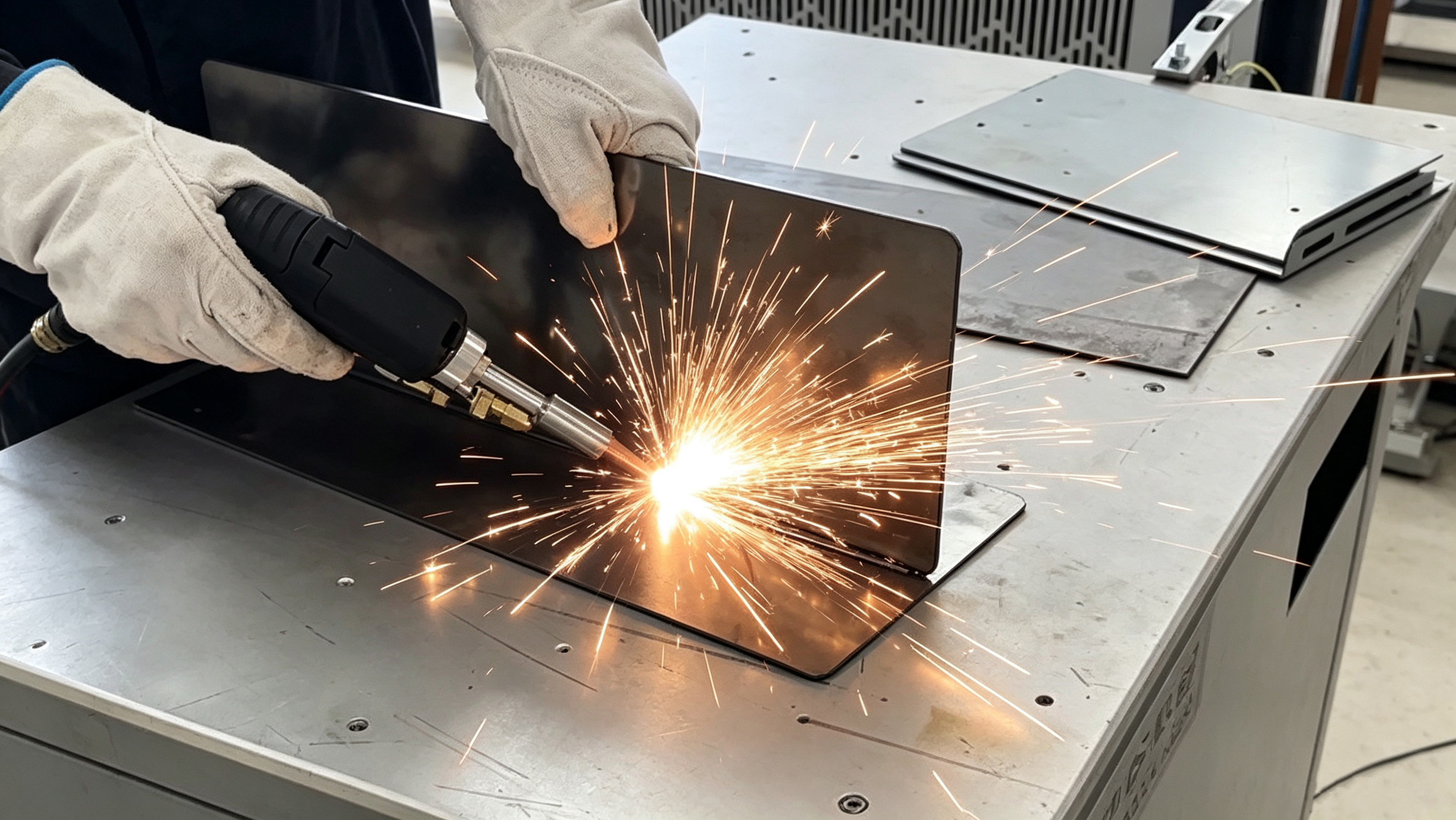
In modern manufacturing, robot laser welding is prized for its precision, speed, and deep penetration. However, its high-performance demands flawless alignment between the laser beam and the joint. Traditional vision systems often struggle with inconsistent lighting, spatter, and complex joint geometries, leading to defects. This is where deep learning is revolutionizing the field. By merging advanced deep learning algorithms with robust vision systems, manufacturers can achieve unprecedented accuracy in seam tracking and gap width estimation, transforming the reliability of robot laser welding.
The Core Challenge in Laser Welding
The effectiveness of robot laser welding hinges on two visual tasks: accurately locating the seam's path (tracking) and measuring the physical gap between parts to be joined (estimation). Even minor misalignment or an unanticipated gap variation can cause severe defects like porosity, undercut, or incomplete penetration. Traditional laser vision sensors use structured light and geometric algorithms. While effective in controlled settings, they can be brittle—easily confused by high reflectivity, oxidation, or the intense glare from the welding process itself. This creates a critical need for a more intelligent, adaptive vision system.
How Deep Learning Transforms the Vision System
Deep learning, particularly convolutional neural networks (CNNs), offers a paradigm shift. Unlike rule-based algorithms, a deep learning model can be trained on thousands of images of welding seams under various conditions. It learns to recognize the seam's features—despite noise, spatter, or changing reflections—in a way analogous to human visual cognition.
-
For Seam Tracking: A CNN can process a real-time image from the vision system's camera and output the precise pixel coordinates of the seam centerline. It distinguishes the seam from background noise with remarkable robustness, enabling the robot laser welding arm to make real-time path corrections.
-
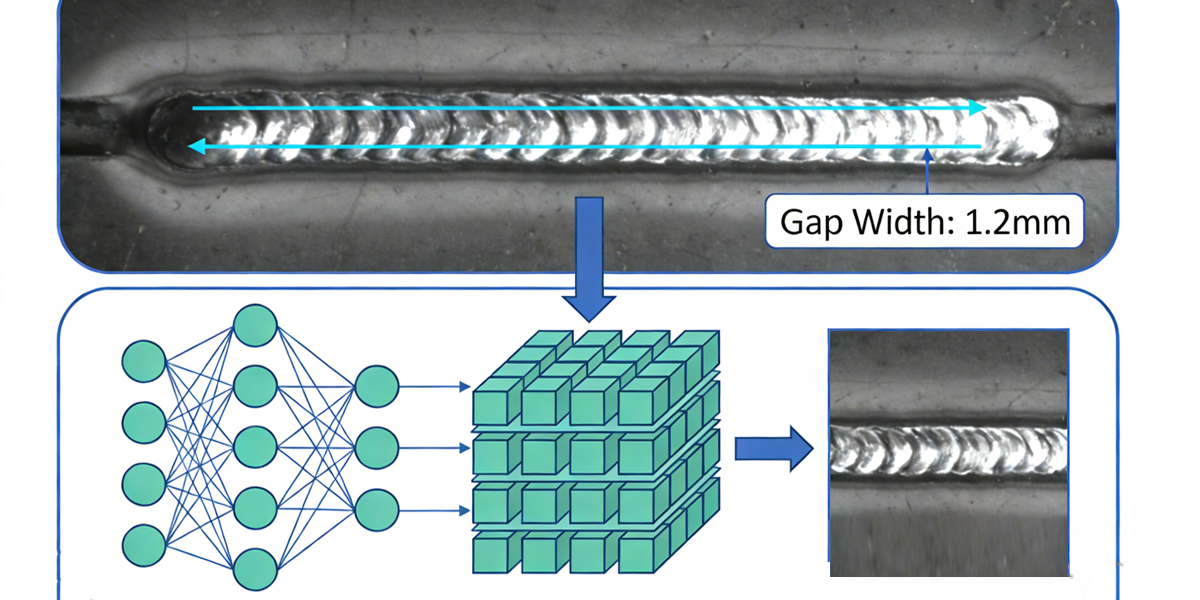
For Gap Width Estimation: Similarly, the model can be trained to identify the two edges of a joint and calculate the pixel distance between them, which is then converted to a real-world gap width estimation. This measurement is crucial for dynamically adjusting laser power or wire feed speed to ensure consistent weld quality, especially in fit-ups with inherent variability.
A seminal study published in Machine Intelligence Research validates this approach. The research developed a deep learning-based vision system specifically for robot laser welding. The system demonstrated superior performance in seam tracking accuracy and real-time gap width estimation compared to conventional methods, highlighting its potential for industrial application.
System Architecture and Workflow
A practical deep learning-based vision system for robot laser welding typically involves:
-
Data Acquisition & Training: A dataset of thousands of labeled images (showing seams with known positions and gap widths) under various lighting and material conditions is compiled. A CNN model (e.g., a U-Net architecture for precise pixel-wise segmentation) is trained on this data.
-
Real-Time Inference: The trained model is deployed on an industrial computer connected to a high-speed camera mounted ahead of the welding torch. It processes each frame in milliseconds.
-
Closed-Loop Control: The outputs—seam centerline coordinates and gap width—are fed to the robot laser welding controller. The robot adjusts its path in real-time, while the welding parameters are modulated based on the gap width estimation, creating a fully adaptive process.
Benefits and Industrial Impact
Integrating deep learning into the vision system delivers tangible benefits:
-
Enhanced Precision & Quality: Achieves near-perfect seam tracking, drastically reducing defects and rework rates.
-
Increased Process Robustness: Tolerates variations in part fit-up, surface condition, and ambient light that would cripple traditional systems.
-
Greater Flexibility: One system can be trained to handle multiple joint types (butt, lap, fillet) without extensive re-programming, facilitating high-mix production.
This innovation makes robot laser welding viable for more demanding applications, from electric vehicle battery tray assembly to precision aerospace components, where quality tolerances are extremely tight.

The Future of Intelligent Welding
The future lies in expanding these capabilities. Next-generation systems will move from 2D vision to 3D perception using stereo cameras or laser scanners, providing even richer data. Furthermore, the deep learning model's role will expand beyond tracking and measurement to include real-time quality prediction—analyzing the molten weld pool geometry to forecast defects before they occur, enabling true in-process correction.
Conclusion
The fusion of deep learning with robotic vision systems marks a significant leap forward for robot laser welding. By delivering highly accurate, robust, and real-time seam tracking and gap width estimation, this intelligent technology overcomes the long-standing limitations of automated welding. It paves the way for more autonomous, flexible, and reliable manufacturing cells, ensuring that the full potential of robot laser welding is realized in the pursuit of zero-defect production.
The Welder That Never Tires: How Automated Laser Systems Build Perfect Products.
Simple Guide to Maintenance for Laser Welding Machines
Related Article