Can You Remove Paint from Wood with a Laser?
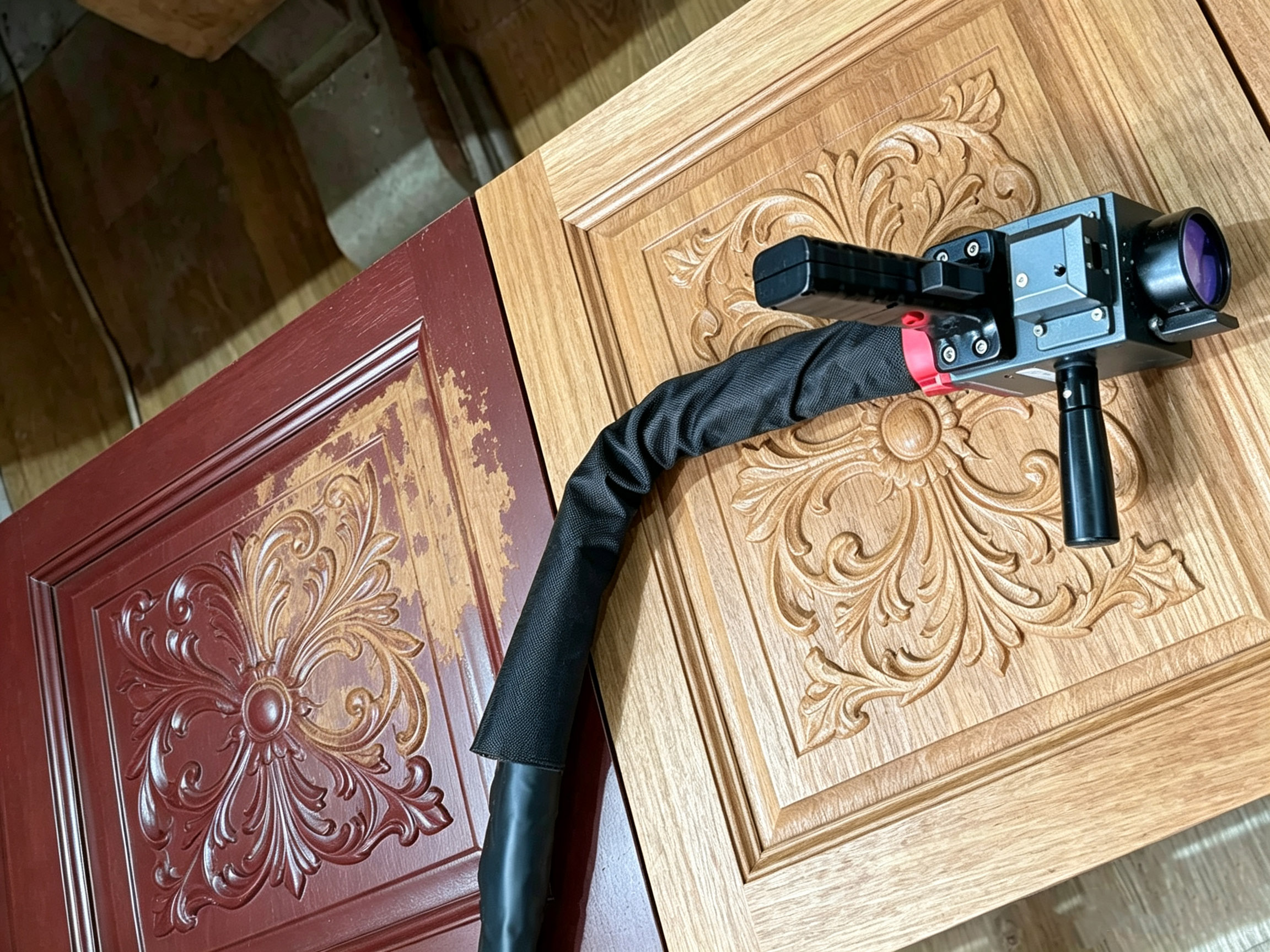
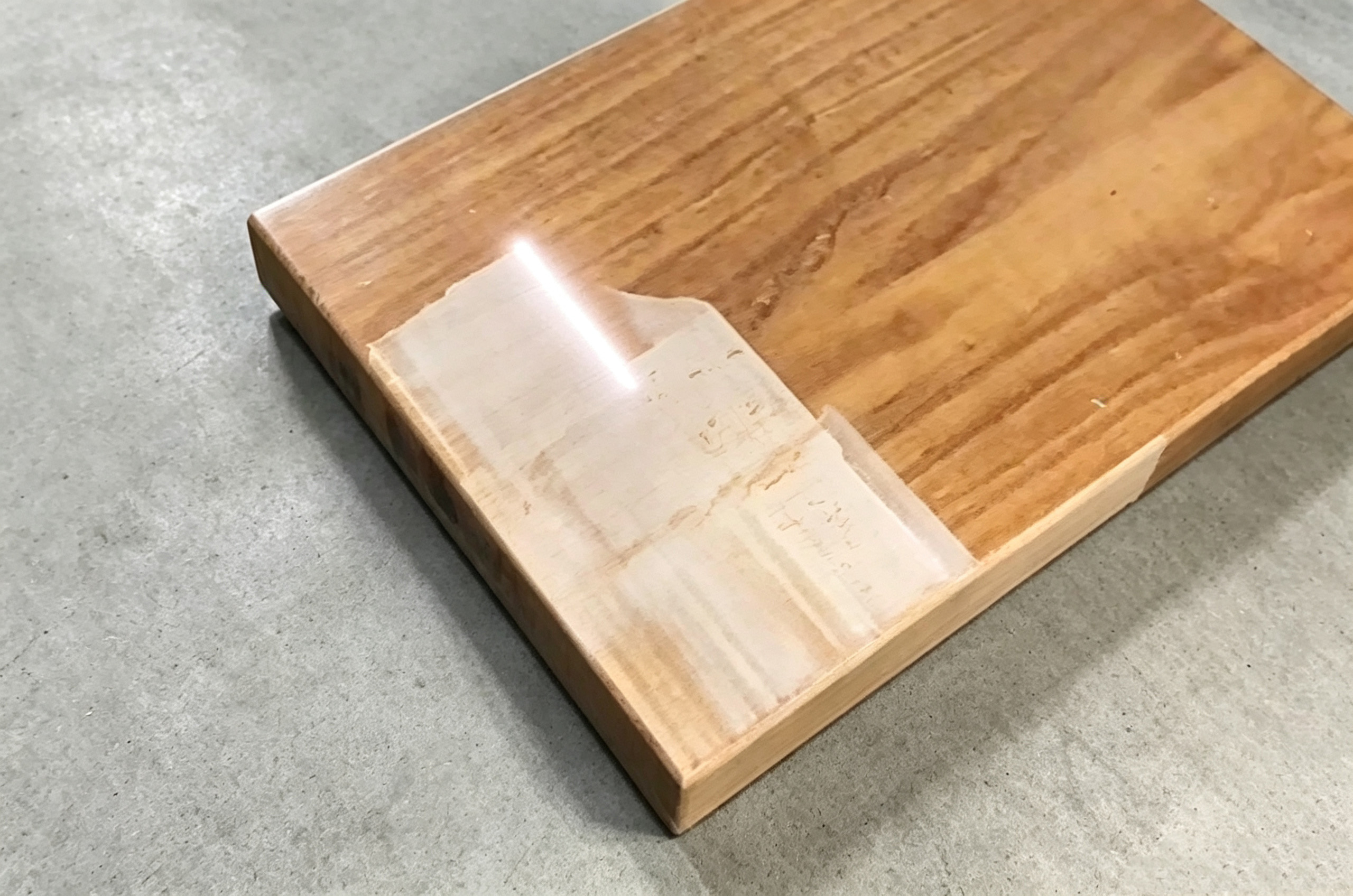
Yes, you can remove paint from wood with a laser. The process uses laser ablation to break down paint and coatings while protecting the wood underneath. But here's the catch: wood burns. Unlike metal, which can take the heat, wood starts to carbonize at around 200°C and ignites at 300°C. Most paints vaporize at 400–600°C. So how do you remove the paint without turning your project into charcoal? The secret is pulsed laser technology that delivers energy so fast—in nanoseconds—that the paint vaporizes before heat has time to transfer into the wood fibers. It's like passing your finger through a candle flame: fast enough, and you don't get burned.
How Does Laser Paint Stripping Work on Wood?
Laser paint removal from wood works through a phenomenon called photo-ablation. A pulsed laser fires extremely short, high-energy bursts at the painted surface. The paint absorbs this energy and instantly vaporizes into gas and microscopic particles. The key is selective absorption: the laser wavelength (typically 1064nm for fiber lasers) is strongly absorbed by most paints but reflected by the wood substrate. Once the paint is gone, the wood stops absorbing the laser energy, and the process automatically stops. This self-limiting feature is what prevents scorching and preserves the wood grain.
For wood applications, only pulsed lasers should be used. Continuous wave (CW) lasers emit a constant stream of energy that builds up heat and will quickly ignite or carbonize the wood. A laser cleaning machine for wood must be a pulsed system—typically 100W to 500W—to deliver the short bursts that remove paint without burning the substrate.
Which Types of Paint Can Be Removed?
Paint types that can be removed:
-
Oil-based paints – Respond well to laser ablation
-
Dark-colored coatings – Absorb laser energy effectively
-
Lacquer and shellac – Can be stripped layer by layer
-
Thick paint layers – Removed progressively in multiple passes
-
Multiple layers of old paint – Each layer can be stripped individually
-
Lead-based paint – Laser removal eliminates the dust hazard of sanding
-
Polyurethane and varnish – Can be effectively stripped
-
Industrial sealants – Removed from architectural wood
Paint types that cannot be easily removed:
-
Clear finishes – Transparent coatings don't absorb the laser energy well
-
Transparent protective coatings – Similar issue; the beam passes through
-
Light-colored paints – White pigments (TiO2) reflect near-infrared laser beams, drastically slowing down cleaning speed
-
Some water-based primers – May penetrate wood fibers and resist ablation
White or reflective paints are particularly challenging because they reflect the laser beam instead of absorbing it. In these cases, a technical assessment may be needed, and sometimes additional mechanical methods are required.
Is Laser Wood Paint Removal Better Than Sanding?
For many applications, yes. Here's how they compare:
| Factor | Laser Cleaning | Sanding |
|---|---|---|
| Speed | 3-5x faster—cleans 1 m² of old paint in 3-5 minutes | Slower; depends on operator skill |
| Surface quality | Maintains clearer grain patterns and smoother textures | Can gouge or damage the wood surface |
| Detail preservation | Removes coatings without damaging carvings or fine details | Cannot clean intricate carvings without damage |
| Material loss | Removes only the coating; preserves 100% of the original wood structure | Removes wood material along with the paint |
| Rework | Less reprocessing required | May require additional sanding passes |
| Environmental impact | No chemicals, no hazardous dust | Creates hazardous dust |
| Labor intensity | Low—operator guides the laser | High—physically demanding |
A laser cleaning machine for wood reduces labor time by 70% or more compared to traditional sanding. For antique furniture with delicate carvings, laser cleaning is demonstrably superior because it preserves details that sanding would destroy.
What Are the Disadvantages of Laser Paint Removal?
Laser paint removal isn't perfect. Here are the key limitations:
-
High initial cost – Equipment ranges from $3,500 for entry-level units to $20,000+ for industrial systems. Professional-grade machines for wood typically cost $7,000–$20,000.
-
Not suitable for all paints – White, reflective, or transparent coatings don't absorb laser energy well.
-
Requires skill and training – Incorrect settings can scorch or burn the wood. Operators need to understand the "ablation threshold" for each material.
-
May not return to clear raw wood – Some pigments or impregnated residues may remain in the fibers, giving a slightly tinted appearance.
-
Multiple passes may be needed – Thick or multi-layer coatings may require several passes.
-
Safety requirements – Laser safety glasses, fume extraction, and proper training are mandatory.
Laser Wood Stripping Machine: What to Look For
When shopping for an industrial laser cleaning machine for wood, consider these factors:
-
Laser type – Only pulsed lasers (not continuous wave). Pulsed fiber lasers at 1064nm are the standard choice for wood.
-
Power – 100–300W handles most antique restoration and furniture work. 300–500W suits thicker coatings and industrial applications.
-
Portability – Handheld units are great for on-site work and field applications. Stationary systems suit production lines.
-
Material compatibility – Softwoods like pine need lower power; hardwoods like oak may need higher power or multiple passes.
-
Safety features – Look for emergency stops, protective enclosures, and fume extraction systems.
-
Support and training – Choose manufacturers that offer operator training and ongoing technical support.
How Much Does Laser Wood Stripping Cost?
Service costs:
-
Professional laser stripping services typically range from $100 to $300 per hour
-
Minimum service calls start around $150
Equipment costs:
-
Entry-level portable units (50–100W): $2,500–$5,000
-
Professional pulsed systems (100–300W): $7,000–$20,000
-
Industrial systems (500W+): $15,000–$30,000+
-
ROI is typically achieved within 6–18 months for professional users
Safety Rules You Cannot Skip
Laser safety is non-negotiable. Here are the essentials:
-
Protect your eyes – Always wear laser safety goggles rated for the specific wavelength. Never look directly at the beam or its reflections.
-
Use proper ventilation – Fume extraction must capture vaporized paint particles at the source. Some paints release harmful fumes when vaporized.
-
Keep the work area clean – Remove flammable materials from the work zone. Wood dust and debris can ignite.
-
Avoid prolonged beam exposure – Never point the laser at people, animals, or reflective surfaces. Use protective barriers to contain stray reflections.
-
Get proper training – Never operate a laser cleaning machine without adequate training on the specific model.
-
Start with low power – Always begin with conservative settings—low power and high scan speed—and test on an inconspicuous area first.
Is Laser Paint Removal from Wood Worth It?
For professional restorers, furniture makers, and industrial woodworkers, the answer is yes. A laser cleaning machine for wood delivers results that traditional methods simply cannot match: preserved grain patterns, intact carvings, zero chemical waste, and dramatically reduced labor time. Industrial laser cleaning is transforming wood restoration by offering a non-contact, chemical-free, and highly precise alternative to sanding and chemical strippers.
The technology isn't cheap upfront, but the long-term savings—eliminating consumables, reducing labor, avoiding rework, and attracting premium clients—make it a sound investment for serious professionals. As one restorer put it: "Laser paint removal solves fundamental problems rather than managing them. Instantaneous results eliminate drying time completely. Selective removal targets only unwanted materials while preserving everything else".
FAQ
Q: Will a laser burn the wood underneath the paint?
A: No—when using a pulsed laser with correct settings. The pulse is so short (nanoseconds) that the paint vaporizes before heat transfers to the wood. Continuous wave lasers will burn wood, which is why they're not recommended.
Q: Can a laser remove varnish from wood?
A: Yes. Laser stripping removes paint, varnish, shellac, lacquer, and polyurethane from wood surfaces.
Q: Is laser wood stripping faster than sanding?
A: Yes—about 50% faster. Laser cleaning can remove old paint from 1 m² of wood in 3–5 minutes.
Q: Can I use a laser cleaning machine for wood on metal too?
A: Yes. An industrial laser cleaning machine can handle both wood and metal by adjusting power and settings. Many professionals use one machine for both applications.
Q: Does laser paint removal work on curved or carved wood?
A: Yes—this is one of its biggest advantages. Laser cleaning can remove coatings without damaging carvings or fine details, something sanding cannot achieve.
Q: How much does a laser cleaning machine for wood cost?
A: Entry-level units start around $3,500, professional systems range from $7,000 to $20,000, and industrial systems can exceed $30,000.
Ready to bring industrial laser cleaning to your wood working or restoration business? Contact ZGLC Laser today for a consultation and see how a laser cleaning machine for wood can transform your workflow.
Top Fiber Laser Cleaning Machine Manufacturers China 2026 Reviews
How Does a Pulse Laser Cleaning Machine Work? A Complete Guide
Related Article