Top Fiber Laser Cleaning Machine Manufacturers China 2026 Reviews

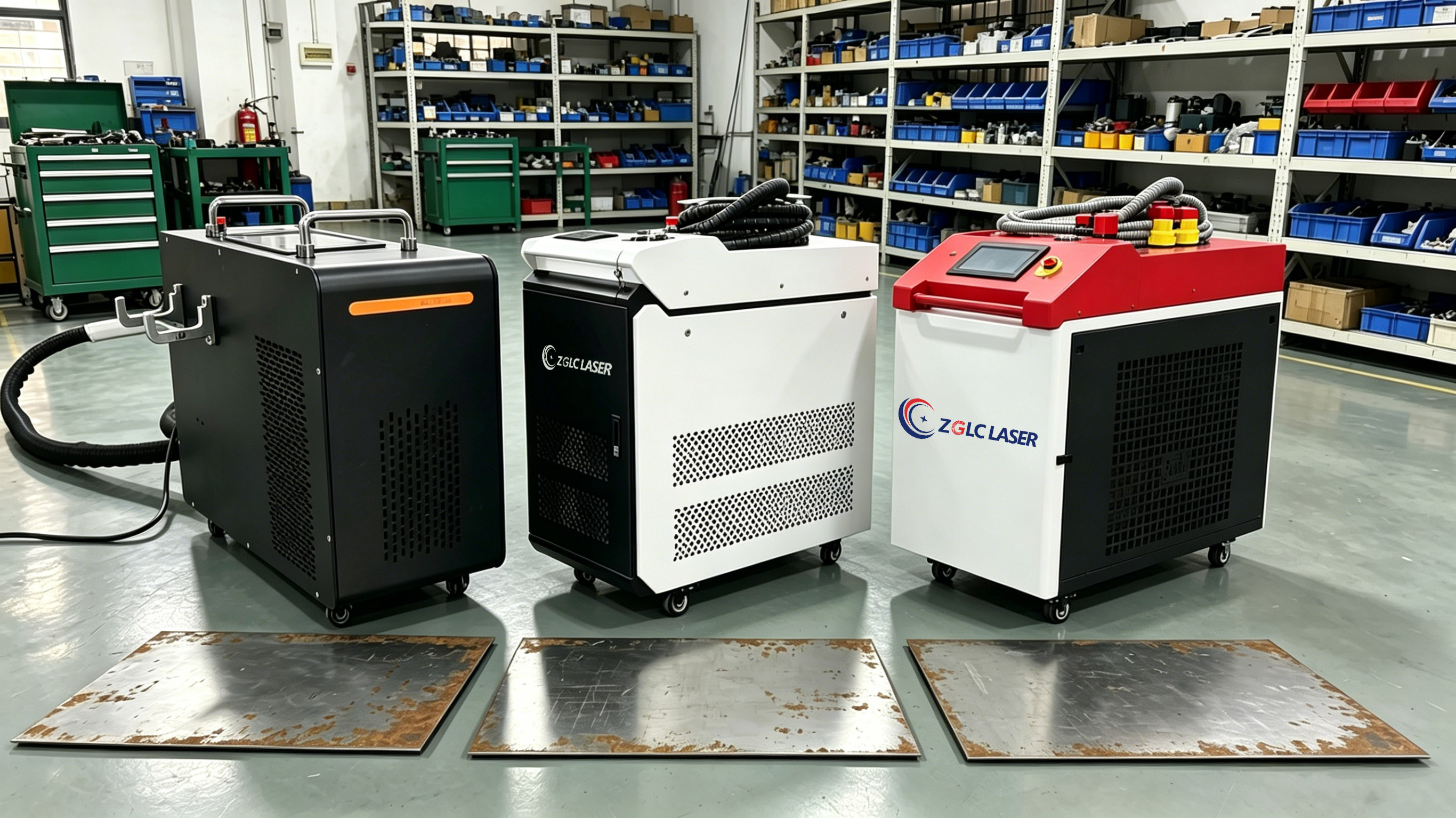
The most common mistake buyers make when shopping for a laser cleaning machine is choosing based solely on power. If you pick wrong, you either waste money—paying for a pulsed system when a continuous wave (CW) unit would do the job—or end up with a machine that can't handle your actual workload. This guide cuts through the confusion. We'll break down what to look for, compare the best options across price tiers, and help you match the right technology to your specific cleaning needs. Here top fiber laser cleaning machine manufacturers China 2026 reviews:
What to Look for Before Buying a Laser Cleaning Machine
Before you start comparing laser cleaning equipment, understand these five critical factors:
-
Power output – Higher wattage means faster cleaning, but overbuying power is a common and costly mistake. Match the power to your typical rust or paint thickness, not your ego.
-
Portability and form factor – Handheld units are lightweight and easy to move around. Stationary systems are better for production lines where the parts come to the machine.
-
Cooling system: air-cooled vs. water-cooled – Air-cooled systems are simpler and cheaper, ideal for lower-power units. Water-cooled systems handle higher power but add complexity and cost.
-
Laser source brand and quality – Chinese sources have proven reliable over the past decade. IPG has the edge in longevity data, but domestic brands like Raycus offer solid performance at lower prices.
-
Safety certifications and ratings – Look for Class 1 or Class 2 enclosures, emergency stops, and proper fume extraction. Don't compromise on safety.
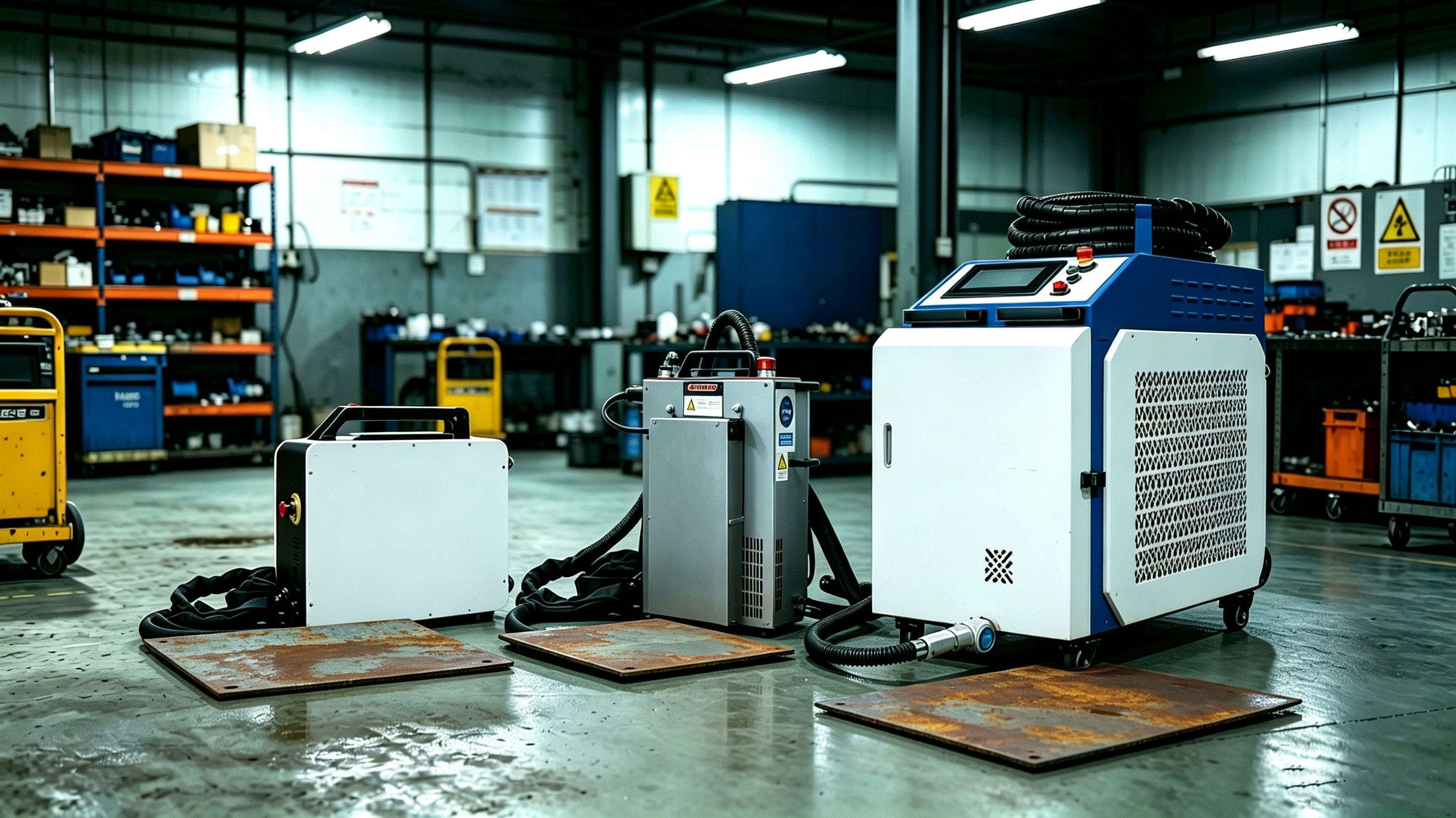
Best Entry-Level Laser Cleaning Machines (Under $6,500)
Who this tier is for: Hobbyists, small workshops, auto restorers, and occasional users who clean light rust, paint, or oil stains on small to medium parts.
Top picks and what makes them unique: Entry-level CW units typically range from $3,000 to $6,500. A 1500W CW machine clears moderate rust at roughly 30–50 square feet per hour. Multi-function systems that combine cleaning, welding, and cutting are also available around $3,700–$4,700.
Limitations to know before buying: These machines are less precise than pulsed systems and can generate more heat. They struggle with delicate surfaces, intricate molds, or thin materials where heat damage is a concern.
Best Mid-Range Laser Cleaning Machines ($6,500 – $12,000)
Who this tier is for: Small to medium manufacturers, auto body shops, mold cleaning specialists, and anyone who needs a balance of power and precision.
Top picks and what makes them unique: This is the most popular segment in 2026. Pulsed systems in the 200W–500W range dominate here, priced from $7,000 to $12,000. A pulse laser cleaning machine delivers controlled bursts that vaporize residue without affecting delicate geometries—critical for tire molds, rubber molds, and injection molds.
What you get versus entry-level: You gain precision and the ability to clean sensitive surfaces without damage. Pulsed systems cost 3–4× more per watt than CW, but they protect your valuable molds and parts. For mold cleaning, one damaged mold costs more than the price difference.
Best Professional High-Power Laser Cleaning Machines ($12,000+)
Who this tier is for: Large manufacturers, shipyards, aerospace facilities, and industrial operations tackling heavy rust, thick coatings, and large surface areas.
Top picks and what makes them unique: High-end industrial CW systems range from $15,000 to $35,000+. A 2000W–3000W CW machine can strip heavy rust and industrial coatings at production-line speeds. Some systems achieve strip rates of up to 240 square feet per hour. Fully automated robotic systems can exceed $200,000.
Handheld vs. Stationary: Which Configuration Do You Need?
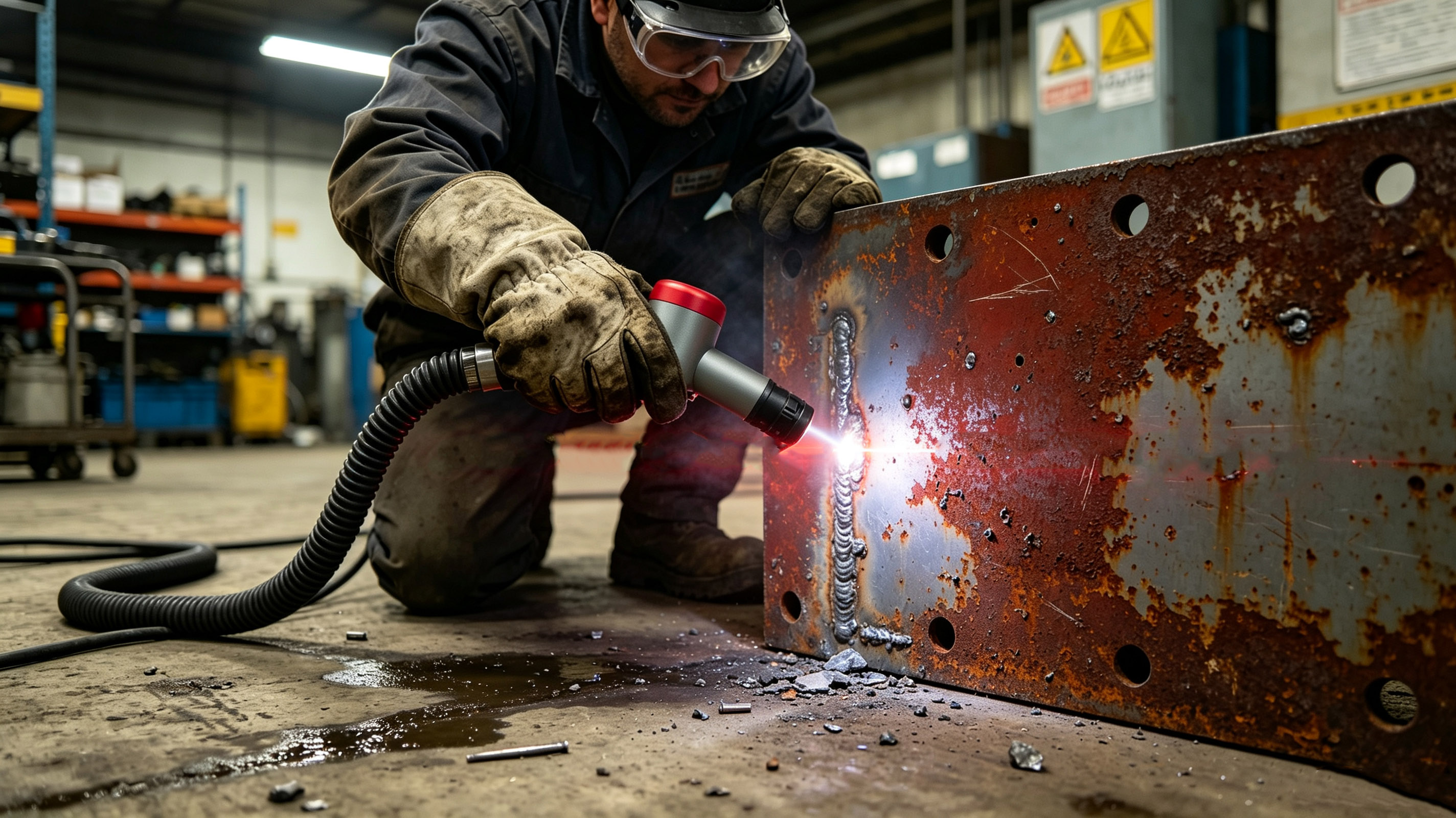
Handheld laser cleaning emphasizes flexibility and on-site accessibility. These portable designs allow efficient cleaning of irregular parts, complex weld areas, and large structures that are difficult to disassemble. Portable units typically weigh under 1kg for the cleaning head.
Stationary systems integrate into production lines with robotic arms, motion platforms, and automated part handling. Choose handheld if you move between job sites or clean large, immovable structures. Choose stationary if you process thousands of identical parts on a production line.
CW Laser Cleaning vs. Pulsed Laser Cleaning: Choosing the Right Technology
Continuous Wave (CW) lasers deliver a steady beam. They're faster, cheaper, and great for heavy rust and paint removal. A decent 1500W machine clears moderate rust at roughly 30–50 square feet per hour. CW is ideal for structural steel, auto restoration, farm equipment, and marine maintenance.
Pulsed lasers fire short, high-energy bursts. They're slower but gentler—essential for precision work and delicate surfaces. Pulsed systems are the go-to for tire molds, injection molds, and any application where heat damage would ruin the part. Budget: $7,000–$12,000 for a quality pulsed system.
Quick rule of thumb: Heavy rust on steel → CW. Tire or injection molds → Pulsed. Historic restoration → Pulsed. Weld prep → CW.
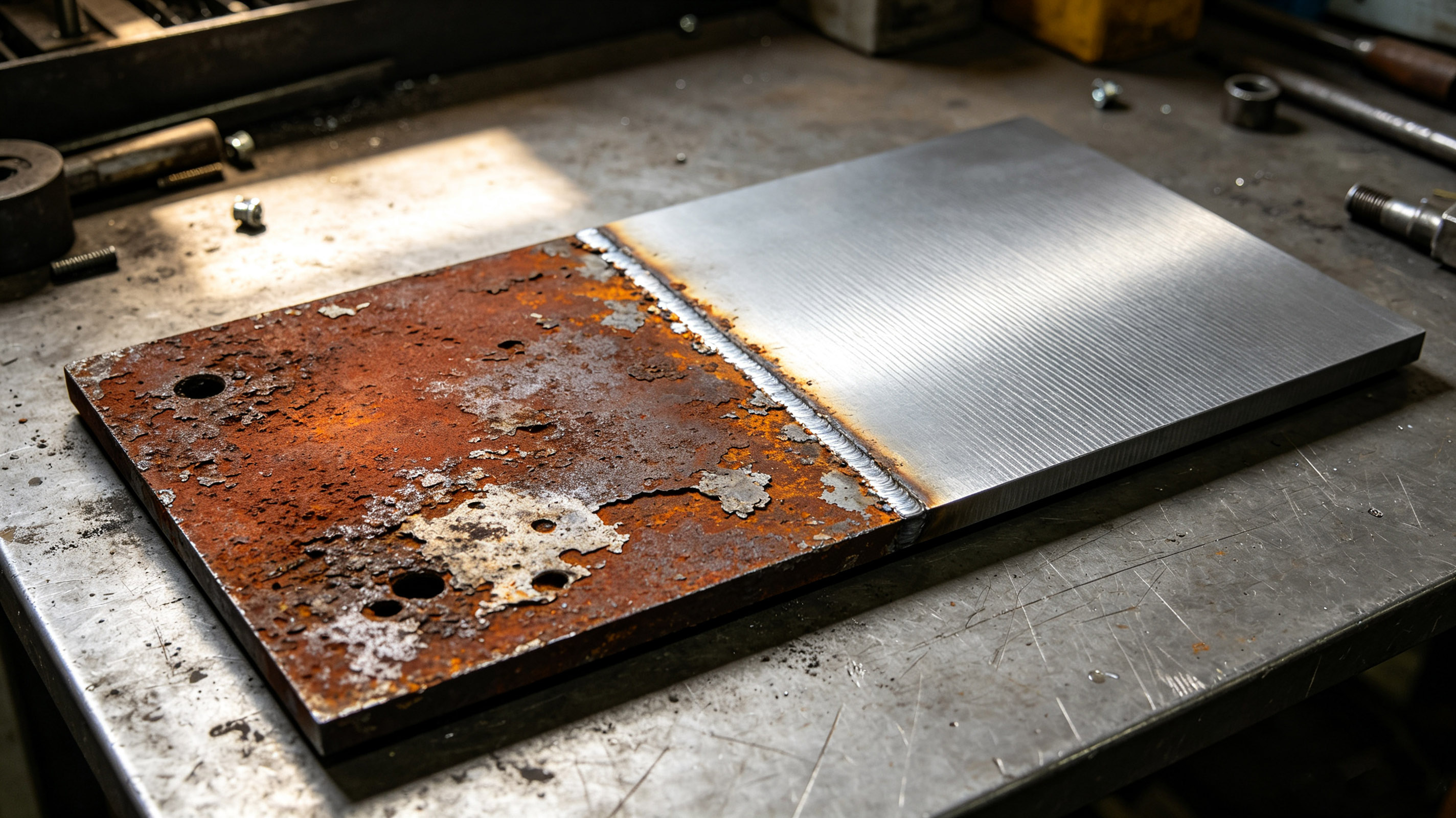
What About 3-in-1 Laser Welding, Cleaning, and Cutting Combo Machines?
Multi-function systems combine cleaning, welding, cutting, and rust removal in one unit. Entry-level combos start around $3,700–$4,700. These are excellent for small shops with limited floor space and budget. However, dedicated machines typically outperform combos in their primary function. If cleaning is your main need, buy a dedicated laser cleaning machine for rust removal.
Total Cost of Ownership: The Real Cost of Running a Laser Cleaning Machine
The purchase price is only 80–85% of the real investment. Typical additional costs:
-
Shipping & import: $400 – $3,000
-
Safety equipment: $300 – $1,500
-
Electrical setup: $300 – $1,000
-
Training & certification: $200 – $1,500
-
Consumables & maintenance: $200 – $500/year
Total extra cost: +15–20% on top of machine price. Operating costs are minimal—roughly $0.10–$0.20 per m² cleaned. Laser cleaning produces zero chemical waste and achieves Sa 2.5–3 surface cleanliness per ISO 8501-1.
Protective Lenses and Consumables
Protective windows are the primary consumable. They shield the optics from debris and dust kicked up during cleaning. Replace them when they become pitted or cloudy—typically every few months depending on usage. Cost: $50–$200 per window. Keep spares on hand to avoid downtime.
Fume Extraction
Never run a laser cleaning machine without proper fume extraction. Vaporized paint, rust, and coatings release harmful particulates and gases. A good extraction system with HEPA and activated carbon filters is non-negotiable. Budget $500–$2,000 for a quality extraction unit.
Our Recommendations by Use Case
| Application | Recommended Type | Power | Price Range | Key Feature |
|---|---|---|---|---|
| Heavy rust on steel | CW | 1500–2000W | $4,500–$7,000 | Fast, cost-effective stripping |
| Paint stripping | CW | 1000–1500W | $3,500–$6,500 | Quick paint removal |
| Tire & injection molds | Pulsed | 200–300W | $7,000–$10,000 | Protects delicate geometries |
| Weld prep & cleanup | CW | 1500–2000W | $4,500–$7,000 | Clean surfaces for strong welds |
| Historic restoration | Pulsed | 100–200W | $6,000–$9,000 | Gentle on valuable surfaces |
FAQ
Q: Will a laser cleaning machine damage the metal underneath?
A: No—when settings are correct. The laser removes only the contaminant layer. CW lasers generate more heat than pulsed, so choose pulsed for heat-sensitive parts.
Q: How fast is laser cleaning for rust removal?
A: A 1500W CW machine clears moderate rust at roughly 30–50 square feet per hour. Heavy scale may require 2000W or higher.
Q: Do I need special training to operate a laser cleaning machine?
A: Yes. Basic training is essential for safety and optimal results. Budget $200–$1,500 for training.
Q: Can a laser cleaning machine remove paint as well as rust?
A: Yes. Laser cleaning removes rust, paint, oils, oxides, and other contaminants.
Q: How much does a laser cleaning machine for rust removal cost?
A: Entry-level CW: $3,000–$6,500. Mid-range pulsed: $7,000–$12,000. High-end industrial: $15,000–$35,000+.
Q: Which is cheaper: CW or pulsed?
A: CW is significantly cheaper—a 1500W CW machine costs less than a 300W pulsed system. But pulsed offers precision that CW cannot match.
Ready to find the right laser cleaning machine for your operation? Contact ZGLC Laser for a consultation and see how our laser cleaning solutions can transform your surface preparation workflow.
How to Laser Clean Cast Aluminum: A Practical Guide
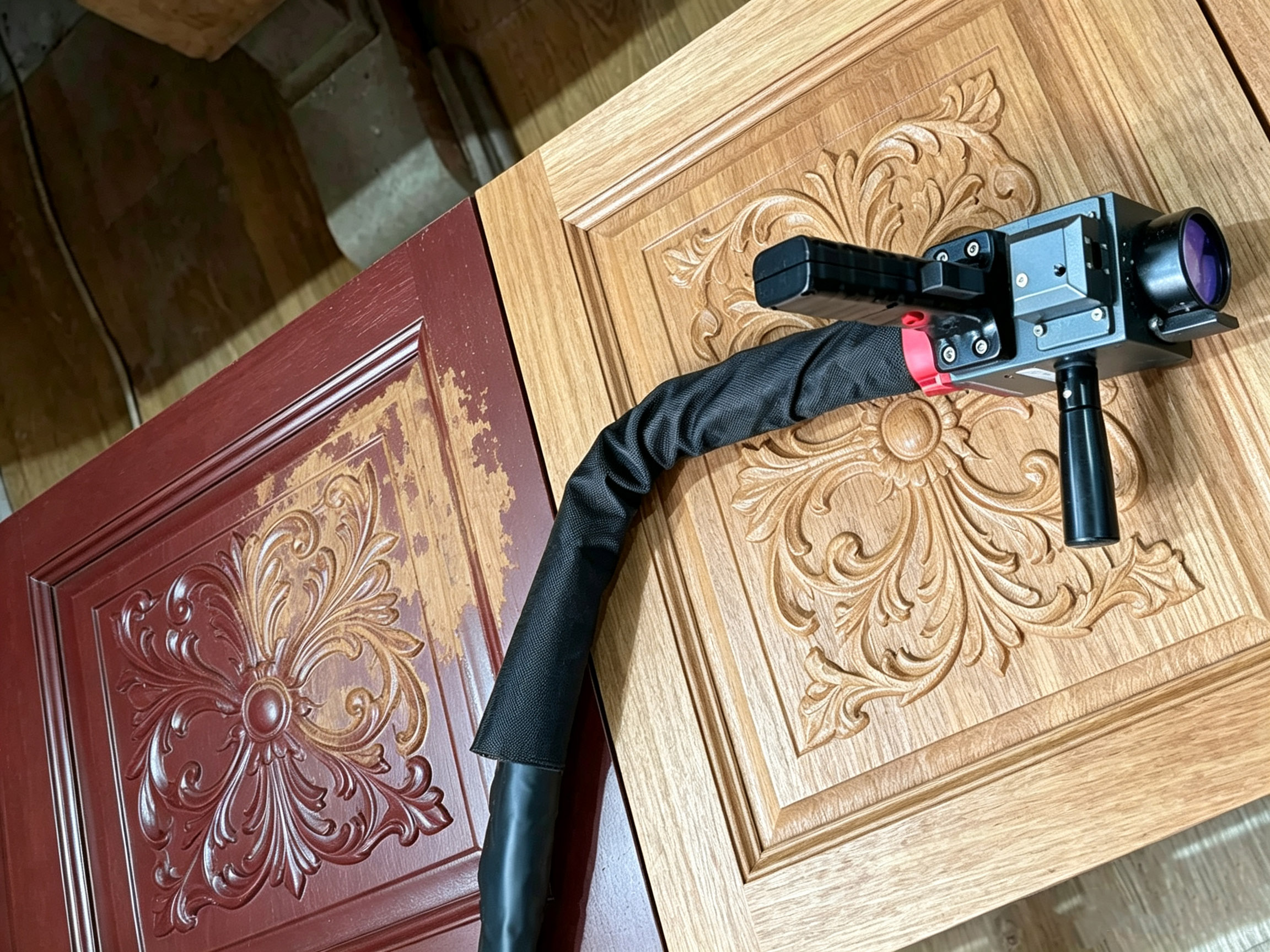
Can You Remove Paint from Wood with a Laser?
Related Article