The Impact of Corrosive Environments on Bonded Joints of a Sports EV Chassis with Laser-Cleaned Surfaces

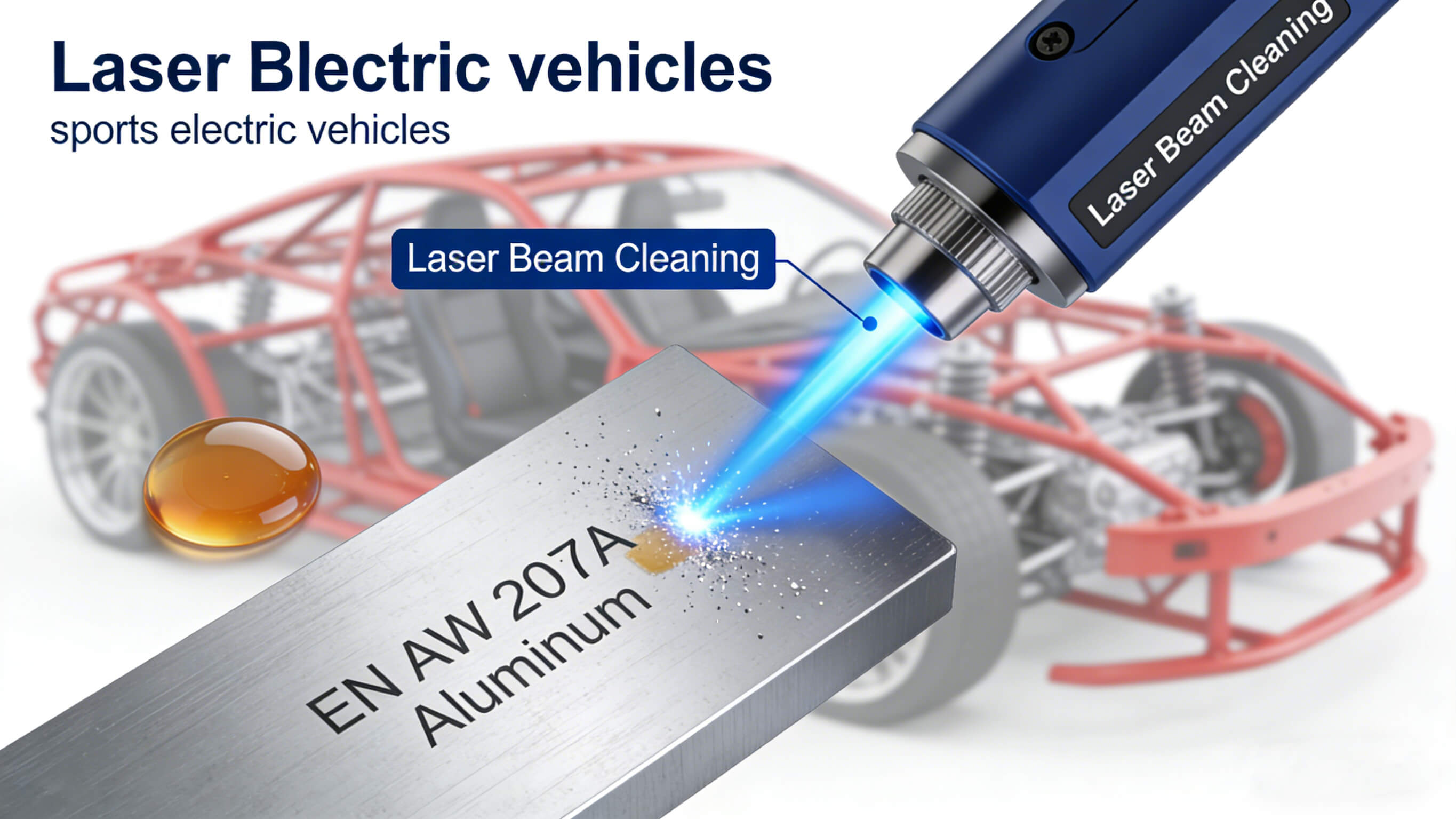
The pursuit of high-performance sports electric vehicles (EVs) demands innovative lightweight structures, often using aluminum alloys and adhesive bonding. However, the long-term reliability of these bonded joints under real-world conditions is a critical challenge. A recent study published in the International Journal of Adhesion and Adhesives provides essential data on this topic, specifically investigating how corrosive environments affect adhesive joints made from aluminum alloy EN AW 2017A—a material intended for a prototype sports EV load-bearing frame—where the surfaces were prepared using laser beam cleaning. This article summarizes the key findings, highlighting the necessity of protection for ensuring corrosion durability and overall structural integrity.
1. The Critical Role of Surface Preparation and Corrosion Protection
For adhesive bonding in high-stress applications like an EV chassis, surface preparation is paramount. This study confirms that laser beam cleaning is an effective, modern pre-treatment method for aluminum alloy EN AW 2017A, capable of removing contaminants and oxides to enhance initial adhesion. However, the research's core focus was on what happens next: when these optimized bonded joints are exposed to a corrosive environment. The researchers prepared four sets of samples: a reference set (no corrosion), unprotected samples exposed to salt spray, and two sets protected with a coating (100 μm and 200 μm thick) before salt spray exposure. This setup directly tested how well the laser-cleaned interface, once bonded, could withstand aggressive conditions with and without additional protection.
2. Quantifying the Impact: Strength Loss Without Protection
The results clearly demonstrate the severe threat posed by corrosive environments. Unprotected bonded joints, despite having an initially superior laser-cleaned surface, suffered significant degradation. After 720 hours of exposure to a salt spray environment (simulating several years of service), these samples exhibited an average reduction in shear tensile strength of approximately 30% compared to the unexposed reference samples, which had an average strength of 32.7 MPa. This quantifies the real risk: the corrosive environment attacks the critical adhesive-metal interface, leading to a substantial loss of load-bearing capacity. Without a barrier, even the best surface preparation cannot guarantee long-term corrosion durability.
3. How Protective Coatings Preserve Joint Integrity
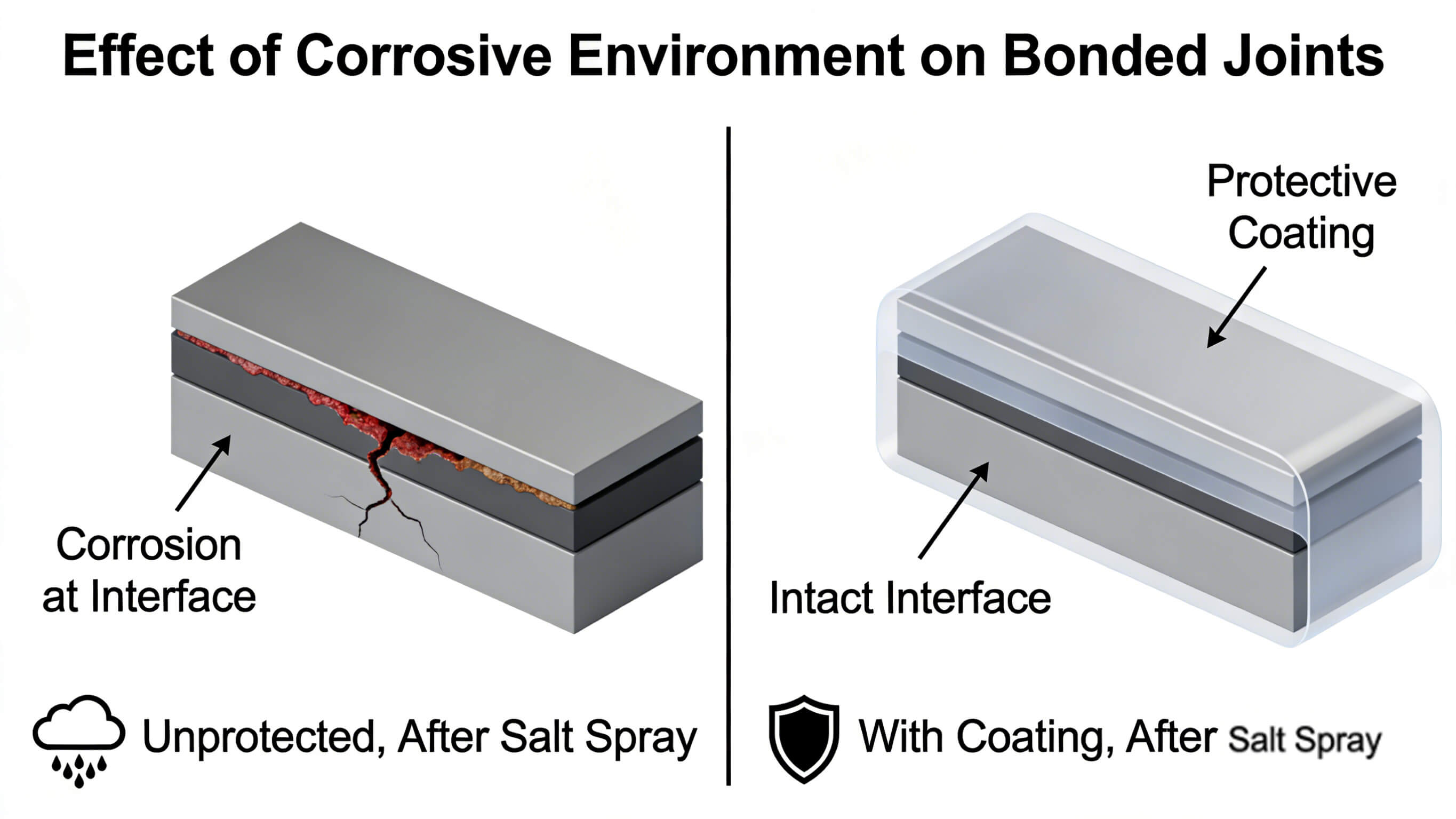
The study's second major finding is the decisive benefit of applying protective coatings. Bonded joints protected with the EvoProtect 130 coating showed markedly improved resistance. While the paper notes the improvement, the key implication is that the coating preserves the integrity of the interface created by laser beam cleaning. Microstructural analysis using electron microscopy confirmed this: reference samples showed an intact adhesive-metal interface. In contrast, unprotected samples exposed to salt spray displayed pronounced corrosion at the interface, which is the direct cause of the strength loss. The protective coating acts as a barrier, preventing electrolyte ingress and maintaining the soundness of the joint. The thickness (100 μm vs. 200 μm) influenced the degree of protection, highlighting the need for proper specification.
4. Conclusions for EV Manufacturing
This research provides actionable insights for designing durable sports EV structures. It confirms that while laser beam cleaning is an excellent preparatory step for aluminum alloys, it is not a standalone solution for environmental resistance. The corrosive environment will degrade unprotected bonded joints over time, directly impacting the corrosion durability and safety of the vehicle's load-bearing frame. Therefore, for critical applications like a chassis prototype, laser surface cleaning must be combined with a robust, well-engineered protective coating system. This combined approach ensures that the initial high bond strength is maintained throughout the vehicle's service life, guaranteeing long-term structural integrity and performance.
Reference: "The effect of the corrosive environment on bonded joints of the load-bearing frame prototype of a sports electric vehicle with a surface cleaned by a laser beam" Written by Pavel Klaus,Marek Beseda,Michal Weisz,Tomáš Pawlenka,Martin Juránek,Jan Rygel
How Laser Cleaning Works (5 Simple Steps)
Laser Cleaning Company: The Smart Partner for Boosting Your Operations
Related Article