Why whole sale fiber laser cleaning machine Is Your Best Bet for Surface Maintenance
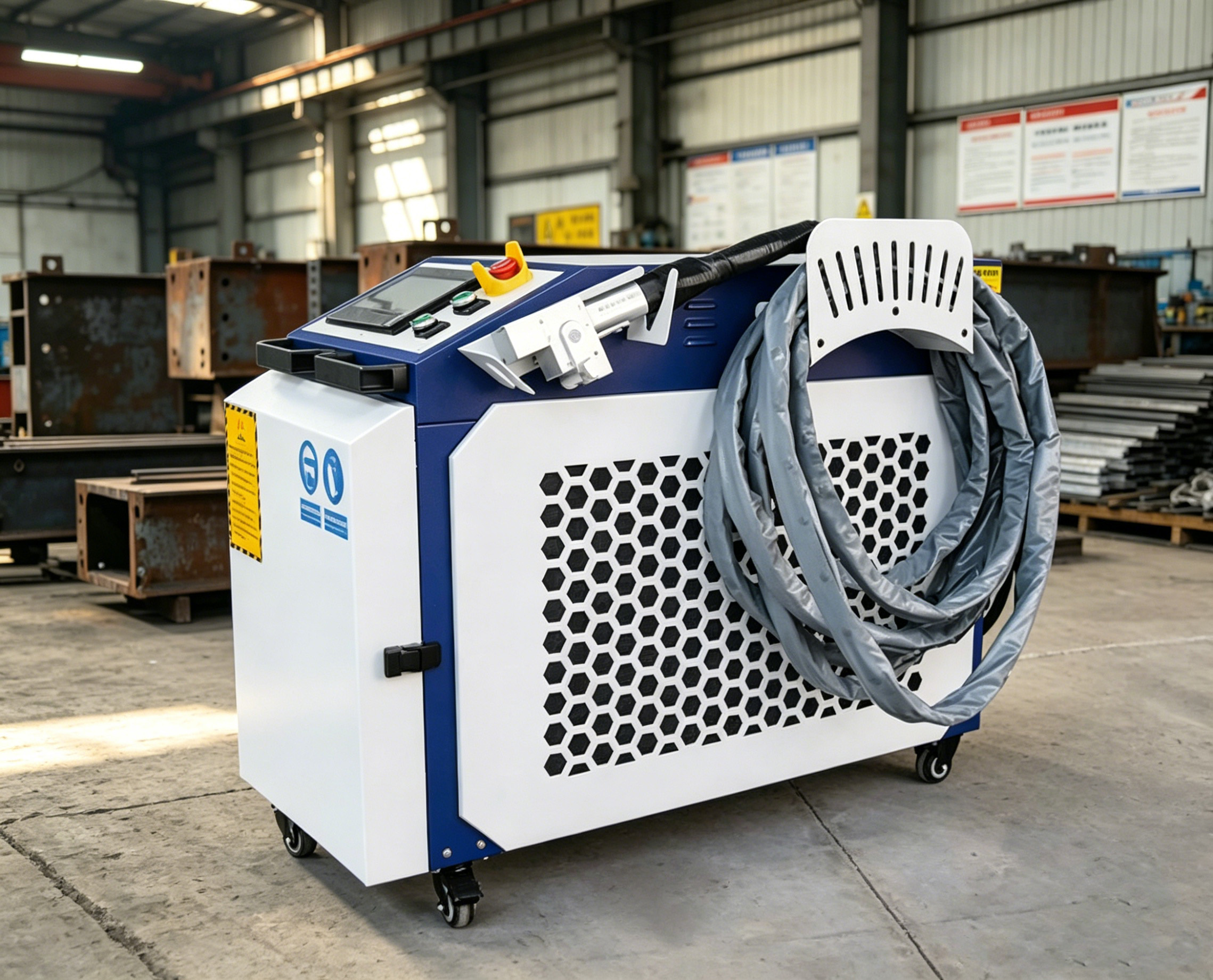
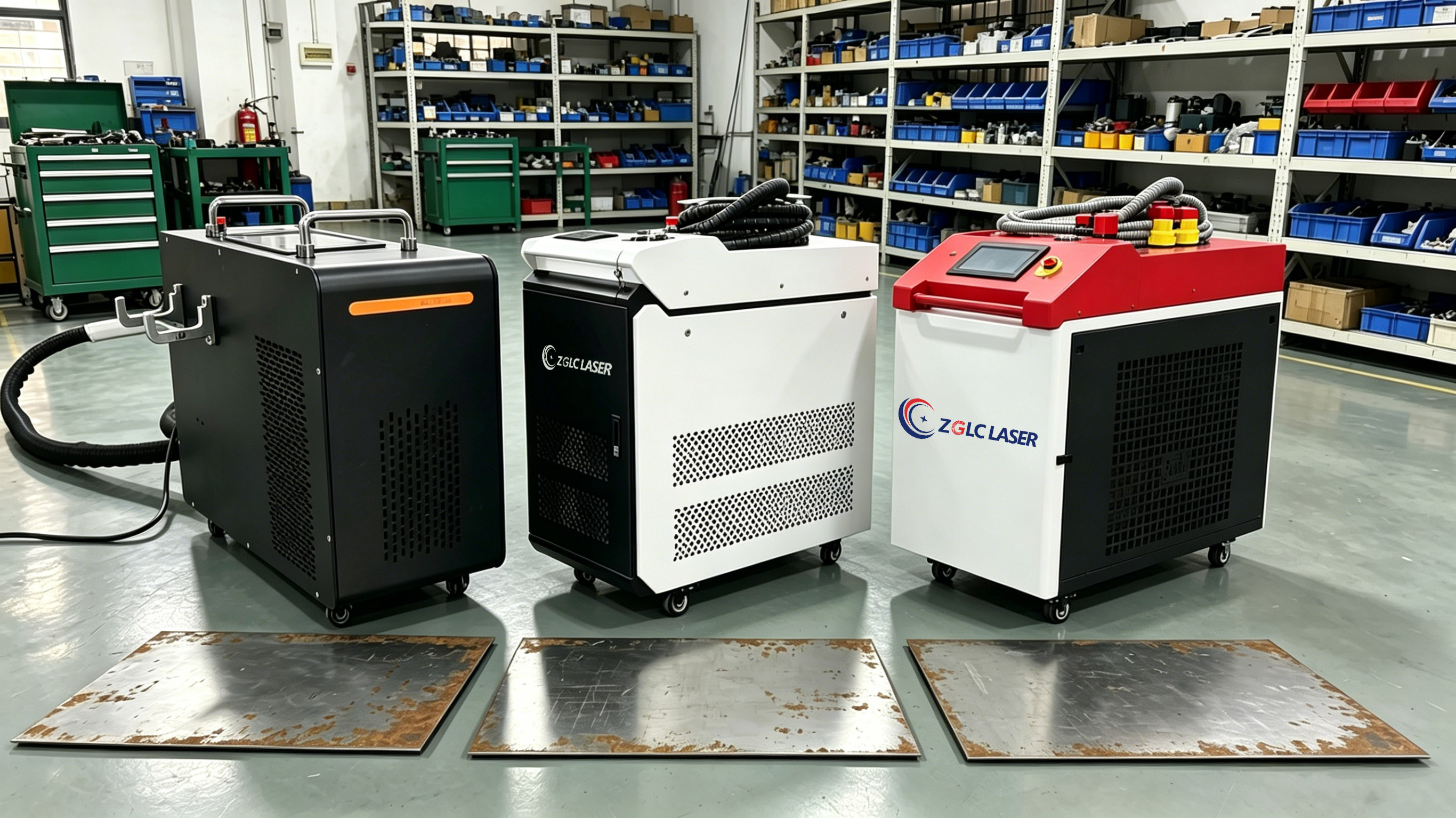
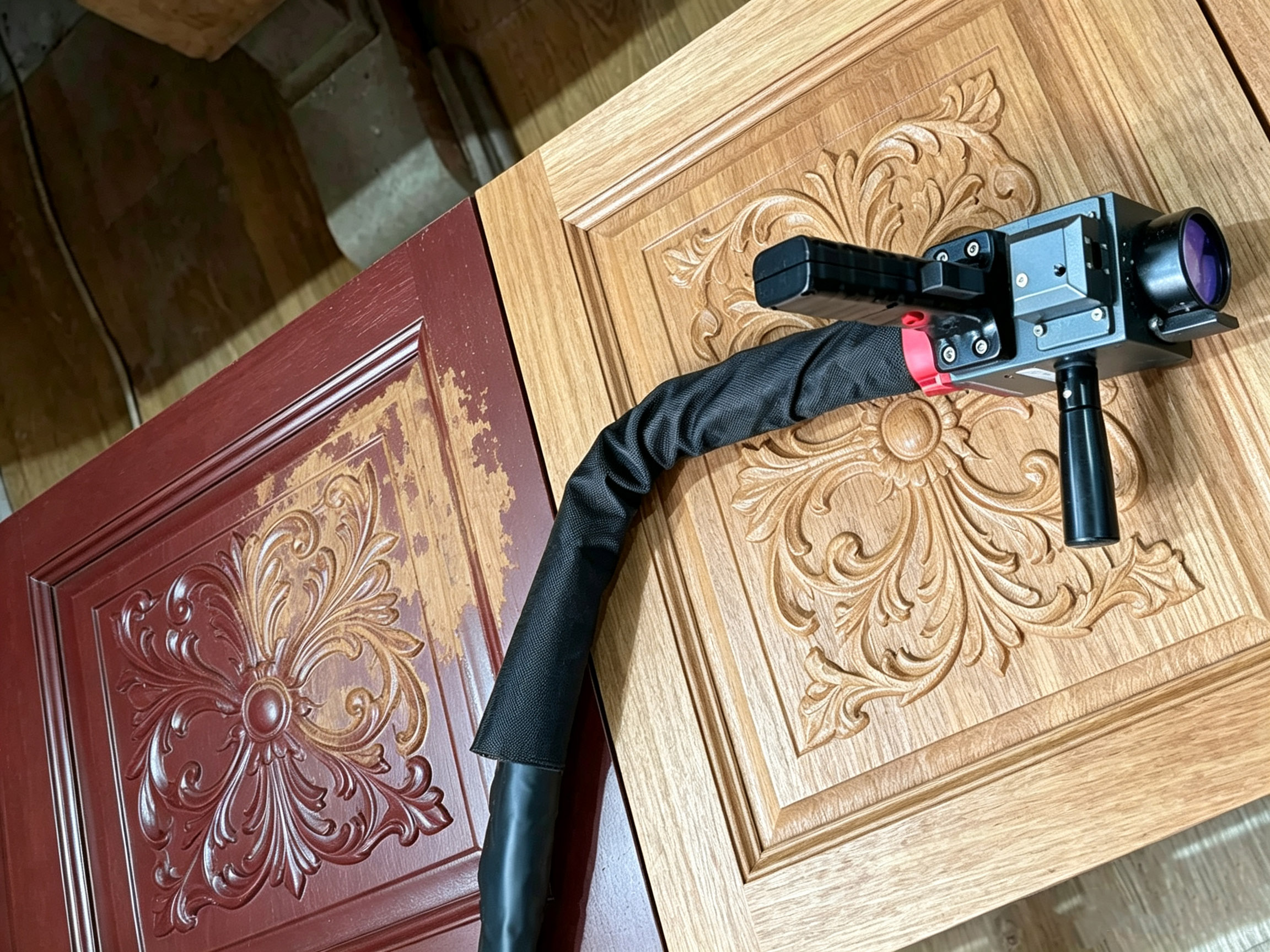
Rust is the enemy of every metal asset. Bridges, ships, trailers, and heavy equipment all suffer from corrosion. Traditional methods like sandblasting or grinding are messy, slow, and damage the base metal. That’s why more maintenance teams turn to a laser cleaning machine. It removes rust and paint without chemicals, without abrasives, and without thinning the steel. In this guide, we’ll focus on high‑power continuous wave (CW) lasers and help you choose the right whole sale fiber laser cleaning machine for your toughest rust jobs.
1. How a 6000W CW whole sale Fiber Laser Cleaning Machine Tackles Stubborn Rust
Thick, scaly rust on heavy steel structures needs serious power. A 6000W CW laser cleaning machine delivers a continuous beam that heats and vaporizes rust instantly.
How it works: The operator moves a handheld or robot‑mounted nozzle over the rusty surface. The laser melts and evaporates the iron oxide layer. A vacuum captures the dust. The underlying steel stays cool because the beam moves fast enough.
Why 6000W? Lower‑power lasers (1000W) can struggle with thick mill scale or multiple paint layers. 6000W cuts through heavy rust in a single pass, saving hours of labor.
Protecting the base material: Modern CW lasers have adjustable beam oscillation and power ramping. You start at lower power to test, then increase until the rust disappears without melting the steel. A skilled operator can remove rust down to bare metal without any thickness loss.
Setup tips: For vertical or overhead surfaces, use a narrower beam width to concentrate energy. On flat plates, widen the scan area to cover more ground per pass.
2. Which Laser Cleaning Machine Removes Paint and Rust from Old Equipment?
Restoring a rusty trailer or old excavator demands versatility. You’ll face layers of old paint, oil, and flaking rust. Here’s how to choose:
CW vs. pulsed for field work:
-
Pulsed laser – Excellent for thin coatings and delicate surfaces. Slow on large areas.
-
CW laser – Faster for broad rust and thick paint. Better for heavy equipment.
For most field jobs on steel, a whole sale fiber laser cleaning machine with CW output between 1500W and 3000W hits the sweet spot.
Nozzle, optics, and ergonomics: Look for a lightweight gun (under 2kg) with a long cable (10‑15m) so you can walk around a trailer without moving the main unit. Interchangeable nozzles (50mm to 200mm width) let you switch between spot cleaning and wide stripping.
Field‑proven settings example: On a rusted dump truck frame, start with 2000W, 100mm scan width, move at 50mm/s. Adjust up or down until the rust vaporizes but the steel only turns dark grey (not molten). Always test on a hidden spot first.
3. Cleaning Efficiency: 1.5kW vs. 2kW vs. 3kW vs. 6kW CW Lasers
The power of your laser cleaning machine directly affects how fast you clean. Here’s a real‑world comparison on medium‑thick rust (0.5mm layer):
| Power | Typical removal rate (m²/hour) | Best for |
|---|---|---|
| 1.5kW | 3‑5 | Light rust, small parts, occasional use |
| 2kW | 6‑8 | General maintenance, trailers, tanks |
| 3kW | 10‑12 | Heavy equipment, ship decks, pipelines |
| 6kW | 18‑25 | Industrial scale, thick mill scale, high throughput |
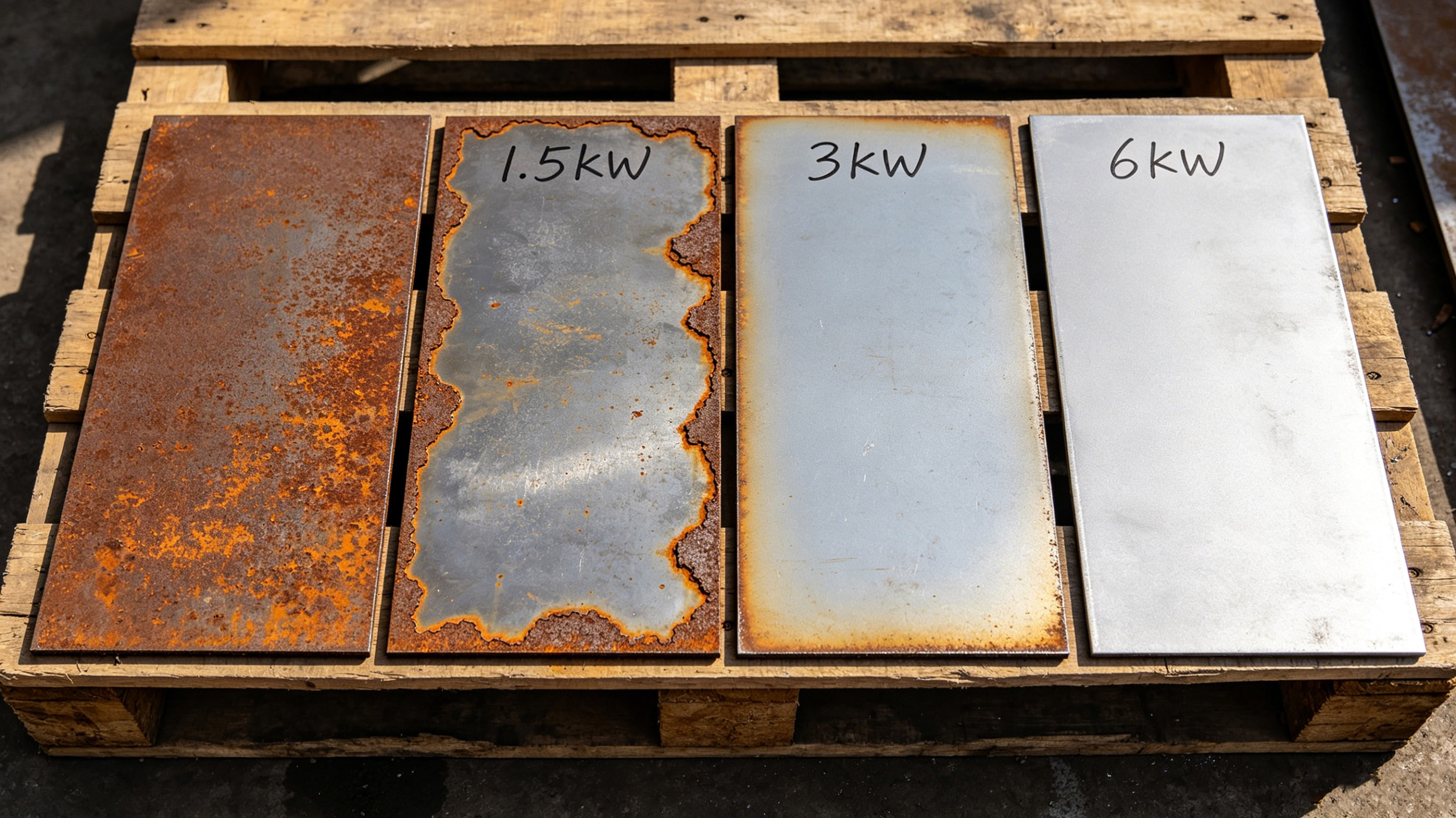
What efficiency means in practice: A 6kW laser cleaning machine can strip a 20m² shipping container in under an hour. A 1.5kW unit would take four hours. The faster machine costs more upfront but saves labor quickly.
Cost vs. utility trade‑off: For a small workshop doing occasional rust removal, 1.5‑2kW is enough. For a contracting business that cleans multiple structures daily, 3‑6kW pays back in months.
4. How to Choose Pulsed vs. Continuous Wave Laser Cleaning Machine
Still unsure which type fits your needs? Use this simple guide.
Core differences:
-
Pulsed laser – Short, high‑energy bursts. Minimal heat spread. Best for thin coatings, delicate surfaces, and precision work.
-
CW laser – Continuous beam. Faster on large areas. Best for heavy rust, thick paint, and high‑throughput jobs.
Use cases:
-
Pulsed – Mold cleaning, oxide removal before welding, aerospace parts, stone restoration.
-
CW – Ship hulls, bridges, storage tanks, construction equipment, rail cars.
Selection checklist:
-
What is your main contaminant? (Thin rust → pulsed. Thick rust + paint → CW)
-
How large is the typical work area? (Small parts → pulsed. Large structures → CW)
-
Do you need portability? (Both can be handheld, but CW requires more cooling)
-
What’s your budget? (Pulsed is often more expensive per watt)
Hybrid workflow: Some shops own both. Use pulsed for fine cleaning around bearings or threads, then switch to CW for broad panel stripping.
5. Conclusion
A laser cleaning machine – especially a high‑power CW model – is the best investment you can make for surface maintenance. It saves labor, eliminates consumables, and protects the base metal. For heavy rust removal on equipment, trailers, and structural steel, choose a CW laser between 2kW and 6kW depending on your throughput needs. For delicate or precision jobs, keep a pulsed unit handy.
Ready to upgrade your rust removal process? Contact ZGLC Laser to discuss your specific application and get a demo with your own rusty parts.
Laser Cleaning Machine – The Ultimate Guide for Hong Kong Manufacturers
Wholesale Fiber Laser Cleaning Machine: Power Your Industrial Cleaning Business
Related Article