Laser Cleaning of Titanium Alloys: A Deep Dive into Mechanisms and Surface Quality Control
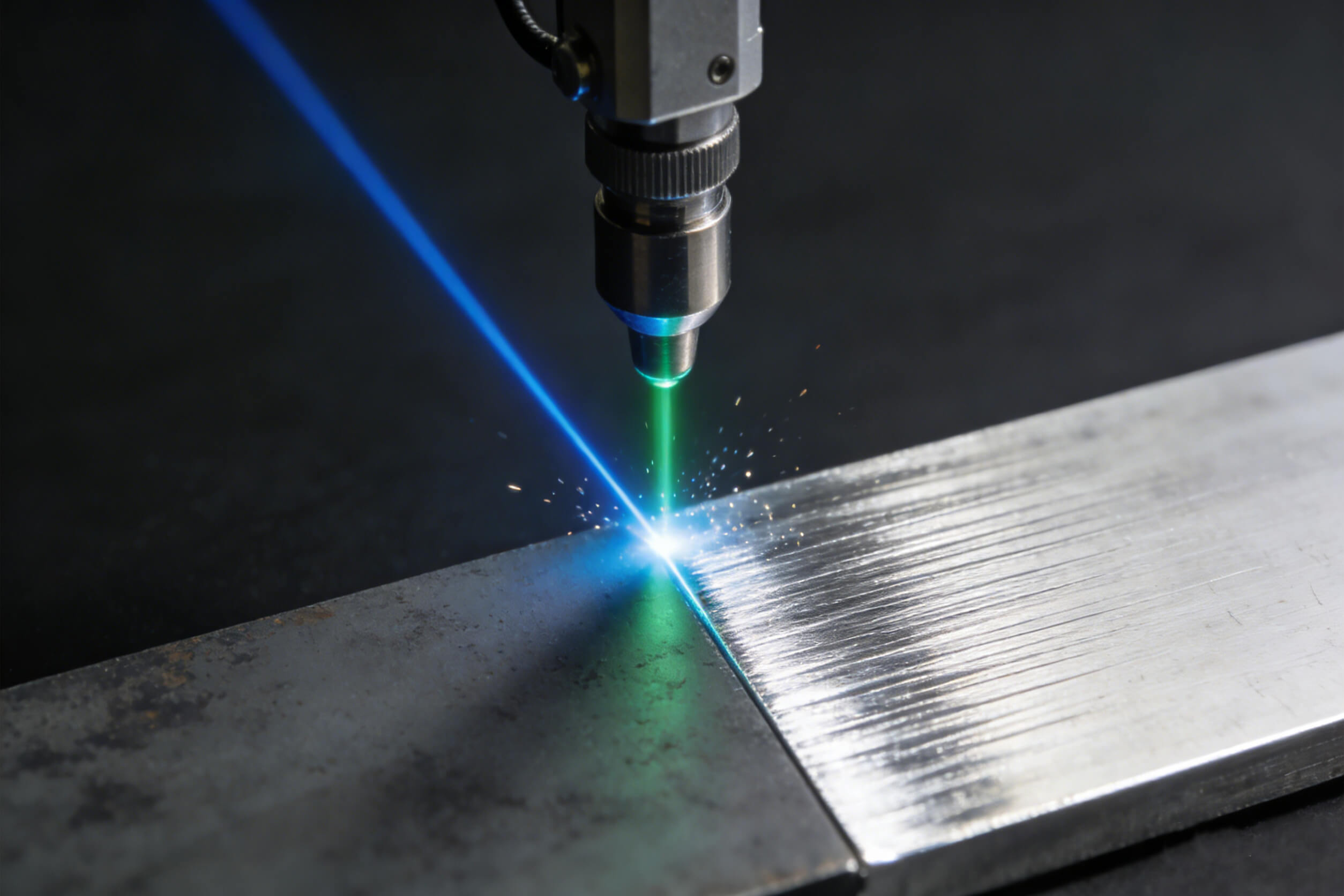
Titanium alloys are indispensable in aerospace, marine, and biomedical engineering due to their exceptional strength-to-weight ratio and corrosion resistance. However, their high affinity for oxygen leads to the rapid formation of tenacious oxide layers and contamination during manufacturing, which severely compromises the performance of subsequent processes like welding and bonding1. Traditional cleaning methods, such as chemical etching and abrasive blasting, raise environmental concerns and risk damaging the delicate substrate. Laser cleaning has emerged as a superior, non-contact, and eco-friendly alternative. This article explores the fundamental mechanisms behind laser cleaning of titanium alloy surfaces and provides actionable insights for achieving optimal surface quality.
1. Core Mechanisms: How Laser Interacts with Titanium Surfaces
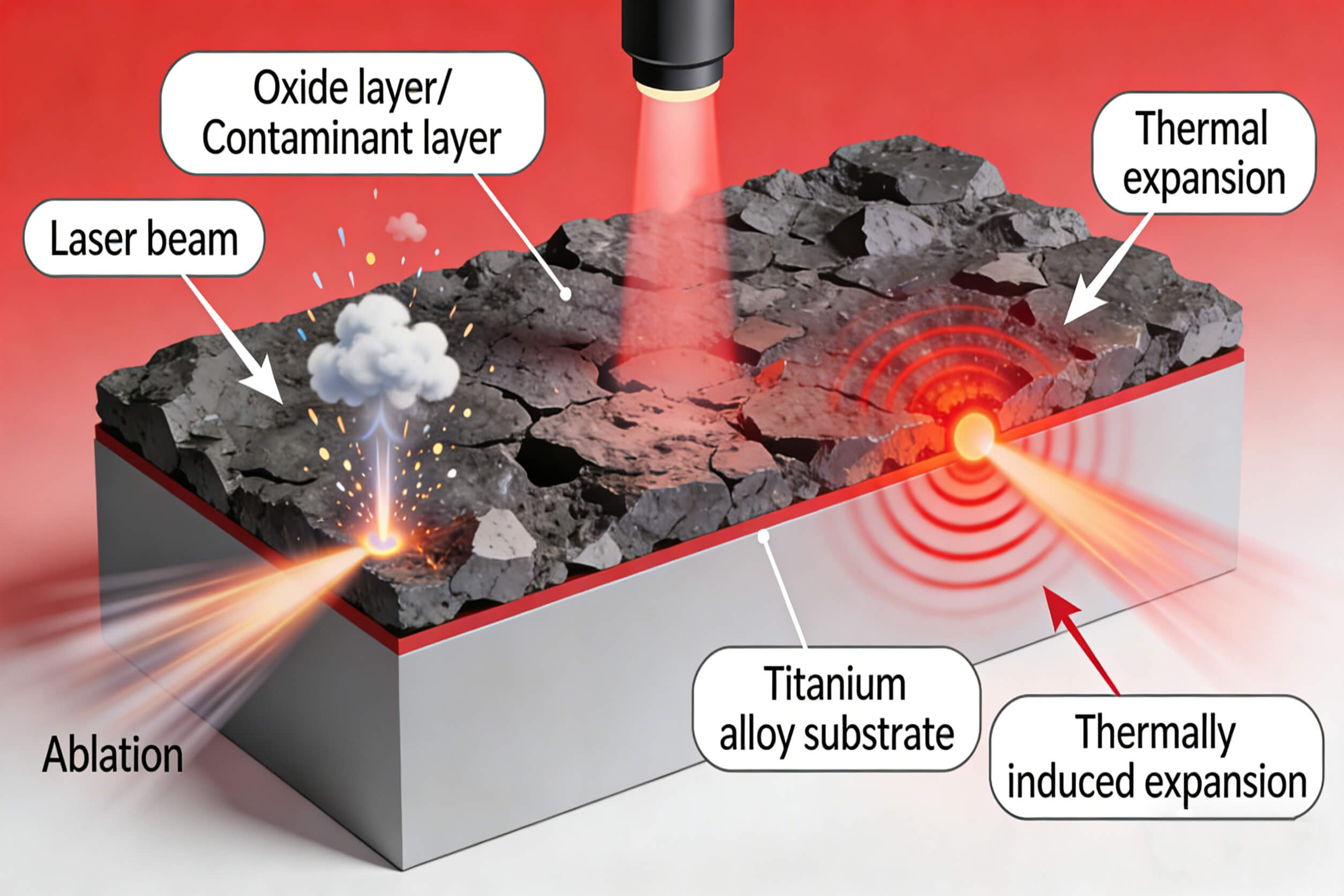
The efficacy of laser cleaning hinges on the precise interaction between high-energy laser pulses and surface contaminants. For titanium alloy, two primary mechanisms are at play, often simultaneously:
-
Ablation/Vaporization: This is the dominant mechanism for removing oxide layers and non-metallic coatings. The intense laser energy is absorbed by the contaminant, causing its temperature to spike above the vaporization point in nanoseconds, leading to direct sublimation or explosive ejection1. A study on laser cleaning TA15 titanium alloy confirmed that the optimal removal effect is achieved when the oxide film temperature is marginally above its boiling point, with the primary mechanism being laser ablation1.
-
Thermal/Substrate-Induced Shockwave: When cleaning greases or loosely adhered particles, the laser beam may primarily heat the underlying titanium alloy substrate. The rapid thermal expansion of the substrate generates an acoustic or shockwave that mechanically dislodges the overlying contaminant. This mechanism is crucial for achieving high surface quality without melting the base metal.
Understanding this interaction is key to process control. Excessive energy can damage the titanium alloy substrate, causing melting, recast layers, or undesirable phase transformations, while insufficient energy leaves residues behind2.
2. Critical Process Parameters and Their Impact on Surface Quality
Achieving impeccable surface quality in titanium alloy laser cleaning requires meticulous optimization of several interlinked parameters.
-
Laser Energy Density (Fluence): This is the most critical factor. It must be carefully balanced between the cleaning threshold (minimum to remove contaminants) and the damage threshold of the titanium alloy substrate1. Research on TC4 titanium alloy has identified an optimal energy density window (e.g., 5.27 J/cm²) that effectively strips oxide films while minimizing substrate alteration.
-
Pulse Width and Repetition Rate: Shorter pulse widths (nanosecond to picosecond) deliver high peak power with minimal heat diffusion, reducing the heat-affected zone (HAZ) and preserving the metallurgical integrity of the titanium alloy, which is vital for fatigue-critical components1. The repetition rate must be synchronized with scanning speed to ensure uniform overlap and coverage.
-
Scanning Strategy and Beam Profile: The pattern and speed of the laser scan directly affect uniformity. Studies comparing Gaussian and flat-top beam profiles on TC4 show that Gaussian beams, with their concentrated central energy, can sometimes yield lower post-cleaning roughness and oxygen content compared to flat-top beams under specific parameters1. Furthermore, innovative mechanisms like water-guided laser cleaning, where a laser is coupled with a thin water jet, have demonstrated superior results. This technique significantly reduces thermal load, suppresses plasma shielding, and immediately flushes away debris, leading to a surface with fewer micro-cracks and lower roughness compared to dry laser cleaning3.
3. Assessing Surface Quality: Metrics and Outcomes
A successful laser cleaning process for titanium alloy is quantified by several surface quality metrics:
-
Visual and Chemical Purity: The end goal is a visually clean, metallic-bright surface. Energy-dispersive X-ray spectroscopy (EDS) analysis is used to confirm the drastic reduction of oxygen and foreign elements. For instance, laser cleaning of oxidized TA5 titanium weld seams (appearing yellow or blue) can restore them to a uniform silver-white color, reducing surface oxygen content to consistent, low levels (e.g., ~8.26-8.65 wt%).
-
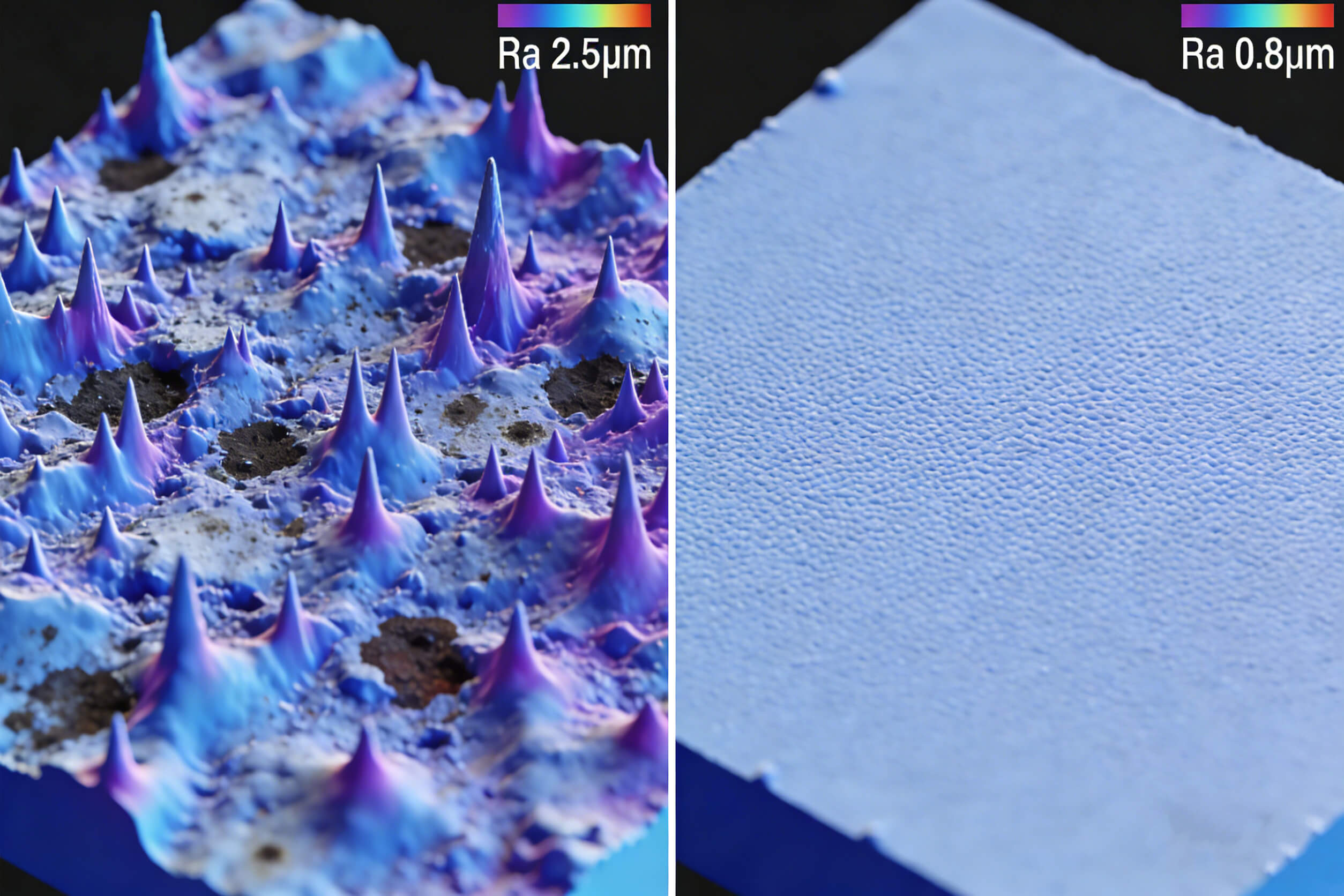
Surface Roughness (Sa/Ra): While laser cleaning can alter micro-topography, optimal parameters aim for controlled, uniform roughness that may enhance adhesion in subsequent coating or bonding steps. Water-guided laser cleaning has been shown to produce surfaces with lower roughness and fewer residual micro-pits compared to conventional dry methods.
-
Microstructural Integrity: The best processes leave the substrate's microstructure and composition virtually unchanged. Research on TC4 titanium alloy indicates that while laser cleaning can remove contaminants from the surface's inherent 富氧α层 (oxygen-enriched alpha layer), it typically does not eliminate this thin, diffused layer itself, thus preserving the substrate's original hardness. Crucially, the process should avoid forming a thick, brittle "white layer" or recast layer that can act as a crack initiator.
4. The Future: Intelligent and Adaptive Laser Cleaning Systems
The future of titanium alloy laser cleaning lies in intelligent, closed-loop systems. Integrating real-time monitoring tools—such as acoustic emission sensors, plasma spectroscopy, or coaxial cameras—allows for instantaneous feedback on cleaning efficacy. This data can be processed by AI algorithms to dynamically adjust laser parameters mid-process, ensuring consistent, damage-free surface quality even for parts with complex geometries or varying contaminant thicknesses. This shift from static parameter sets to adaptive process control represents the next frontier in precision manufacturing.
Conclusion
Laser cleaning is a transformative technology for preparing titanium alloy components. Its effectiveness is governed by a sophisticated interplay of ablation and thermal mechanisms. By mastering critical parameters like energy density, pulse characteristics, and scanning strategy, engineers can reliably achieve exceptional surface quality—characterized by chemical purity, optimal roughness, and preserved microstructure. As the technology evolves with smarter, adaptive systems, laser cleaning is poised to become the standard for high-integrity surface preparation across advanced industries.
Reference:
1. "Influence of Different Spot Pattern Lasers on Cleaning Effect of TC4 Titanium Alloy" by Xinqiang Ma, Tengchao Liu, Yuan Ren, Yanlu Zhang, Zifa Xu, Wei Cheng, Zhenzhen Zhang, Yongmei Zhu, Qinhe Zhang
2. "Investigation into CO2 laser cleaning of titanium alloys for gas-turbine component manufacture" by M.W. Turner, P.L. Crouse, L Li, A.J.E. Smith
3. "Comparison of Surface Quality of Titanium Alloy After Paint Removal by Water-Guided and Dry Laser Cleaning" by Ying Lu, Jilitu Humu, Yan Cheng, Hongchao Qiao, Hongzheng Han, Boyu Sun
The Invisible Tool: Demystifying Industrial Laser Ablation
The Impact of Corrosive Environments on Adhesive Joints in Laser-Cleaned Sports EV Chassis Prototypes
Related Article