Laser Cleaning Machine: The Ultimate Guide to Rust Removal & Surface Preparation
Looking for a laser cleaning solution for your factory? This guide covers how laser cleaning machines remove rust, paint, and oil from metal surfaces—without chemicals or abrasives. Laser cleaning is a revolutionary, non-contact process that uses a focused laser beam to remove contaminants like rust, paint, oxide, oil, and coatings from surfaces. It is rapidly replacing traditional methods (e.g., sandblasting, chemical solvents, abrasive scraping) by offering a superior, precise, and environmentally friendly alternative.
How Does Laser Cleaning Work?
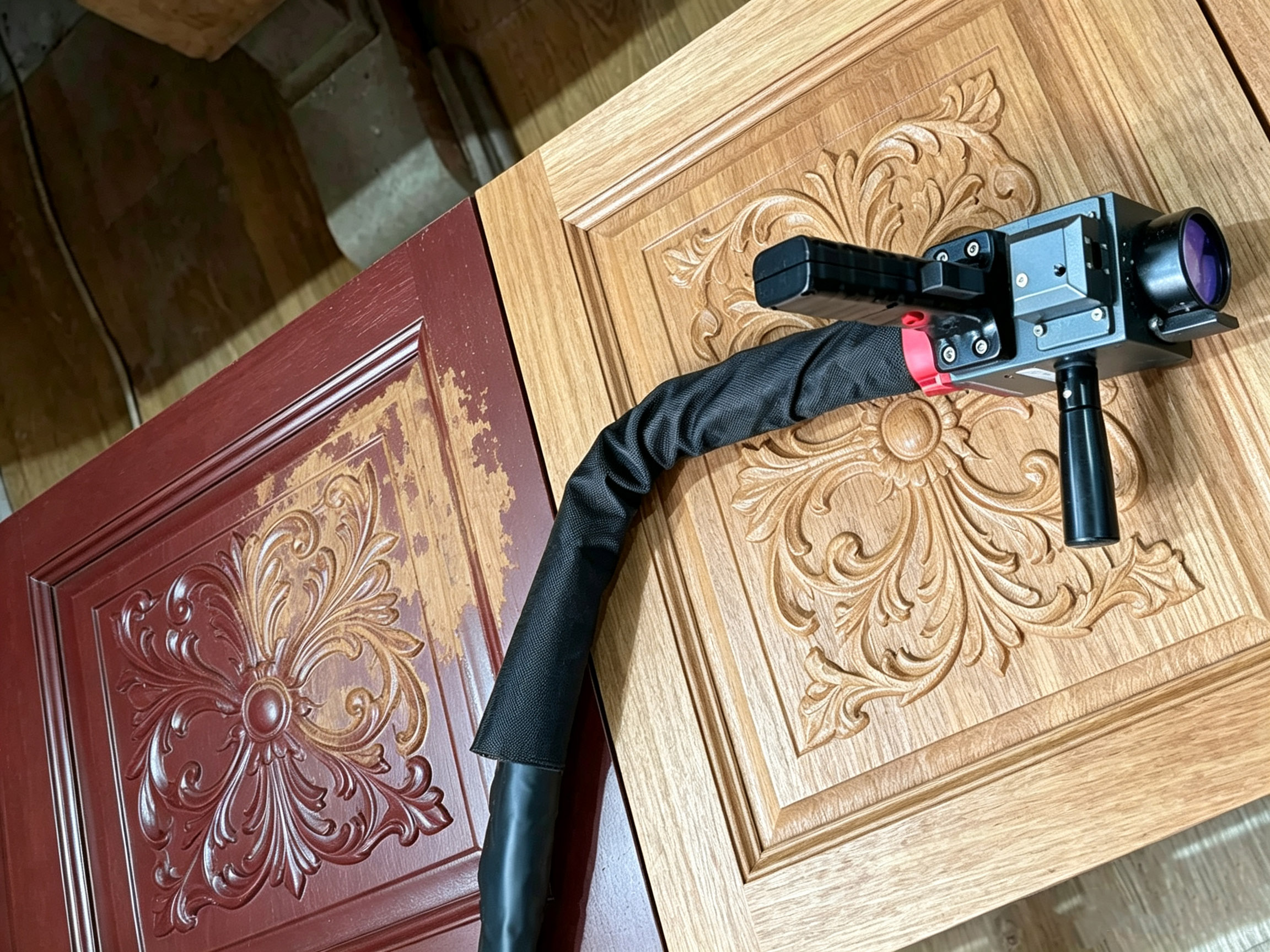
A laser cleaning machine generates a beam of high-intensity light. When this beam hits the surface, contaminants instantly absorb the energy, causing them to vibrate at an extremely high rate and turn into plasma or gas. The underlying base material, which reflects the specific wavelength of the laser, remains completely unharmed and cool to the touch.

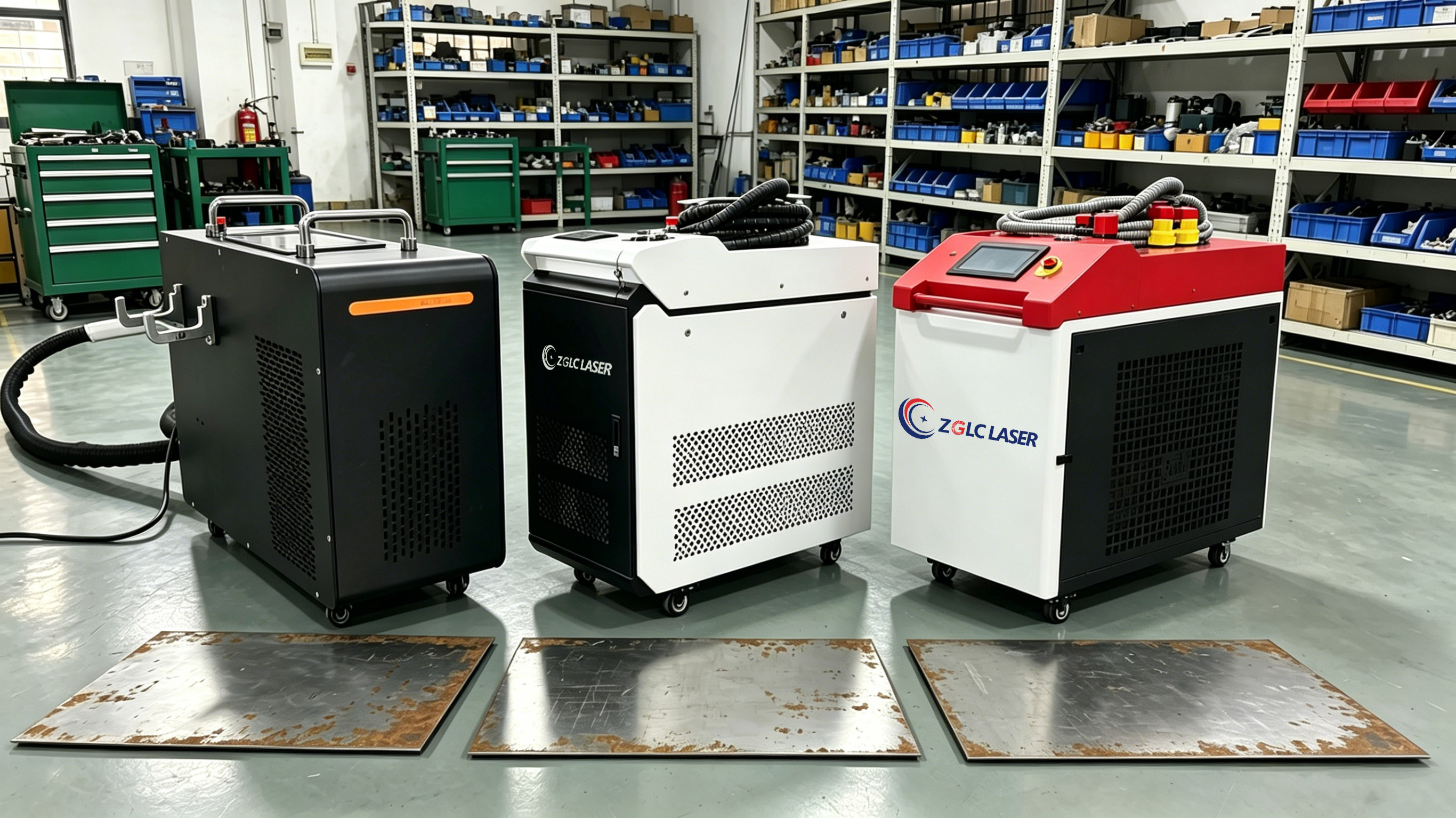
S-Model ZGLC laser cleaner

M-Model ZGLC laser cleaner
Key Characteristics & Benefits:
-
Non-Abrasive & Non-Contact: Preserves the integrity of the base material. There is no surface damage, media embedding, or tool wear.
-
Eco-Friendly & Green: Eliminates the need for harsh chemicals, toxic solvents, or abrasive media (like sand or plastic beads). It produces only negligible waste, which is typically captured by a filtration system.
-
Precise & Controllable: Allows for pinpoint accuracy, enabling the cleaning of specific areas without affecting surrounding material. Ideal for delicate parts and selective cleaning.
-
Reduced Operating Costs: While the initial investment is higher, it eliminates recurring costs for consumables (chemicals, media, disposal) and reduces labor time.
-
Easy Integration: Many systems are portable or can be integrated into automated production lines for high-volume cleaning tasks.
Types of Laser Cleaning Machines: Pulsed vs. Continuous Wave
Laser cleaning systems are typically categorized into two types: Continuous Wave (CW) and Pulsed lasers, each offering distinct advantages depending on the application.
A Continuous Wave laser emits a steady, uninterrupted beam of light at a constant power level- up to 3 kilowatts, depending on system specifications. These systems are ideal for high-speed, large-area cleaning, particularly in industrial environments that demand continuous, powerful operation. For surface roughening tasks, CW lasers can also operate in a modulated mode, simulating a pulsed effect.
In contrast, a Pulsed Laser releases short, high-intensity bursts of energy, where power is concentrated into milliseconds or microseconds. The longer the interval between pulses, the greater the peak power of each burst often reaching up to 10 times the average output power. This makes pulsed lasers ideal for precision cleaning tasks that require minimalthermal impact and substrate protection.


ZGLC laser cleaner- Pulse Laser ZGLC laser cleaner- Continuous Laser
Applications of Laser Cleaning in different Industries:
-
Metalworking & Automotive: Removing rust and paint from car bodies; preparing surfaces for welding or cladding; restoring classic parts.
-
Aerospace & Aviation: Stripping paint from airframes; de-coating turbine blades; critical maintenance cleaning.
-
Mold & Tool Maintenance: Cleaning residues from injection molds and tooling without damaging precision surfaces.
-
Cultural Heritage Restoration: Gently cleaning stone, wood, and metal artifacts with unparalleled control, preserving historical details.


Aerospace and aviation Rail transit Automobile body


Automotive wheels Tire molds Food processing industry
Laser Cleaning vs. Traditional Cleaning Methods
Before investing in any cleaning solution, it‘s important to understand how laser cleaning compares to the traditional methods you may already be using.
Laser Cleaning vs. Sandblasting
Sandblasting has long been the go-to method for heavy-duty rust and paint removal. However, it comes with significant drawbacks. Sandblasting lacks selectivity—it removes everything in its path, including the base material. It also requires consumables (abrasive media) and generates much dust and debris that require cleanup.
Laser cleaning, by contrast, requires no consumables and generates little to no waste. It is a much safer method, requiring only eye and skin protection. The precision of laser cleaning means other manufacturing processes can be carried out in the same proximity without interference.
While sandblasting may be faster for large-area, heavy-duty cleaning, the post-cleaning cleanup and containment costs add up quickly. Laser cleaning offers a cleaner, more controlled process with minimal environmental impact.
| Feature | Laser Cleaning | Sandblasting |
|---|---|---|
| Consumables | None | Abrasive media required |
| Substrate Damage | None (selective) | High (removes everything) |
| Waste Generated | Minimal | much dust and debris |
| Safety Requirements | Eye and skin protection | Full protective gear required |
| Environmental Impact | Low | High |
| Post-Cleaning Cleanup | Minimal | Significant |
Laser Cleaning vs. Chemical Cleaning
Chemical cleaning methods, such as pickling and chemical solvents, have been used for decades. However, they come with serious environmental and safety concerns. Chemical cleaning can be selective, but not with the same spatial accuracy as laser systems. The process is complex and generates hazardous waste that requires proper disposal.
Laser cleaning eliminates the need for hazardous chemicals entirely, creating a safer work environment. It produces no toxic waste, reducing environmental impact significantly. The only downside? Laser systems have a higher upfront cost compared to chemicals. However, the long-term savings on consumables, waste disposal, and regulatory compliance often outweigh the initial investment.
Laser Cleaning vs. Dry Ice Cleaning
Dry ice cleaning uses solid CO₂ pellets blasted at high velocity to clean surfaces. While it’s chemical-free, it requires a constant supply of dry ice pellets, which adds recurring costs. Laser cleaning, on the other hand, requires no consumables at all—just electricity.
Summary Comparison Table
| Cleaning Method | Consumables | Substrate Damage | Waste | Safety Risk | Cost Over Time |
|---|---|---|---|---|---|
| Laser Cleaning | None | None | Minimal | Low | Low |
| Sandblasting | High | High | High | High | High |
| Chemical Cleaning | High | Medium | High | High | High |
| Dry Ice Cleaning | Medium | Low | Medium | Medium | Medium |
The Bottom Line: Laser cleaning offers the best combination of precision, safety, and environmental responsibility. While the initial investment is higher, the elimination of consumables, reduced cleanup time, and zero chemical waste make it the most cost-effective solution in the long run.
How to Choose the Right Laser Cleaning Machine
Selecting the right laser cleaning machine depends on your specific application, material types, and cleaning requirements. Here’s a practical guide to help you make the right choice.
Step 1: Understand Laser Types
There are two main types of laser cleaning machines:
| Laser Type | Power Range | Best For |
|---|---|---|
| Pulsed Laser | 20W – 500W | Precision cleaning, sensitive surfaces, expensive molds, delicate parts |
| Continuous Wave (CW) Laser | 500W – 3000W+ | Large-scale rust removal, heavy paint stripping, high-speed production |
Pulsed lasers focus energy in short bursts, achieving high peak power with low heat input—ideal for fine cleaning where substrate protection is critical.
CW lasers deliver constant energy output, making them faster for large-area cleaning. If you need rust removal speed and want the fastest ROI for large projects, CW lasers in the 1500W-3000W range are your best bet.
Step 2: Match Power to Your Application
Laser power is measured in watts (W) and directly affects cleaning speed and depth. Here‘s a breakdown by power level:
| Power Level | Suitable Applications | Cleaning Speed |
|---|---|---|
| 50W – 200W | Light surface cleaning, oil removal, delicate electronics, semiconductor wafers | Slow, high precision |
| 1000W | Light rust removal, surface coatings, light-duty cleaning | Moderate |
| 1500W | The “sweet spot” for most fabrication shops—moderate rust, general industrial cleaning | Fast (30-50 sq ft/hour for moderate rust) |
| 2000W – 3000W | Heavy rust, multi-layer coatings, thick paint, ship hull maintenance, large molds | Very fast |
| 3000W+ | Heavy-duty industrial applications, infrastructure, pipeline corrosion removal | Maximum speed |
The rule is simple: More power equals faster cleaning and deeper penetration, but it also increases the machine cost. Choose the lowest power that meets your cleaning needs to avoid unnecessary expense.
Step 3: Consider Your Materials
Different materials require different approaches:
-
Steel and iron: Rust removal typically requires a pulsed laser of 500W or more for effective cleaning
-
Aluminum and copper: Lower power settings to avoid surface damage
-
Plastics and composites: Pulsed lasers with precise control to prevent melting
-
Molds and precision parts: Pulsed lasers (100W-300W) for zero-damage “cold processing”
Step 4: Evaluate Your Production Volume
-
Low volume / Occasional use: A lower-power portable unit (100W-500W) may suffice
-
Medium volume / General shop use: 1000W-1500W CW laser offers the best balance of cost and performance
-
High volume / Production line: 1500W-3000W CW laser for maximum throughput
Step 5: Don‘t Forget Cooling and Portability
Higher wattage machines require more robust cooling systems. Consider your workshop setup:
-
Air-cooled: Suitable for lower-power machines (under 500W)
-
Water-cooled: Required for higher-power machines (1000W+), more efficient but requires water supply
Frequently Asked Questions (FAQ)
Q1: How does laser cleaning work?
Laser cleaning works by directing a high-energy laser beam at a contaminated surface. The laser energy is absorbed by the unwanted layer—whether it‘s rust, paint, grease, or oxide—causing it to rapidly heat up and vaporize or detach from the underlying material. The process is highly selective: the laser can be precisely calibrated to affect only the contaminant while leaving the base material completely undamaged.
Q2: What materials can a laser cleaning machine remove?
Laser cleaning machines can remove both organic pollutants (paint, oil, grease, coatings) and inorganic substances (metal rust, oxide layers, metal particles, dust). They work effectively on steel, aluminum, copper, cast iron, stainless steel, and even some non-metallic surfaces.
Q3: Will laser cleaning damage my product surface?
No. A properly configured laser cleaning machine removes only the contamination layer while preserving the base material. Pulsed lasers, in particular, achieve zero-damage “cold processing” by using microsecond-level emissions that remove contaminants without heating or damaging the substrate. The key is choosing the right power and settings for your specific material.
Q4: Is laser cleaning environmentally friendly?
Yes. Unlike chemical cleaning, laser cleaning requires no chemicals and produces no toxic waste or chemical runoff. Unlike sandblasting, it generates minimal dust and debris, and any particles produced can be easily collected with a simple exhaust system. Laser cleaning is one of the most sustainable industrial cleaning solutions available today.
Q5: How long does a laser cleaning machine last?
The laser source in a quality machine typically lasts up to 100,000 hours with stable performance and reliable operation. With proper maintenance—including regular cleaning of optics, cooling system checks, and following the manufacturer‘s service schedule—a laser cleaning machine can serve your production line for over a decade.
Q6: What’s the difference between a 1000W, 1500W, and 3000W laser cleaning machine?
A 1000W machine is best for light rust and surface coatings. A 1500W machine offers the best balance for most fabrication shops—it handles moderate rust and paint at good speeds. A 3000W machine is designed for heavy rust, thick multi-layer coatings, and high-speed production lines. Choose based on your typical workload: heavier contamination = higher power needed.
The Ultimate Guide-How The Laser Do Cleaning and Rust Removal?
Related Article